Qualcomm unveils Snapdragon Reality Elite & START platforms to power over 40 AI wearable devices, betting on a future beyond smartphones.
Qualcomm Inc. is aggressively positioning itself to dominate the next generation of personal computing, unveiling two new platforms designed to power the nascent market for AI-centric wearable devices. The move comes as the company seeks to reduce its reliance on the mature smartphone sector, with its new Snapdragon Reality Elite platform delivering a 160% improvement in Neural Processing Unit (NPU) performance over its predecessor, signaling a significant leap in on-device artificial intelligence capabilities for mixed-reality glasses and other form factors.
The chipmaker’s CEO, Cristiano Amon, confirmed the company is actively supporting over 40 distinct AI wearable device designs, encompassing everything from smart jewelry and camera-equipped earbuds to pins and advanced watches. This strategic pivot underscores a conviction that the smartphone’s successor will be a collection of context-aware, always-on devices, with Qualcomm aiming to become the foundational silicon provider for this anticipated wave of innovation. The newly introduced Snapdragon Reality Elite platform is specifically engineered for mixed-reality glasses, promising more robust on-device AI processing, while the Scalable Turnkey AI-Ready Toolkit (START) offers a comprehensive hardware and software solution to accelerate development for a broader array of AI devices, initially targeting smart glasses.
Technical specifications highlight Qualcomm’s commitment to advanced on-device AI. Beyond the substantial NPU gains, the Snapdragon Reality Elite platform boasts up to a 60% increase in GPU performance and up to a 30% boost in CPU performance compared to its previous XR platform. These enhancements enable the chip to run a 3-billion-parameter language model at a rapid 45 tokens per second, facilitating swift and responsive AI interactions crucial for seamless user experience in a wearable context. The platform further supports 4.4K per-eye resolution at 90 frames per second, a modest but important upgrade from the 4.3K per-eye resolution of the XR2+ Gen 2, which is vital for minimizing motion sickness and eye strain during extended use of augmented or mixed reality headsets.
Qualcomm envisions the Snapdragon Reality Elite powering two primary device categories: standalone video-see-through (VST) headsets that overlay digital content onto a real-world camera feed, and lightweight, tethered optical-see-through (OST) glasses that integrate digital imagery directly into the wearer’s field of view. Initial partners leveraging the platform include XREAL Project Aura, showcased earlier this year, and an upcoming device from Play for Dream. The START initiative, meanwhile, bundles an AR chip, a software platform, companion applications, and a white-label program designed to expedite time-to-market for hardware manufacturers. This program includes three reference designs: an audio-plus-camera setup akin to existing smart glasses, a monocular display, and a binocular display. Eyewear manufacturers Inspecs and O’Neill, a TitanFlex brand, are among the first partners in this white-label endeavor, with Qualcomm indicating START will eventually extend to support other wearable form factors beyond smart glasses.
What It Means
Qualcomm's aggressive foray into AI wearables represents a significant long-term strategic bet, aiming to replicate its dominant position in the smartphone chipset market within a potentially nascent, significant computing paradigm. This shift is not merely about incremental improvements but a fundamental reorientation towards "ambient computing," where intelligence is distributed across numerous devices interacting seamlessly with the user and their environment. The company's emphasis on robust on-device AI processing is critical for this vision, enabling faster, more personalized, and privacy-preserving interactions by reducing reliance on cloud-based computation, a key differentiator from early, often clunky, wearable attempts.
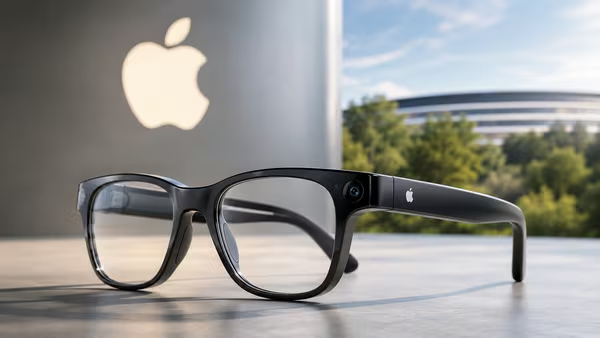
The success of this strategy hinges on consumer adoption of new form factors and compelling use cases for always-on AI. Qualcomm is attempting to lower the barrier for entry for original equipment manufacturers through programs like START, fostering an ecosystem much like it did with Android smartphones. However, the path to mass market acceptance for wearables has historically been fraught with challenges, from aesthetic concerns and battery life limitations to overcoming user privacy anxieties. This initiative also positions Qualcomm in a more direct competitive posture against platform giants like Apple, which has its own vertically integrated approach with devices like the Vision Pro, and Meta Platforms Inc., which is investing heavily in VR/AR hardware through its Quest and Ray-Ban smart glasses lines.
160%
The increase in Neural Processing Unit (NPU) performance offered by Qualcomm's new Snapdragon Reality Elite platform, signaling a significant leap in on-device AI capabilities for future wearable devices.
Background
Qualcomm has long been the dominant force in supplying chips for Android smartphones, leveraging its extensive intellectual property in mobile connectivity and low-power computing. However, the smartphone market has matured, with slowing growth rates and increased competition, prompting the company to actively diversify its revenue streams. Previous diversification efforts have included automotive, IoT, and PC segments, with varying degrees of success. The acquisition of NUVIA, a server chip startup, in 2021 was a strategic move to bolster its high-performance, low-power CPU capabilities, elements now critical for advanced AI processing in both mobile and edge devices.
The pursuit of a post-smartphone computing platform is not new, with tech giants continually exploring augmented reality, virtual reality, and other wearable technologies. Early attempts like Google Glass offered a glimpse into the potential but struggled with form factor, social acceptance, and compelling applications. What distinguishes the current push, which Qualcomm is actively enabling, is the maturation of artificial intelligence, particularly generative AI, and the increasing miniaturization of powerful processing units. This confluence of technological advancements makes the prospect of truly intelligent, always-on wearables more feasible and potentially more appealing to a broader consumer base, shifting the focus from simple notification delivery to active, contextual AI assistance.
What Analysts Say
Industry analysts largely view Qualcomm's accelerated push into AI wearables as a necessary, albeit high-stakes, long-term strategic play. The smartphone market, while enormous, faces secular headwinds, and securing a foundational role in the "next big thing" is paramount for sustained growth. While the immediate revenue impact is likely to be modest given the nascent stage of the market, establishing an early lead and cultivating an ecosystem of hardware partners could yield significant returns over the coming decade. The company's extensive experience in optimizing chips for power efficiency and integrating advanced wireless capabilities provides a strong competitive advantage against pure-play AI chip startups, though competition from integrated players like Apple remains a substantial hurdle.
Concerns persist regarding the fragmented nature of the wearables market, the lack of a clear "killer app," and the inherent challenges in designing devices that are both technologically advanced and aesthetically pleasing enough for widespread consumer adoption. Analysts also point to the need for robust developer tools and a vibrant software ecosystem to truly unlock the potential of these devices. However, Qualcomm’s white-label program with START is seen as a pragmatic approach to lower barriers for entry, fostering experimentation and potentially accelerating market development by reducing the R&D burden for smaller players. The ability of these devices to gather real-world data and feed sophisticated AI agents is seen as a powerful differentiator, potentially creating a new paradigm of personalized and proactive computing.
Investors will be closely watching for further partnership announcements and concrete product launches from Qualcomm's ecosystem partners throughout the coming periods. Key indicators of success will include initial sales figures for devices powered by Snapdragon Reality Elite and START, the expansion of the START white-label program to new form factors, and evidence of a growing developer community building compelling applications for these ambient AI devices. Any significant shifts in consumer sentiment towards wearable technology or competitive moves from rival chipmakers and platform owners will also warrant close attention, shaping the long-term trajectory of Qualcomm’s strategic pivot.
Frequently asked questions
What new products did Qualcomm announce for AI wearables?
Qualcomm announced two key offerings: Snapdragon Reality Elite, a platform for mixed-reality glasses, and the Scalable Turnkey AI-Ready Toolkit (START), which provides hardware and software for AI devices like smart glasses.
What improvements does Snapdragon Reality Elite offer?
Snapdragon Reality Elite boasts significant performance gains, including up to 60% faster GPU, 30% faster CPU, and a 160% boost in NPU performance compared to its predecessor. It can also run a 3-billion-parameter language model at 45 tokens per second.
What types of devices will use Snapdragon Reality Elite?
The platform is designed to power stand-alone video-see-through (VST) headsets and lightweight, tethered optical-see-through (OST) glasses. Initial devices include XREAL Project Aura and an upcoming device from Play for Dream.
What is Qualcomm's START platform?
START is a Scalable Turnkey AI-Ready Toolkit consisting of an AR chip, software, companion apps, and a white-label program to help hardware makers bring AI devices to market faster. It offers reference designs for smart glasses.
Why is Qualcomm focusing on AI wearable devices?
Qualcomm CEO Cristiano Amon believes AI agents will drive a new wave of hardware startups needing novel form factors to gather real-world data, positioning Qualcomm as the foundational silicon provider for the post-smartphone era.
How many AI wearable devices is Qualcomm currently working on?
According to CEO Cristiano Amon, Qualcomm is currently working on over 40 different AI wearable device designs, encompassing various form factors such as jewelry, earbuds with cameras, pins, and watches.