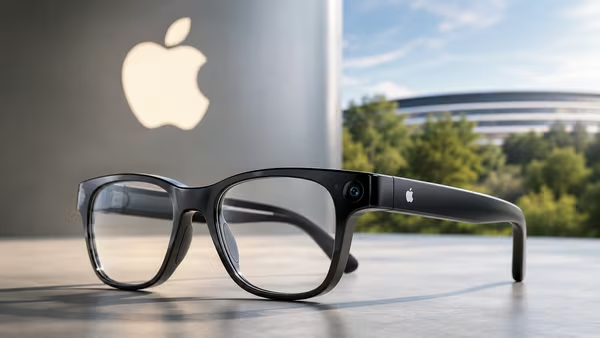
Apple's highly anticipated 'N50' smart glasses are set to debut at WWDC 2027, promising a revolution in tech and new avenues for India's ecosystem.
Apple is reportedly gearing up to unveil its highly anticipated smart glasses, codenamed 'N50', at WWDC 2027 with a consumer release expected later that year.
This strategic move, despite engineering and privacy challenges, positions Apple to redefine the nascent smart glasses market, presenting immense opportunities and challenges for the Indian tech ecosystem.
The journey to seamlessly blend the digital and physical worlds has been a long-held ambition for many tech pioneers, and for Apple, this vision is reportedly crystallising with its entry into smart glasses. What started as whispers in the corridors of Cupertino is now firming up into concrete plans, with the tech giant reportedly preparing to unveil its first pair of smart glasses at the Worldwide Developers Conference (WWDC) in June 2027. This unveiling isn't just about a new gadget; it represents a significant inflection point for the extended reality (XR) sector, potentially galvanising innovation and adoption on a global scale, including within India's burgeoning tech landscape. Codenamed 'N50', these smart glasses were initially slated for a late 2026 reveal, with an early 2027 launch. However, reports now suggest a revised timeline, pushing the consumer release to the end of 2027. This delay, while seemingly minor, points to the intricate engineering challenges and the profound marketing hurdles involved, particularly around defining the device's messaging concerning user privacy. For Apple, meticulous refinement is paramount, ensuring that the product not only functions flawlessly but also addresses societal concerns head-on, especially as it navigates a market segment that has previously faced scrutiny. The smart glasses segment, though still in its nascent stages, has seen a mix of ambitious attempts and cautious introductions. Companies like Meta, with their Ray-Ban Meta and standalone Meta Glasses starting at approximately $300, have laid some groundwork, familiarising consumers with the concept of connected eyewear. However, these early entrants have also highlighted critical privacy issues. Meta, for instance, has faced scrutiny regarding its privacy track record and user surveillance with its smart glasses, leading to concerns swirling around its competing products. This checkered history underscores the delicate balance between innovation and ethical design. Apple's approach with the 'N50' aims to learn from these predecessors. The device is expected to feature two camera sensors: one for photo and video capture, and another dedicated to computer vision tasks. Significantly, unlike some future AR concepts, these smart glasses are not anticipated to include a display of any kind. Instead, they will rely on an array of cameras, speakers, and microphones for functionalities such as phone calls, AI queries, music playback, and capturing moments. This audio-centric design, coupled with a strong emphasis on privacy by Apple's development teams, seeks to rehabilitate the segment's reputation and foster greater user trust. The company is reportedly developing stringent features and policies to mitigate the privacy concerns that have plagued competing products, making it a priority in the device's architecture. The broader market for smart glasses is at an exciting crossroads. Despite some impressive sales figures from early adopters, smart glasses remain a niche item. Most consumers own multiple pairs of traditional eyewear but none in the smart category. This hesitation stems from several factors: the nascent stage of the technology, price sensitivity, and a lack of clear understanding among potential users about the value proposition. Apple's entry, however, is often seen as a legitimising force in any market it enters. Its brand cachet and ecosystem integration could well transform smart glasses from a curiosity into a coveted status symbol, akin to its top-tier phones and accessories, which would significantly alter market dynamics globally and in India. For India, Apple's impending launch carries profound implications. The country, with its rapidly expanding digital infrastructure and a massive, tech-savvy youth population, represents a colossal market for innovative consumer electronics. The 'status symbol' aspect of Apple products resonates strongly with a segment of Indian consumers, and smart glasses could find a receptive audience among early adopters in urban centres. Beyond consumption, this development also opens new avenues for India's vibrant startup ecosystem. Indian developers could find fertile ground in creating localised applications and experiences for Apple's smart glasses, leveraging India's diverse linguistic and cultural landscape. Imagine AI queries tailored for regional dialects or augmented experiences for Indian heritage sites—the possibilities are extensive. Furthermore, Apple's stringent focus on privacy could set a new benchmark for wearable technology in India. As discussions around data privacy and digital rights intensify within the country, a product that champions user privacy could gain significant traction. However, challenges remain. The relatively high price point of Apple products, coupled with the nascent understanding of smart glasses' utility, might initially limit adoption to a premium segment. Education around responsible usage and data protection will be crucial for wider acceptance. Moreover, this move by Apple will undoubtedly spur local innovation, pushing Indian startups in the AR/VR/XR space to develop competitive and culturally relevant solutions, potentially fostering a new wave of 'Make in India' tech in this cutting-edge domain. The arrival of Apple's smart glasses is not merely about a new product; it's about the evolution of human-computer interaction and the relentless pursuit of ambient intelligence. It signals a future where computing is less about screens and more about seamless, contextual overlays on our reality. For India, a nation at the forefront of digital transformation, this moment offers an unparalleled opportunity to participate in and shape the next frontier of personal technology, fostering both innovation and a deeper conversation about technology's role in our lives.
Frequently asked questions
When will Apple's first smart glasses be unveiled?
Apple's highly anticipated first smart glasses, codenamed 'N50', are reportedly set to be unveiled at the Worldwide Developers Conference (WWDC) in 2027. A consumer release is then expected later in 2027, marking a significant entry into the nascent smart glasses market.
What is the codename for Apple's smart glasses?
The codename for Apple's upcoming smart glasses is 'N50'.
When is the expected release date for Apple's smart glasses?
Apple's first smart glasses are expected to be released to consumers in late 2027.
How will Apple's smart glasses impact the Indian tech ecosystem?
The launch of Apple's smart glasses presents both immense opportunities and significant challenges for the Indian tech ecosystem, potentially redefining the local market.
What challenges does Apple face with these smart glasses?
Apple is reportedly navigating significant engineering and privacy challenges in the development of its smart glasses.
What is WWDC 2027?
WWDC (Worldwide Developers Conference) is an annual event hosted by Apple to showcase new software and technologies for developers, where the smart glasses are expected to be unveiled.