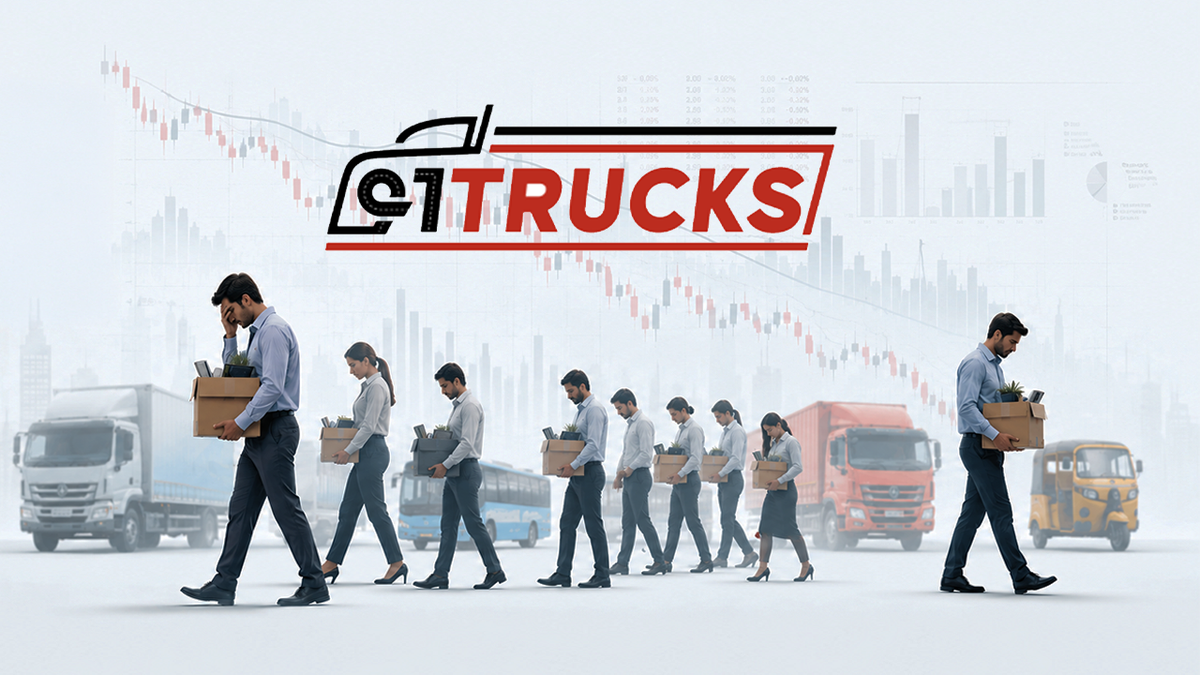
Commercial vehicle startup 91trucks slashes nearly 70% of staff and closes physical stores, signaling deep troubles in the mobility sector.
Commercial Vehicle Startup 91trucks Lays Off Nearly 70% of Its Workforce Amid Funding Crunch and Slowing Demand
The commercial vehicle marketplace, a sector crucial for keeping supply chains moving and economies humming, is currently navigating turbulent waters. This reality has hit home hard for 91trucks, a prominent player in the space, which has just undergone a significant restructuring. The company has laid off a substantial portion of its workforce and closed several physical stores, signaling a broader re-evaluation of growth strategies in a challenging economic climate. Here's what happened: 91trucks has reduced its headcount by nearly 70%, with approximately 100 employees departing the company over recent weeks, leaving a team of roughly 50. The startup's co-founder and CEO, Siddharth Sharma, confirmed the headcount reduction, though he did not specify the exact figures. This isn't just a minor adjustment; it's a profound shift for a company that once garnered significant investor confidence. The drastic measures come as 91trucks faced a dual challenge: growth projections that simply weren't met over the past six months, coupled with a tougher macroeconomic environment. Sources close to the company point to weakened demand in the commercial vehicle segment, exacerbated by ongoing geopolitical tensions and the persistent pressure of high diesel and petrol prices, which directly impact transport operators and their vehicle purchase decisions. For many startups, especially those with an ambitious physical footprint, these external pressures can quickly turn an optimistic outlook into a fight for survival. 91trucks operates a platform designed to simplify commercial vehicle discovery, financing, and related services. In May 2025, the company had successfully raised around $5 million in a Series A funding round, achieving a valuation of approximately $33 million. However, the recent restructuring follows a failed attempt to secure another $10 million in fresh funding, a stark indicator of the tightening venture capital landscape that now favors profitability over rapid expansion at all costs. This inability to close a follow-on round likely forced the company's hand in making difficult operational decisions.
Why this matters for the broader tech and logistics market
The story of 91trucks is a potent example of a trend currently sweeping through the global startup ecosystem, and particularly impacting capital-intensive sectors like logistics and automotive tech. Across North America, for instance, venture capitalists have grown significantly more cautious. Gone are the days of easy money for companies prioritizing market share above all else. Today's investors demand clear paths to profitability and strong unit economics, especially from "phygital" business models that blend digital platforms with a costly physical presence. 91trucks' decision to scale down its offline retail presence, shutting nearly two dozen stores primarily in southern India and MP, directly reflects this shift. While physical hubs can build trust and facilitate complex transactions like vehicle sales and financing, they also represent significant overhead in terms of rent, staffing, and operational complexities. When demand softens and funding dries up, these assets quickly become liabilities. My read on the situation is that many logistics and mobility startups, including those operating across North America, are facing similar scrutiny of their physical footprints and aggressive expansion plans. The cost of customer acquisition through brick-and-mortar stores, when combined with a digital offering, needs to deliver clear, measurable returns, or it becomes unsustainable.
The challenges of a shifting strategy
In response to these challenges, 91trucks has undertaken a strategic pivot. The company aims to strengthen its presence in the North Indian market while exiting other geographies. Siddharth Sharma cited "operational complexities and timelines involved in backend processes, particularly RC transfers and related compliance activities" as a primary driver for this decision. This is a critical insight, revealing the often-underestimated hurdles of scaling in highly regulated and fragmented markets. From my perspective as someone tracking tech and product, these "operational complexities" are not unique to any one region. Across North America, for example, varying state-level regulations for vehicle titling, registration, and cross-border commercial operations can present immense headaches for logistics tech platforms aiming for seamless service. The need to streamline backend processes and compliance is often a bottleneck for growth, demanding either significant tech investment or a more focused geographic approach. The fact that this strategic shift has also led to senior leadership changes, including the departure of the company's country head, underscores the depth of the organizational upheaval and the challenges of navigating such a significant pivot. It's also worth noting the timing of this restructuring. Just three months prior to these drastic actions, 91trucks had acquired Motorfloor and Trucksfloor, two mobility-focused platforms. This acquisition was intended to bolster its presence in the commercial vehicle ecosystem. The rapid shift from expansion through acquisition to aggressive cost-cutting within such a short period highlights the incredible speed at which market conditions can change and how quickly even well-laid growth strategies can unravel when funding becomes scarce and demand falters. The broader implications are clear: startups in the automotive retail, mobility, and commercial vehicle sectors are grappling with what could be a prolonged period of muted demand and a significantly tougher funding environment. Industry executives and investors are increasingly warning that aggressive expansion, particularly through extensive offline networks, could lead to further consolidation, workforce reductions, and even business shutdowns if capital remains difficult to raise and demand recovery stays slow. This trend is global, impacting even established players in North America who expanded rapidly during the last boom cycle. The 91trucks narrative serves as a stark reminder for entrepreneurs and investors globally: even strong initial valuations and strategic acquisitions can't inoculate against sustained macroeconomic headwinds. In today's climate, the imperative for startups, whether in North America or emerging markets, is a relentless focus on efficiency, sustainable unit economics, and a clear, demonstrable path to profitability. The era of growth at any cost appears to be firmly in the rearview mirror, replaced by a demand for resilience and fiscal prudence.
Frequently asked questions
What happened to 91trucks?
91trucks, a commercial vehicle marketplace startup, recently laid off nearly 70% of its workforce and shut down several stores. This restructuring comes amid a significant funding crunch and a slowdown in market demand.
Why did 91trucks lay off so many employees?
The company cited a severe funding crunch and a significant slowdown in market demand for commercial vehicles as the primary reasons for the massive workforce reduction.
How many employees were laid off by 91trucks?
Nearly 70% of 91trucks' total workforce was impacted by the recent layoffs, signaling a drastic restructuring effort.
Are 91trucks' physical stores still operating?
No, as part of the restructuring and cost-cutting measures, 91trucks has shut down its physical stores.
What is the broader impact of 91trucks' layoffs on the commercial vehicle sector?
The layoffs at 91trucks highlight the increasing difficulties faced by startups in the commercial vehicle marketplace, reflecting challenges like funding scarcity and slowing economic growth.
Where can I find more information about 91trucks' situation?
Further details on 91trucks' layoffs and store closures can be found in exclusive reports from business publications like Business Insider and Entrackr.