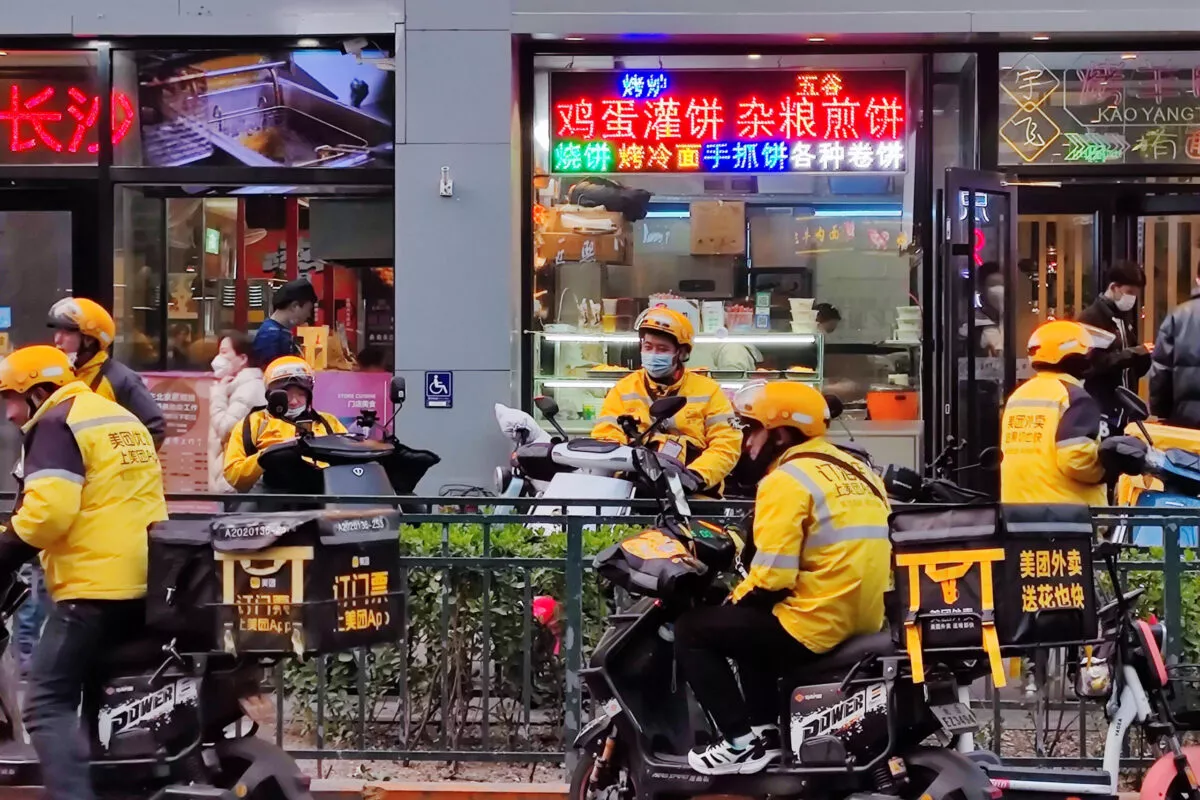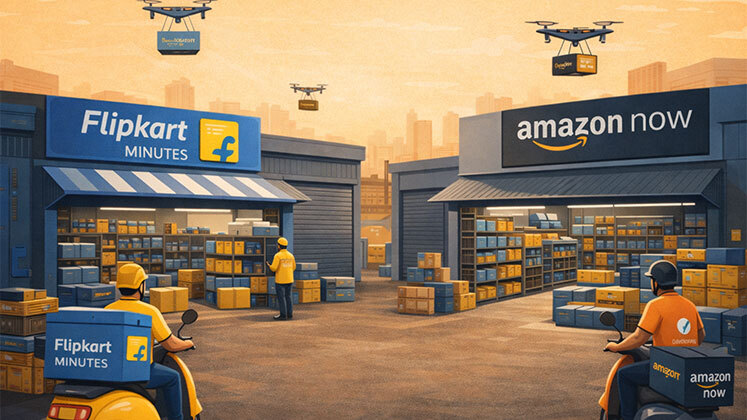
Flipkart's quick-commerce 'Minutes' service hits 1,000 micro-fulfillment centers, intensifying rivalry with Amazon in India.
The Race for Your Every Impulse: How India's Quick-Commerce Battle Between Flipkart and Amazon Is Redefining Retail
In an increasingly instant-gratification world, the race to deliver goods at lightning speed has become the next great frontier for global e-commerce. While consumers in North America have become accustomed to fast shipping, the sheer intensity and scale of the quick-commerce battle unfolding in India offer a fascinating glimpse into the future of online retail, where major players are scrambling to fulfill everyday needs—and desires—in minutes, not days. This isn't just about speed; it's about fundamentally reshaping consumer habits and brand engagement. At the heart of this high-stakes competition is Walmart-backed Flipkart, which just announced its Minutes service has scaled to an impressive 1,000 micro-fulfillment centers across India, less than two years after its launch. This rapid expansion positions Flipkart squarely against global titan Amazon, which is also aggressively ramping up its fast-delivery network, Amazon Now, in the South Asian nation, vying for a dominant share of what is quickly becoming one of the world's most dynamic and competitive markets. The concept of quick commerce, often facilitated by "dark stores" or micro-fulfillment centers—small, localized warehouses optimized for rapid picking and packing—has transformed how consumers access everything from groceries to gadgets. These aren't your typical sprawling distribution centers; they are strategically placed hubs designed to shave minutes off delivery times, making them the new battlegrounds for consumer loyalty. Flipkart's ambition is clear: it plans to expand its Minutes network to 1,500 such centers by the end of 2026, signaling an all-in commitment to this burgeoning sector. This aggressive build-out places Flipkart among the top contenders in a market already crowded with formidable local players like Blinkit, Zepto, and Swiggy Instamart. Blinkit, for example, currently operates over 2,243 micro-fulfillment centers, making it the market leader by infrastructure count, according to a recent analysis by Jefferies. Yet, the pace of expansion from both Flipkart and Amazon suggests that market shares are still very much in play, with the underlying infrastructure—the number and strategic placement of these dark stores—being a critical determinant of success. India presents a unique canvas for this quick-commerce revolution. With a massive, digitally-native population, increasing disposable incomes, and a cultural embrace of convenience, it’s a fertile ground for businesses that can deliver on the promise of immediacy. The stakes are immense, not just for the companies involved, but for the millions of consumers whose shopping patterns are being fundamentally reshaped.
Why India's Quick-Commerce Explosion Matters Globally
What's happening in India is more than just a regional phenomenon; it's a real-time experiment with global implications for how brands connect with consumers and how distribution models will evolve. For businesses and marketers observing from North America, the Indian market provides critical insights into the future of consumer expectations and the potential for "instant" to become the new baseline for e-commerce. It challenges the traditional supply chain models and forces a reevaluation of what "omnichannel" truly means when delivery windows shrink to minutes. The rapid innovation and investment by companies like Flipkart and Amazon demonstrate a profound shift in consumer behavior: the desire for immediate gratification is no longer limited to entertainment or communication but extends to physical goods. This trend, if successful in a market as diverse and populous as India, could set a precedent for other emerging economies and even push the boundaries of what consumers expect in more mature markets. It highlights that the "last mile" is now often the "last few blocks," requiring hyper-localized inventory and highly efficient micro-logistics. From a marketing perspective, this means brands need to rethink their entire distribution strategy, ensuring products are not just visible online but also physically accessible within minutes of a consumer's impulse. This drives a need for a seamless blend of digital discovery and hyper-local physical availability, creating new dimensions for brand loyalty and customer acquisition.
Beyond Groceries: The Evolution of Instant Retail
Initially, quick commerce was largely synonymous with grocery delivery, a convenient way to get milk, eggs, or fresh produce to your door in a flash. However, the data coming out of India reveals a significant and fascinating evolution. Flipkart Minutes, which launched in August 2024, is now seeing demand rapidly expand beyond just everyday essentials. Kunal Gupta, head of Flipkart Minutes, noted that categories like electronics, beauty, and personal care products are driving a substantial portion of orders. This signals a pivotal shift: quick commerce is no longer just a utility for forgotten items; it's becoming a go-to platform for a broader range of planned and impulse purchases. This expansion into higher-value and more diverse product categories directly impacts average order values and, critically, customer retention. Flipkart reported an astonishing 400% growth in orders year-over-year, alongside a 20% increase in customer retention for its Minutes service. Similarly, average order values for fruits and vegetables alone rose 30% year-over-year. This indicates that customers aren't just using quick commerce for emergencies but are integrating it into their regular shopping routines, viewing it as a reliable channel for a wider array of needs. For marketers, this means quick commerce platforms are evolving into powerful new channels for product discovery and brand visibility, demanding tailored content and promotional strategies that can capitalize on both the immediate need and the spontaneous desire. The strategic push into smaller cities is another critical component of this growth story. Both Flipkart and Amazon are aggressively targeting markets beyond India’s largest metropolitan areas, recognizing the immense untapped potential. Flipkart reported an astounding 4,000% growth in these smaller cities year-over-year, aided by expansion into 90 new locations. This isn't surprising; Amazon has observed that 70% of its new Prime members in India come from these smaller markets, and it's on track to double its Prime membership base from 2023 levels by the end of this year. This decentralization of quick commerce means a broader audience is gaining access to instant delivery, further solidifying it as a fundamental part of the retail landscape. The success in these emerging markets, such as Patna, Guwahati, and Siliguri, where new stores are maturing faster than expected, underscores the universal appeal of convenience. It’s not just a big-city luxury; it’s becoming an expectation across demographics and geographies. This geographic expansion is not only about reaching more customers but also about gathering invaluable data on diverse shopping behaviors, allowing platforms to fine-tune their offerings and marketing strategies for maximum impact. What's also clear is that quick commerce services like Flipkart Minutes are not cannibalizing their parent company's main e-commerce platforms. Instead, they are acting as complementary services, driving increased shopping frequency and expanding into new categories like fresh produce and daily essentials. This symbiotic relationship suggests that quick commerce enhances the overall customer journey, providing options for every type of purchasing occasion, from planned bulk orders to spontaneous, immediate needs. The relentless pace of expansion continues, with Flipkart planning to open between 75 and 100 new micro-fulfillment centers every month, further solidifying its presence across the country. This aggressive investment highlights the long-term vision: quick commerce is not a fleeting trend but a foundational shift in how goods are distributed and consumed. As Bernstein analysts project, India’s current network of over 5,500 dark stores is expected to grow to around 7,500 by 2030. This infrastructure will serve as the backbone for the next generation of e-commerce, moving beyond mere convenience to become an integral part of daily life. The battle for instant delivery in India is a microcosm of a global retail transformation, offering invaluable lessons on how immediacy, hyper-localization, and strategic expansion are set to define the future of consumer engagement.
Frequently asked questions
What is Flipkart Minutes?
Flipkart Minutes is Walmart-backed Flipkart's quick-commerce service in India, using micro-fulfillment centers to deliver products like groceries, beauty, and electronics in minutes. It recently expanded its network to 1,000 centers. This service is a key part of Flipkart's strategy to compete in India's rapidly growing instant delivery market.
How many micro-fulfillment centers does Flipkart Minutes have?
Flipkart Minutes currently operates 1,000 micro-fulfillment centers and plans to expand to 1,500 by the end of 2026.
Who are Flipkart's main competitors in India's quick-commerce market?
Flipkart's main competitors include Amazon (with Amazon Now), Blinkit, Zepto, and Swiggy Instamart.
What types of products does Flipkart Minutes deliver?
While initially focused on groceries, Flipkart Minutes has expanded its assortment to include electronics, beauty, personal care products, fresh produce, and daily essentials.
Is quick commerce in India limited to large cities?
No, both Flipkart Minutes and Amazon Now are seeing significant growth and expanding their services into smaller cities and non-metropolitan areas across India.
How is Amazon expanding its quick-commerce presence in India?
Amazon is accelerating the rollout of Amazon Now, available in over 15 cities with 500+ micro-fulfillment centers, planning to expand to 100 cities with 1,000+ centers and a broader product assortment.