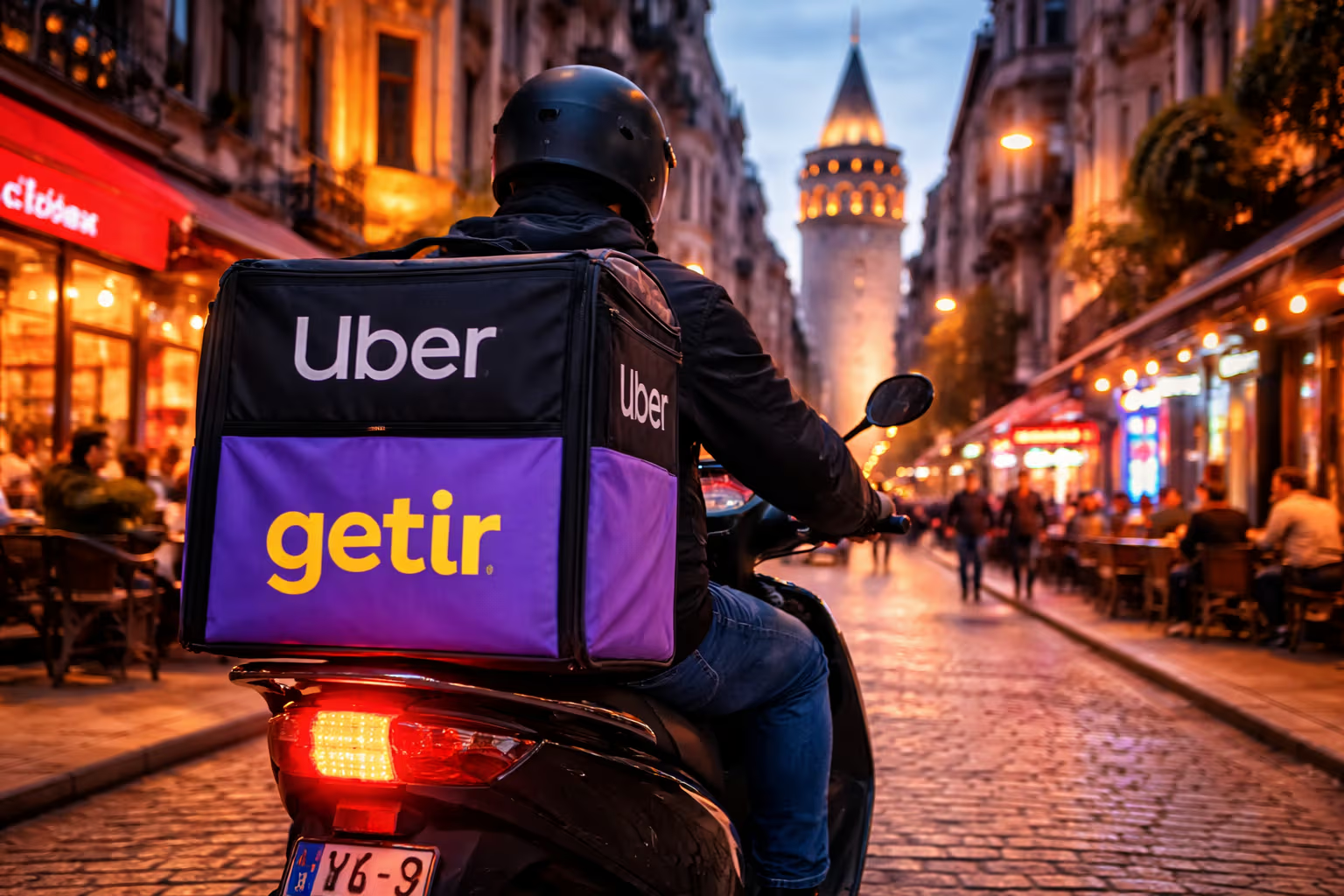
Regulatory approval in Turkey signals Uber's strategic push into global delivery, reshaping the quick-commerce landscape.
Uber's Turkish Delight: Regulatory Nod for Getir Deal Signals a New Global Delivery Playbook
Uber has just secured a crucial regulatory green light in Turkey for a strategic partnership with Getir, the one-time quick-commerce darling. While the deal unfolds thousands of miles away, this approval isn't just a win for Uber in an emerging market; it's a telling sign of a massive shake-up in the global delivery landscape, hinting at how consumer services and competition might evolve even in North America.
Here's what happened: The Turkish Competition Authority has formally approved Uber's deal with Getir, paving the way for a collaboration that will see Getir's extensive grocery and food delivery infrastructure in Turkey integrated with Uber's vast user base and technological platform. This isn't an acquisition, but a partnership, designed to leverage each company's strengths in a highly competitive and capital-intensive sector. For regular people, this could mean more seamless and potentially faster delivery options through a familiar app, consolidating choices rather than fragmenting them.
The approval marks a significant moment for both companies, albeit for different reasons. For Getir, a company that once commanded billions in valuation and aggressively expanded globally, this deal represents a strategic pivot. After a whirlwind period of hyper-growth that saw it launch in markets from New York to London, Getir has been forced to retrench dramatically, exiting key markets like the United States, the United Kingdom, and several European countries amid a brutal venture capital drought and intense pressure to achieve profitability. This partnership allows Getir to maintain a strong presence in its home market, leveraging its existing dark store network and logistics, without the crushing burden of independent operational expansion.
For Uber, the move solidifies its position as a diversified local commerce giant. Beyond its core ride-hailing business, Uber has poured resources into expanding its delivery arm, Uber Eats, which now encompasses restaurant meals, groceries, and even convenience store items. This partnership in Turkey perfectly aligns with Uber's long-term vision of becoming the "super app" for local services, offering everything from rides to dinner to weekly groceries all within a single ecosystem. It's a strategy of strategic alliances and market consolidation, rather than outright acquisition, which can be a more capital-efficient way to expand in challenging geographies.
The Turkish market itself is a battleground, characterized by a young, digitally-savvy population and a highly competitive local delivery scene. By partnering with an established local player like Getir, Uber gains immediate access to a robust logistics network and local market expertise, sidestepping the immense cost and time associated with building such infrastructure from scratch. This approach is increasingly common for global tech behemoths looking to expand without replicating the massive capital burn that plagued many quick-commerce startups during their initial growth phase.
Why This Turkish Deal Resonates in North America
While the immediate impact of this deal is confined to Turkey, its implications ripple far beyond, offering a potent case study for the evolving dynamics of the delivery sector in mature markets like North America. What we're seeing in Turkey is a microcosm of a broader global trend: the consolidation of the quick-commerce industry. After a pandemic-fueled boom, where venture capitalists poured billions into rapid delivery startups promising groceries in minutes, the market is undergoing a harsh correction. Companies that once operated on a "growth at all costs" model are now facing intense pressure to achieve profitability, leading to layoffs, market exits, and strategic partnerships.
Getir's own dramatic retreat from North America just last year, alongside other quick-commerce players like Jokr, is a stark reminder of the unique challenges and cutthroat competition in the region. The high operational costs, fierce competition from established players like Instacart, DoorDash, and Uber Eats, and the sheer cost of acquiring customers proved unsustainable for many of these rapid delivery startups. The Turkish deal, therefore, isn't just about Uber's international strategy; it's a clear signal that even for pioneering quick-commerce firms, survival often means pivoting away from independent, global expansion towards more focused, partnership-driven models in select markets.
For Uber, the Turkey deal underscores a nuanced strategic playbook. In some markets, Uber has acquired competitors (like Postmates in the US) to expand its delivery footprint. In others, like Turkey, it's opting for a partnership that leverages existing local infrastructure. This diversified approach suggests Uber is becoming more agile in how it navigates different regulatory and competitive landscapes globally, choosing the most efficient path to market dominance. It's a pragmatic shift from solely aggressive expansion to strategic collaboration, a model that could inform its approach in other competitive sectors or geographies, even within North America, should new opportunities arise for niche partnerships.
The Future of Quick Commerce: Consolidation and Profitability
The quick-commerce sector, which promised to revolutionize how we shop for everyday essentials, is now firmly in a phase of consolidation. The exuberance of the early pandemic years, characterized by seemingly endless venture capital and rapid geographic expansion, has given way to a more sober reality. Investors are no longer prioritizing growth at any cost; profitability and sustainable business models are now paramount. This shift is forcing companies to re-evaluate their strategies, leading to a landscape dominated by fewer, larger players who can achieve economies of scale and operational efficiency.
For consumers in North America, this trend, as exemplified by deals like Uber-Getir in Turkey, means a potential reduction in the sheer number of distinct delivery apps. While this might lead to less direct competition among a multitude of startups, it could also result in more integrated and reliable services from the established giants. These larger platforms, with their extensive logistics networks and customer bases, are better positioned to offer competitive pricing and broader selection over the long term. For the workers in the gig economy, consolidation could bring a degree of stability, as larger companies might offer more consistent work, though the debate around worker classification and benefits will undoubtedly continue.
The Turkish regulatory approval for Uber's partnership with Getir serves as a potent reminder that the global quick-commerce race is far from over, but the rules of engagement have fundamentally changed. The days of boundless spending and hyper-expansion are largely behind us. What remains is a more strategic, often localized, battle for market share where partnerships and operational efficiencies are key. Uber's move demonstrates a clear understanding of this new reality, opting for a surgical strike in a key market rather than a broad-spectrum assault.
This deal also highlights the continued importance of emerging markets for global tech companies. While North America remains a lucrative core, the growth potential in regions like Turkey, with its young population and increasing digitalization, cannot be overlooked. By securing this partnership, Uber is not only strengthening its position in a vital market but also refining its global playbook for how to expand effectively and profitably in a post-boom quick-commerce world. The long-term success of this collaboration will undoubtedly be watched closely by competitors and investors alike, as it could very well set a precedent for future strategic alliances across the fragmented and evolving landscape of urban logistics and instant delivery.
Frequently asked questions
What does Uber's approval for the Getir deal in Turkey mean?
This approval signifies a major step in Uber's strategic expansion into global delivery services, particularly in emerging markets. It allows Uber to integrate Getir's quick-commerce operations, aiming to enhance its market presence and compete more effectively in the delivery sector.
Why is the Getir deal important for Uber?
It expands Uber's global footprint in the quick-commerce sector and helps it diversify its delivery offerings beyond traditional rides and food, strengthening its market position.
What is Getir's role in this partnership?
Getir, a former quick-commerce leader, will integrate its delivery operations with Uber, leveraging Uber's platform and reach to continue its services in Turkey.
How does this impact the Turkish delivery market?
The deal will likely intensify competition and reshape the landscape of food and grocery delivery services in Turkey, potentially leading to more integrated and efficient offerings.
Is this part of a larger Uber strategy?
Yes, it's seen as a key move in Uber's broader strategy to dominate the global delivery market and respond to evolving consumer demands for quick commerce.
What are the implications for other delivery companies?
This partnership could prompt other delivery companies to pursue similar strategic alliances or acquisitions to maintain competitive relevance in the rapidly consolidating market.