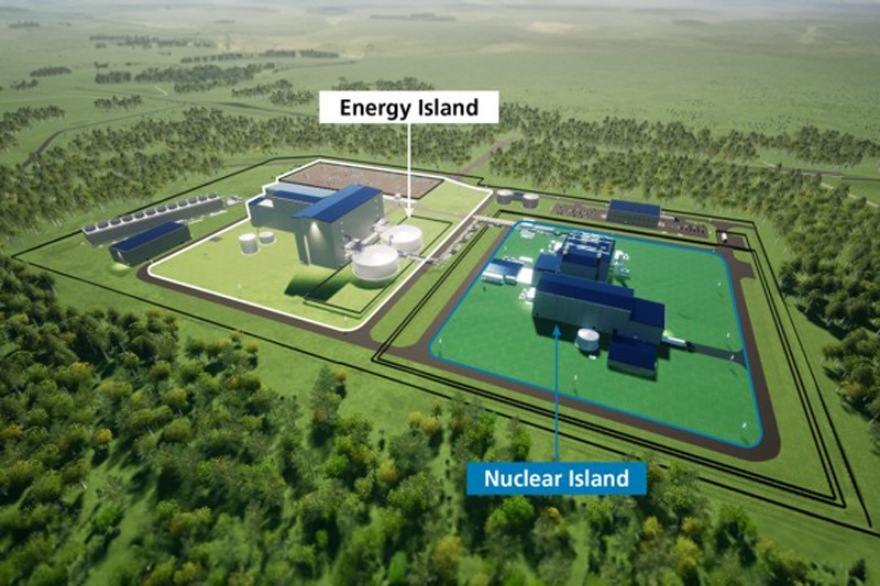
TerraPower's 345 MW Natrium reactor starts Generic Design Assessment in the UK, marking a key step for commercial deployment.
Bill Gates' TerraPower Initiates UK Regulatory Assessment for Advanced Natrium Nuclear Reactor
TerraPower, the advanced nuclear energy company founded by Bill Gates, has initiated the Generic Design Assessment (GDA) process in the United Kingdom for its 345-megawatt Natrium reactor, signaling a significant step towards commercial deployment and providing a potential boost to the global market for Small Modular Reactors (SMRs). This move underscores the escalating strategic importance of innovative nuclear technologies in achieving decarbonization goals and bolstering energy security, attracting renewed investor attention to a sector historically plagued by cost overruns and protracted timelines. The formal design assessment, undertaken with the UK's Office for Nuclear Regulation (ONR) and the Environment Agency (EA), represents a critical regulatory milestone for the sodium-cooled fast reactor, which integrates a molten salt energy storage system capable of flexible power output. The Natrium design, featuring a 345 MWe capacity, is poised to offer a firm, dispatchable power source designed to complement intermittent renewable energy generation, addressing a key challenge in grid stability as nations transition away from fossil fuels. Gates' long-standing commitment to TerraPower, including substantial personal investment, positions the firm as a frontrunner in the advanced nuclear space, aiming to overcome the conventional economic and operational hurdles that have constrained large-scale nuclear projects. The UK's structured GDA process is a multi-phase undertaking, designed to rigorously scrutinize the safety, security, and environmental aspects of new reactor designs before any site-specific licensing can commence. By entering this assessment, TerraPower is aligning with the UK's ambitious net-zero targets and its broader strategy to establish itself as a global leader in advanced nuclear technology, potentially unlocking significant future investment and job creation within the country's burgeoning SMR ecosystem. This regulatory engagement is viewed by proponents as a de-risking event, potentially paving the way for expedited project development once the design is approved.
What It Means
The entry of TerraPower's Natrium design into the UK's rigorous regulatory assessment represents a pivotal moment, challenging the entrenched conventional wisdom that nuclear power is inherently too slow, expensive, and inflexible to serve as a cornerstone of rapid decarbonization. For decades, the industry has contended with monolithic, gigawatt-scale projects characterized by bespoke construction, immense capital outlays, and often decades-long development cycles, leading to investor hesitancy and public skepticism. The Natrium reactor, however, embodies a profound departure from this paradigm, proposing a factory-fabricated, modular approach that promises significant reductions in construction time and cost per megawatt. This modularity, coupled with advanced automation in manufacturing, aims to fundamentally alter the economic calculus for nuclear generation, moving it closer to a cost-competitive position against other firm power sources. This shift is particularly pertinent for global energy markets grappling with the increasing intermittency of renewable energy sources and the acute geopolitical vulnerabilities associated with fossil fuel dependence. The Natrium's integrated energy storage system, utilizing molten salt, allows it to ramp power output quickly and efficiently, providing the flexible baseload power necessary to stabilize grids heavily penetrated by wind and solar. This capability positions advanced SMRs not merely as replacements for existing generation but as critical enablers for a highly renewable grid, creating a new market niche that traditional large-scale nuclear reactors, designed for steady-state operation, cannot easily fill. The implications extend beyond electricity generation, with high-temperature reactors like Natrium also holding substantial potential for industrial process heat applications, such as hydrogen production or chemical manufacturing, further broadening their economic footprint and total addressable market in the drive towards comprehensive industrial decarbonization. The UK's proactive engagement through its Generic Design Assessment process, alongside broader initiatives for future nuclear deployment, signals a robust government commitment that could significantly de-risk private investment in the sector, attracting a new wave of capital previously wary of nuclear's historical financial performance.
TerraPower's Natrium reactor design boasts an electrical output of 345 megawatts, paired with an integrated molten salt energy storage system capable of boosting power to 500 megawatts for over five hours. This flexible dispatch capability is crucial for grid stability, allowing it to complement intermittent renewable energy sources effectively.
Background
TerraPower, founded by Microsoft Corp. co-founder Bill Gates in 2008, has been at the forefront of developing advanced nuclear reactor technologies for over a decade, driven by a vision to provide clean, abundant, and safe energy. The company's genesis was rooted in the recognition that traditional light-water reactor designs, while proven, faced significant economic, operational, and public perception challenges that new approaches could potentially overcome. Gates has consistently advocated for a "new generation" of nuclear power, pouring substantial personal capital and strategic guidance into TerraPower's research and development efforts, focusing on designs that offer enhanced safety, improved fuel efficiency, and reduced waste profiles. His enduring commitment underlines a long-term strategic play in the global energy transition, distinct from short-term venture capital cycles. The Natrium reactor is a sodium-cooled fast reactor (SFR) design, a significant departure from the pressurized water reactors that currently dominate the global nuclear fleet. SFRs utilize liquid sodium as a coolant, operating at atmospheric pressure and considerably higher temperatures than conventional reactors. This characteristic allows for greater thermal efficiency in power generation and opens up opportunities for high-temperature process heat applications, crucial for industrial decarbonization. A defining and innovative feature of the Natrium design is its integral energy storage system, which uses molten salt to store heat generated by the reactor. This system allows the plant to operate flexibly, decoupling the reactor's thermal output from the electrical grid's demand, thereby enabling sophisticated load-following capabilities essential for modern grids increasingly reliant on intermittent renewable sources. This innovation directly addresses a primary critique of traditional nuclear power – its perceived inflexibility – by providing a dispatchable power source that can quickly respond to fluctuations in electricity demand. The technology has undergone extensive research and testing, including a planned demonstration project in Kemmerer, Wyoming, United States, showcasing the company's commitment to proving the commercial viability and operational safety of its advanced concepts on a tangible timeline. This demonstration is a key part of the U.S. Department of Energy's Advanced Reactor Demonstration Program (ARDP), further solidifying its credibility and access to federal support.
The Bear Case
Despite the technological promise and high-profile backing, the deployment of advanced nuclear reactors like Natrium faces significant hurdles, prompting a cautious outlook from some market observers. Regulatory approval, while underway in the UK, remains a protracted and expensive endeavor. Each phase of the Generic Design Assessment (GDA) demands substantial resources, time, and rigorous technical scrutiny, with unforeseen challenges capable of extending timelines. Critics often point to the historical precedent of advanced nuclear prototypes in other nations, which have frequently encountered unforeseen technical complexities and cost escalation during both construction and commissioning, tempering expectations for rapid deployment and cost parity. The very novelty of sodium-cooled fast reactors, while offering inherent safety and efficiency advantages, also introduces new regulatory complexities and potential public perception issues related to the use of liquid metals as a coolant, which may require extensive public engagement and education efforts. Furthermore, the economic viability of Small Modular Reactors, even with modular construction, is still subject to the "first-of-a-kind" cost penalty, meaning initial deployments are likely to be considerably more expensive than subsequent units once manufacturing processes are fully optimized and supply chains matured. This initial cost premium could make it challenging to compete directly with increasingly inexpensive renewable energy, absent significant government subsidies or carbon pricing mechanisms. The competitive landscape for SMRs is also intensifying globally, with multiple developers, including Rolls-Royce in the UK with its pressurized water reactor design, and NuScale Power, pursuing diverse reactor technologies and vying fiercely for government support, limited market share, and critical supply chain partnerships. The ultimate success of TerraPower's Natrium in the UK, and globally, will hinge not just on navigating regulatory approval and demonstrating technical performance, but also on its ability to secure long-term power purchase agreements at competitive prices, against a backdrop of declining renewable energy costs and evolving government energy policies that could shift investment priorities. The risk of project delays, coupled with potential for cost overruns in a first-of-a-kind deployment, remains a significant concern for financial models. Investors and energy policymakers will closely monitor the progress of TerraPower's Natrium design through the UK's GDA process, with successful completion of Phase 1 expected to trigger increased investor confidence and potential for further development agreements. Key upcoming milestones include the transition to subsequent GDA phases, which will delve deeper into design specifics and safety cases, and potential announcements regarding specific site selections or financing structures. The trajectory of this project will serve as a bellwether for the broader advanced nuclear industry, indicating the pace at which next-generation nuclear technologies can move from concept to commercial reality, shaping the future energy mix globally.
Frequently asked questions
What is Bill Gates' nuclear firm doing in the UK?
Bill Gates' firm, TerraPower, has initiated the Generic Design Assessment (GDA) process in the UK for its 345-megawatt Natrium reactor. This is a crucial step towards its commercial deployment in the region.
What is the Natrium reactor?
The Natrium reactor is an advanced 345-megawatt nuclear reactor developed by TerraPower, founded by Bill Gates, designed for enhanced safety and efficiency.
What is the Generic Design Assessment (GDA) process?
The GDA is a rigorous regulatory assessment process in the UK for new nuclear power plant designs, ensuring they meet strict safety and environmental standards.
Why is TerraPower pursuing the GDA in the UK?
Initiating the GDA in the UK is a significant step towards commercial deployment of the Natrium reactor, aiming to tap into the UK's nuclear energy market and contribute to its clean energy goals.
Who founded TerraPower?
TerraPower, an advanced nuclear energy company, was founded by Bill Gates.
What is the potential impact of this development?
This development signals a potential boost to the global market for advanced nuclear energy and could accelerate the transition to cleaner energy sources.