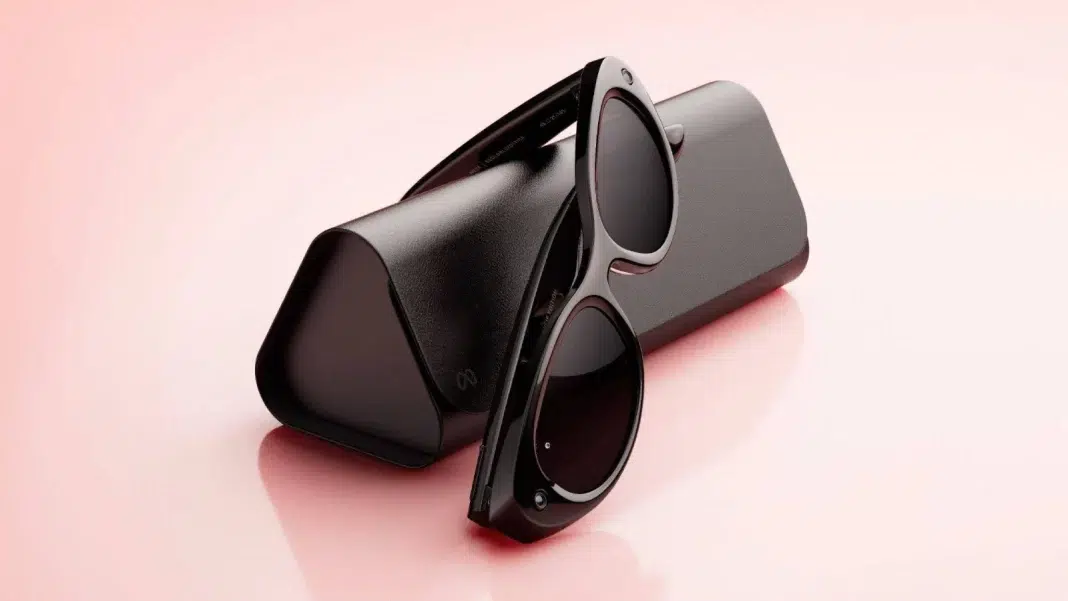
Meta's new smart glasses integrate Muse Spark AI and a 12MP camera, signaling a shift from data centers to consumer faces. Is this a genuine leap or another metaverse gamble?
Does Meta Platforms Inc.’s latest smart glasses, featuring Muse Spark AI and a 12-megapixel camera, represent a genuine leap towards ambient computing or merely another speculative bet in the company's vast metaverse expenditure? The launch signals a critical inflection point for Meta, moving its advanced artificial intelligence capabilities from the data center directly onto consumers’ faces, potentially reshaping the competitive landscape for pervasive AI and wearables while demanding a fresh assessment of its long-term market capitalization.
Meta unveiled its third generation of smart glasses, developed in partnership with Luxottica's Ray-Ban brand, at a recent developer conference. These new devices, starting at an accessible price point of $299, integrate Meta's proprietary Muse Spark AI assistant, offering real-time information, translation, and conversational capabilities directly through audio and visual cues. The inclusion of a 12-megapixel ultra-wide camera enhances the glasses' ability to capture high-quality photos and videos from a first-person perspective, facilitating features like visual search and object identification, pushing the envelope on what a daily-wear device can accomplish without requiring users to disengage from their immediate surroundings.
This iteration moves beyond previous generations by significantly upgrading both hardware and embedded intelligence. The Muse Spark AI, an on-device large language model, processes requests and provides responses in real-time, leveraging the integrated camera for context-aware interactions. For instance, the AI can identify landmarks, translate signs, or provide cooking instructions based on visual input. This immediate, hands-free information access positions the glasses not just as a camera or communication tool, but as a genuine ambient computing interface, a strategic cornerstone in Meta’s broader vision for the future of human-computer interaction and an essential data-gathering conduit for refining its AI models in diverse real-world scenarios.
What It Means
From an ecosystem-insider perspective, this launch is not about selling millions of units next quarter; it is a foundational play in the multi-decade race for the next computing platform. Meta is strategically positioning these glasses as an approachable entry point into augmented reality and pervasive AI, sidestepping the high-friction, high-cost barrier of full-fledged AR headsets like Apple's Vision Pro. This "Trojan horse" strategy aims to normalize face-worn technology and build a critical mass of users accustomed to interacting with AI in an ambient, always-on fashion. The success here is less about immediate revenue and more about cultivating a user base and generating invaluable real-world data to refine Meta’s AI models, which could underpin future, more immersive AR experiences.
The financial implications for Meta are complex. While the initial hardware sales may not significantly move the needle on its multi-billion-dollar revenue, the strategic value lies in market positioning and data acquisition. Establishing dominance in the ambient AI space could unlock substantial future monetization opportunities, from enhanced e-commerce experiences to context-aware advertising, and potentially licensing its AI models. Investors are likely scrutinizing these glasses as a proxy for Meta's long-term AR/AI viability, particularly as the company continues to invest heavily in its metaverse division, which has yet to demonstrate a clear path to profitability. The market reaction will hinge on whether this move is perceived as a prudent, incremental step or another costly diversion in its ambitious, capital-intensive metaverse journey.
$299: The accessible starting price of Meta's new smart glasses, signaling a deliberate strategy to democratize ambient AI and AR adoption, contrasting sharply with premium offerings in the spatial computing market.
Background
Meta's foray into smart glasses is a persistent thread in its overarching narrative to transition beyond 2D screens and dominate the next computing paradigm. The initial Ray-Ban Stories, launched in 2021, served as an exploratory pilot, testing consumer comfort with integrated cameras and basic audio functionality. Those early devices were primarily lifestyle accessories, capturing photos and short videos, and largely lacked sophisticated AI. This new generation, however, represents a significant evolution, leveraging the vast advancements in large language models and computer vision that have characterized the past two years of AI development.
The development of the Muse Spark AI is intrinsically linked to Meta's broader investment in artificial intelligence, including its open-source Llama models. By integrating an on-device AI, Meta is addressing the latency and privacy concerns associated with cloud-only AI assistants. This local processing capability, combined with the glasses' form factor, positions Meta to compete directly with Google's various AI initiatives and Apple's rumored future AR devices. The company's commitment to building out its AI infrastructure and models is a multi-year, multi-billion-dollar endeavor, with these glasses serving as a crucial hardware manifestation of that strategic imperative.
The Stakes
What strikes me here is the profound market context this product inhabits. The launch intensifies the nascent but rapidly escalating competition in ambient computing. Apple's Vision Pro, with its premium price and full immersion, targets a different segment, but Meta's approach, focused on seamless integration into daily life, poses a more direct challenge to the general consumer market for intelligent wearables. The battle for the "face computer" is not just about hardware sales, but about who controls the user interface, the data flow, and ultimately, the next generation of digital interaction. Google, with its Android ecosystem and AI research, remains a formidable competitor, even if its hardware plays have been more fragmented.
My read is that Meta is playing a long game, investing in the infrastructure and user habits required for a future where digital and physical realities are seamlessly intertwined. The success of these glasses will not be measured by units sold alone, but by the extent to which they normalize on-body AI, influence developer adoption for new use cases, and gather the diverse, real-world data necessary to leapfrog competitors in AI model sophistication. The integration of AI into such a personal, always-on device also inevitably raises significant privacy and ethical considerations, a challenge Meta must navigate adeptly given its past regulatory scrutiny. These concerns, if not proactively addressed, could stifle adoption and invite further governmental oversight, impacting Meta's brand equity and market valuation.
The next few quarters will provide crucial insights into the market's reception of Meta’s latest smart glasses. Key indicators to watch include initial sales figures, user engagement metrics, and, critically, developer interest in building applications that leverage the Muse Spark AI and camera capabilities. Commentary from Meta's leadership during upcoming earnings calls regarding strategic priorities for its Reality Labs division, particularly around the pace of AI integration and user growth for these ambient devices, will be essential for investors to gauge the long-term trajectory and potential financial returns on this significant bet.
Frequently asked questions
What are the key features of the new Meta Glasses?
The new Meta Glasses feature Muse Spark AI and a 12-megapixel camera. They are designed to bring advanced artificial intelligence capabilities directly to consumers for an ambient computing experience.
What is Muse Spark AI?
Muse Spark AI is Meta's advanced artificial intelligence capability integrated into the new smart glasses, moving AI processing from data centers to a wearable consumer device.
What is the camera resolution of the Meta Glasses?
The Meta Glasses come equipped with a 12-megapixel camera.
What is the price of the new Meta Glasses?
The article details the price of the new Meta Glasses along with their full specifications and market implications.
Do the Meta Glasses represent a step towards ambient computing?
The article questions whether the Meta Glasses' launch with Muse Spark AI genuinely represents a leap towards ambient computing or is another speculative bet in Meta's vast metaverse expenditure.
How do Meta Glasses impact Meta's metaverse strategy?
The launch of Meta Glasses is seen as a critical inflection point, moving Meta's AI capabilities onto consumers' faces, which could significantly influence its broader metaverse strategy and investments.