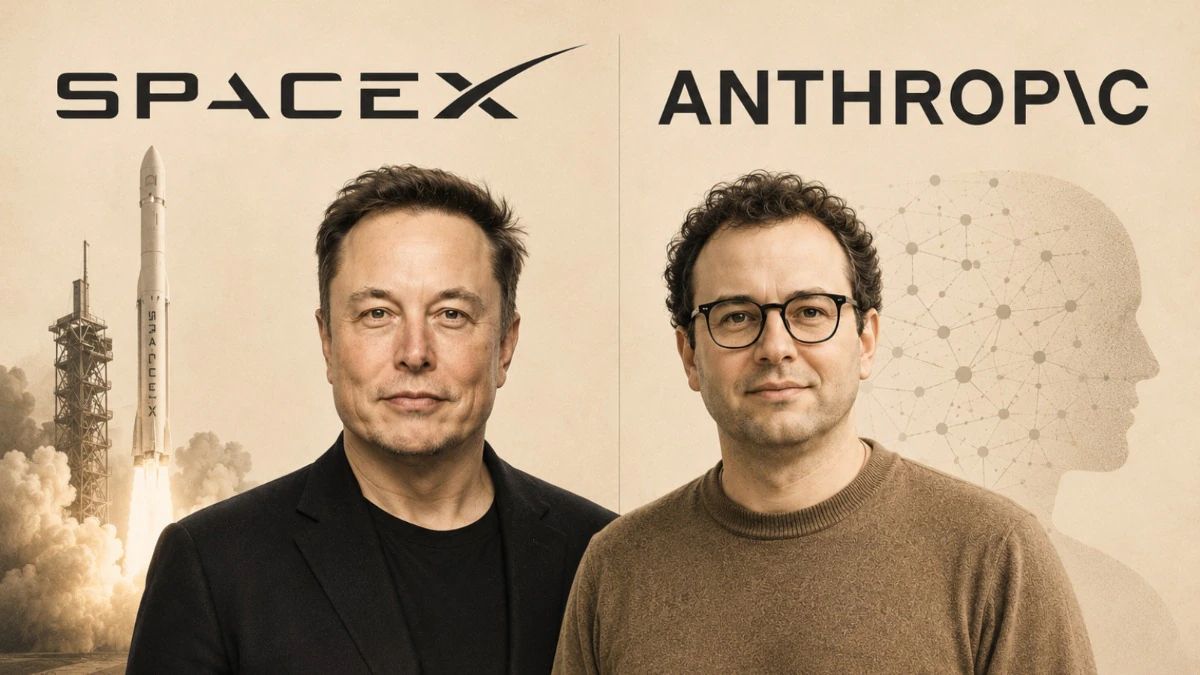
OpenAI's GPT-5.6 outpaces Anthropic's Claude Fable 5 in new benchmarks, marking a significant stride in the competitive AI race.
OpenAI's latest model, GPT-5.6, has surged ahead of rival Anthropic's Claude Fable 5 in a recent benchmark measuring AI capabilities. This achievement, hailed by OpenAI as a "big milestone," underscores the relentless and intensely competitive evolution of artificial intelligence, where even narrow gains can signal significant shifts in the race for AI supremacy.
OpenAI announced on July 13, 2026, the triumph of GPT-5.6, which the company hailed as a 'big milestone.' This multifaceted leap forward positions OpenAI at the vanguard of a technological arms race that continues to redefine digital capabilities and enterprise potential.
What Does a Benchmark Reveal?
A benchmark leaderboard, an independent assessment platform, evaluates advanced AI models. The benchmark provides a dynamic ranking of AI models based on their performance in various challenges. This system offers a transparent, albeit ever-changing, snapshot of capabilities in a rapidly advancing field.
GPT-5.6 emerged at the pinnacle of this leaderboard, placing it above Anthropic's Claude Fable 5. The updated rankings illustrated the tight competition at the top tier of AI development.
For developers and businesses, this benchmark win suggests a tangible improvement in AI's capabilities. Such a capability can dramatically accelerate development cycles, reduce human error, and democratize access to sophisticated design tools, fundamentally altering workflows in software engineering and creative industries.
The Escalating OpenAI-Anthropic Rivalry
The rivalry between OpenAI and Anthropic has become a defining narrative in the frontier AI landscape. Both companies, founded by former OpenAI researchers, are locked in a high-stakes contest to develop the most advanced and capable large language models (LLMs). This competition is not merely academic; it drives innovation, attracts top talent, and shapes the future of AI applications across global industries.
Anthropic's Claude Fable 5, previously a strong contender, now faces a direct challenge to its perceived lead in certain domains. The continuous back-and-forth in benchmark performance underscores the intense pressure on both entities to push the boundaries of AI, vying for market share and technological prestige. This dynamic ensures a constant cycle of innovation, albeit with significant investment in research and development.
This competitive environment is a boon for consumers and enterprises, fostering rapid advancements in AI capabilities. However, it also raises questions about the sustainability of such an accelerated pace and the potential for a winner-take-all scenario as models become increasingly sophisticated and resource-intensive to develop and deploy. The US market, with its significant venture capital and tech giants, is a primary battleground for this fierce competition.
What is the Strategic Significance of the GPT-5.6?
OpenAI's introduction of GPT-5.6 represents a strategic diversification of its offerings, targeting different segments of the burgeoning AI market. This approach acknowledges that a single, monolithic AI model cannot efficiently serve the varied needs of developers and enterprise users, who prioritize different combinations of capability, cost, and speed.
GPT-5.6 is positioned as OpenAI's latest AI model.
OpenAI aims to make advanced AI more accessible and economically viable for a broader range of businesses, balancing capability with operational efficiency.
This tiered approach allows OpenAI to address diverse customer requirements, maximizing its market reach.
This strategy of segmenting the market with specialized models mirrors the evolution seen in other mature technology sectors, such as microprocessors or cloud computing services. It suggests a maturing AI industry where differentiation based on performance, cost, and specific use-case optimization becomes increasingly crucial for sustained growth and competitive advantage.
How Do Benchmarks Influence AI Development and Adoption?
Benchmarks play a pivotal role in the AI ecosystem, serving multiple functions beyond simple scorekeeping. They provide objective, albeit often narrow, metrics for comparing models, which is crucial for developers making informed choices about which AI tools to integrate into their platforms. For researchers, benchmarks highlight areas of strength and weakness, guiding future development efforts.
However, the reliance on benchmarks also presents a paradox. While they offer quantifiable progress, they can sometimes incentivize "teaching to the test," where models are optimized specifically for benchmark performance rather than broader, real-world utility. This can lead to a disconnect between a model's benchmark score and its practical effectiveness in unpredictable, dynamic environments. The significance of a benchmark win, even when hailed as a 'big milestone,' can be a subject of discussion due to this tension.
For businesses and policymakers, these benchmarks are indicators of technological leadership and national competitiveness. The US government, for instance, closely monitors AI advancements, understanding their implications for economic growth, national security, and societal well-being. A strong showing by a US-based company like OpenAI reinforces the nation's position as a global leader in AI innovation.
What Are the Broader Implications for the AI Landscape?
The continuous leapfrogging in AI capabilities, exemplified by GPT-5.6's ascendancy, points to several significant trends shaping the future of artificial intelligence.
Secondly, there is a growing awareness and industry commitment to responsible AI development. As AI models become more powerful and integrated into critical infrastructure, ensuring their ethical behavior, robustness against misuse, and alignment with human values becomes paramount. This is a crucial area of discussion and development in the United States, with significant governmental and academic attention.
Finally
Frequently asked questions
What is the significance of GPT-5.6 beating Claude Fable 5?
GPT-5.6 beating Claude Fable 5 signifies a major advancement for OpenAI in the highly competitive artificial intelligence landscape. This achievement highlights new benchmarks in AI capabilities and positions OpenAI's model as a leading force in the ongoing race for AI supremacy.
Which AI model did GPT-5.6 surpass?
GPT-5.6 surpassed Anthropic's Claude Fable 5 in recent AI capability benchmarks.
Who announced the GPT-5.6 milestone?
OpenAI announced the achievement, hailing it as a "big milestone" in artificial intelligence.
When was the GPT-5.6 achievement announced?
OpenAI announced the GPT-5.6 achievement on July 13, 2026.
What does this mean for the AI industry?
This achievement underscores the relentless and intensely competitive evolution of artificial intelligence, where even narrow gains can signal significant shifts in the race for AI supremacy.
Is Claude Fable 5 from OpenAI?
No, Claude Fable 5 is developed by OpenAI's rival, Anthropic.