Microsoft CEO cautions businesses about the critical challenge of protecting proprietary knowledge when adopting artificial intelligence.
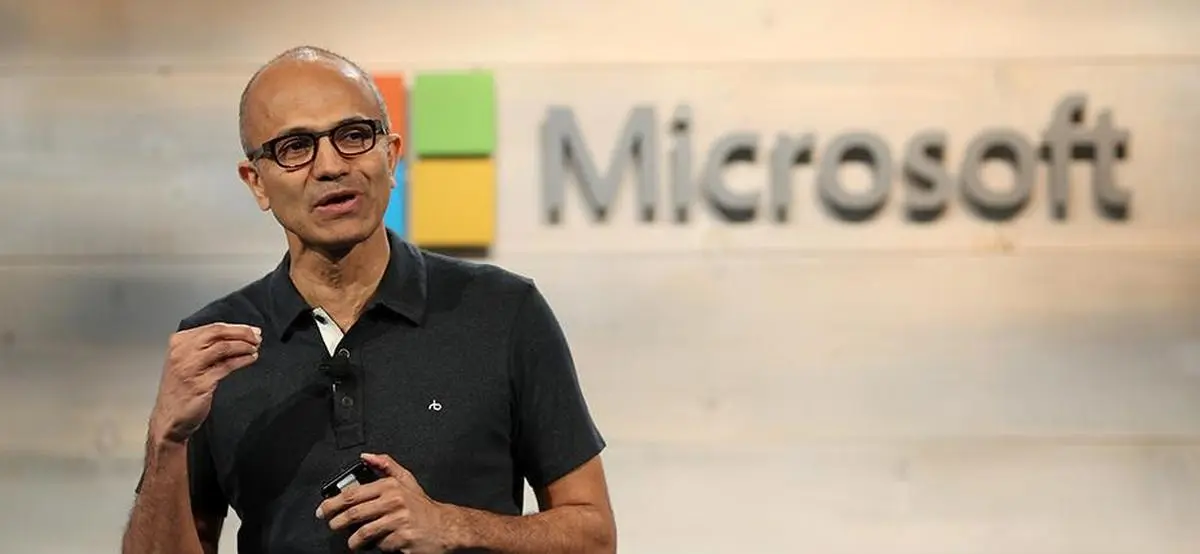
Microsoft CEO Satya Nadella recently issued a significant warning, highlighting a looming challenge for businesses embracing artificial intelligence: the risk of inadvertently surrendering their most valuable proprietary knowledge. This caution from the head of a global tech giant underscores a critical juncture for companies in the AI age, particularly those across the rapidly digitising economies of India and Southeast Asia. For many founders, this isn't just a technical problem, but a strategic dilemma that could define their future competitive edge.
Microsoft CEO Satya Nadella warns businesses using AI face a "reverse information paradox," risking their proprietary knowledge to improve models.
This challenge demands a strategic shift for Indian and Southeast Asian enterprises to safeguard their competitive advantage and foster local AI innovation.
For Satya Nadella, the moment that sparked this crucial warning was observing the evolving dynamics between businesses and AI providers. He posits that while companies invest significant capital to access powerful AI models, they simultaneously provide the very data and insights that help these models learn and improve. This creates an insidious loop where unique institutional know-how, painstakingly built over years, becomes the training fuel for general-purpose AI, potentially eroding a company’s distinct advantage. It’s a moment of reckoning for how businesses approach their digital transformation. What started as a small idea in a research lab, AI has rapidly become a foundational technology, prompting businesses worldwide to integrate it into their operations. However, Nadella argues that this integration comes with a hidden cost, defining it as the "reverse information paradox." In the AI age, Nadella suggests, this dynamic is inverted. The buyer—the business adopting AI—risks giving away its own unique knowledge simply to make the purchased AI useful. This means businesses are effectively paying twice for intelligence: first with their financial investment in AI services, and then again with something even more valuable—their proprietary knowledge. The more a company wants an AI model to perform optimally for its specific needs, the more of its unique data, processes, and insights it must feed into the model. This "exhaust"—the prompts, corrections, and interactions users have with the AI—is distilled into the model’s learning, becoming part of its institutional know-how. This process creates an "information asymmetry" where AI providers gain profound insights into their customers' operations, while the customers themselves have little visibility into what the providers learn from their data. For the burgeoning tech ecosystems in India and Southeast Asia, Nadella's warning carries particular weight. Startups and established enterprises across Bengaluru, Jakarta, Singapore, and beyond are rapidly adopting AI to innovate and scale. Their competitive advantage often lies in unique datasets, localized market understanding, and bespoke operational processes. If this invaluable intellectual property is inadvertently fed into generalized AI models, it could dilute their distinctiveness, making it harder to maintain a competitive edge against global players or even emerging local rivals who might benefit from a more generalized, improved AI without having contributed the underlying proprietary knowledge. This challenge goes beyond mere data privacy; it touches upon the very foundation of strategic competitive differentiation. Companies are not just providing data; they are providing context, nuance, and the 'secret sauce' that makes their operations efficient or their products innovative. This raises critical questions for founders about their AI adoption strategies: Should they prioritize building in-house AI capabilities, even if more expensive and time-consuming? How can they ensure data governance and sovereignty when leveraging third-party AI platforms? The imperative to protect proprietary knowledge could spur greater investment in secure, private AI solutions and on-premise deployments, moving away from purely cloud-based, general-purpose models. The implications extend to the broader digital transformation narrative in the region. Governments in India and across Southeast Asia are increasingly focused on data sovereignty and building robust digital public infrastructure. This includes discussions around national AI strategies and developing indigenous foundational models. Nadella's "reverse information paradox" adds another layer of urgency to these conversations, emphasizing the need for frameworks that not only protect personal data but also safeguard corporate and national intellectual property in the AI era. My read on this is that it signifies a maturation point for the AI industry, compelling businesses to think beyond immediate utility and consider the long-term strategic implications of their AI partnerships. It’s a call for greater transparency from AI providers regarding data usage and learning mechanisms, and for businesses to implement robust data governance strategies from the outset. This isn't about shunning AI, but about deploying it intelligently and securely, ensuring that the very tools designed to enhance competitiveness don't inadvertently undermine it. This includes exploring approaches like federated learning, where models are trained on decentralized data without the data ever leaving the company's premises, or secure enclaves that provide isolated computation environments. This shift in perspective is vital for India and its regional neighbours, which are poised to become global leaders in AI innovation and adoption. By strategically navigating this "reverse information paradox," Indian founders and enterprises can not only protect their intellectual assets but also foster a more robust, trustworthy, and sovereign AI ecosystem. It challenges entrepreneurs to think critically about where their true value lies and how to leverage AI as an accelerator, not a drain, on their unique strengths, ultimately paving the way for a more secure and innovative digital future for the nation and the sector.
Frequently asked questions
What is Satya Nadella's main warning about AI?
Satya Nadella, Microsoft CEO, warns that companies integrating AI solutions risk inadvertently surrendering their most valuable proprietary knowledge and intellectual property to external models.
Why is AI a risk to proprietary knowledge?
AI models, especially large language models, are often trained on vast datasets. When companies feed their unique, proprietary data into these systems, there's a risk this information could be learned or exposed, diminishing its exclusive value.
Which type of companies are most affected by this AI warning?
Companies across all sectors, particularly those in rapidly digitizing economies and those heavily reliant on unique datasets or trade secrets, face this challenge when adopting AI technologies.
How can businesses mitigate the risk of losing proprietary data with AI?
Businesses should implement robust AI governance frameworks, utilize secure private AI models, ensure strict data anonymization, and carefully review terms of service for AI platforms to protect their intellectual property.
What did Microsoft CEO Satya Nadella say about AI and valuable assets?
Nadella stated that by using AI, companies are at risk of 'handing over their most valuable asset,' referring to their unique proprietary knowledge and data that forms their competitive edge.
Is this warning from a global tech giant important for startups?
Absolutely. Startups often rely heavily on unique IP for their competitive advantage, making Nadella's warning particularly crucial for them to consider data security and IP protection strategies early in their AI adoption.