The narrative surrounding India’s Global Capability Centres (GCCs) has never been defined by a single, isolated milestone. Instead, it has evolved through a series of quiet, compounding shifts—each one progressively moving the needle far beyond its initial blueprint. What originally began over two decades ago as an operational model built purely on cost arbitrage has matured into something far more profound. Today, global enterprises rely heavily on Indian GCCs to anchor and execute their most consequential corporate decisions.
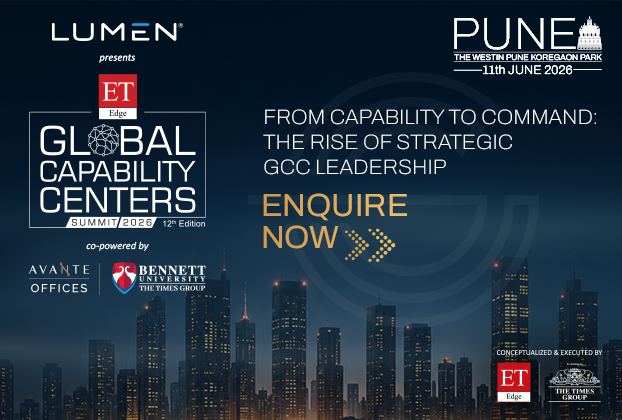
Yet, public discourse and traditional industry conversations have often struggled to keep pace with the rapid reality unfolding on the ground. Bridging this specific knowledge gap is exactly what the ET Edge GCC Summit has dedicated itself to over its past eleven editions. Now, in June 2026, the prestigious 12th Edition of the ET Edge GCC Summit 2026 returns. Co-powered by Avante Spaces, this landmark event lands in the thriving hub of Pune to map out the next frontier of global business leadership.
Why Pune? The Rise of Maharashtra’s Tech and Engineering Powerhouse
Historically celebrated for its deep-rooted manufacturing heritage and automotive legacy, Pune has successfully transformed its economic identity. Driven by a robust network of premier academic institutions and an influx of top-tier professional talent, the city has quietly engineered a premier digital ecosystem.
Today, Pune stands proud as a primary destination for global enterprises, hosting more than 120 active GCCs. These centers span a diverse array of critical sectors, including:
Banking, Financial Services, and Insurance (BFSI): Driving core financial operations, fintech innovations, and global risk management models from Pune.
Automotive & Engineering: Leveraging Pune’s historic manufacturing legacy to pioneer next-generation mobility solutions and smart engineering.
Information Technology (IT) Services: Scaling complex cloud infrastructure and enterprise software management.
Pharmaceuticals & Life Sciences: Managing global clinical data, regulatory compliances, and digital health initiatives.
Digital Technology & Analytics: Spearheading data-driven solutions that power parent organizations across the globe.
This dense ecosystem is not just growing in sheer scale; it is rapidly maturing in the sophistication and strategic nature of the work it delivers. The government of Maharashtra has recognized this immense potential and integrated it into the state's macroeconomic vision. The state government has set an ambitious target to establish 400 new GCCs by 2030. This initiative is backed by an estimated investment of approximately ₹50,600 crore and is projected to create nearly four lakh high-skilled jobs.
To turn this vision into reality, the government has rolled out aggressive fiscal and structural incentives. These include comprehensive capital subsidies, extended rental support, tailored payroll benefits, and targeted infrastructure investments. These measures signal a governance structure that deeply understands the economic stakes and is fully committed to positioning Pune at the absolute center of this regional ambition.
The Inflection Point: Moving from Capability to Command
The Indian GCC sector has officially completed its first major evolutionary transformation, successfully transitioning from a basic operational cost center into a highly valued capability hub. However, the next shift currently underway is arguably much more significant. Global enterprises are no longer merely asking Indian centers to execute pre-defined mandates; they are asking them to own them entirely.
The industry is witnessing a fundamental pivot where teams are moving swiftly from delivering outcomes to defining them, and from being embedded in global strategy to actively driving it from the front lines. The core themes shaping the upcoming summit discussions in Pune reflect this exact strategic transition:
Generative AI & Advanced Analytics: Evaluating how cutting-edge AI frameworks are fundamentally redefining enterprise-wide decision-making, accelerating operational productivity, and carving out long-term competitive advantages.
The Skills-First Global Workforce: Building agile, globally integrated teams designed to fulfill the talent demands of the next decade of GCC growth.
Cyber Resilience & Digital Governance: Strengthening cybersecurity architectures and navigating increasingly complex international compliance and regulatory environments.
Mainstreaming ESG Frameworks: Transitioning Environmental, Social, and Governance (ESG) mandates from a parallel corporate agenda into a core element of how GCCs operate, innovate, and report.
Driving Mandate Ownership: Unpacking the structural and leadership shifts required for a GCC to step beyond standard operational execution and take full accountability for global enterprise outcomes.
The fundamental nature of the conversation has permanently changed. The global business community no longer questions whether India can deliver high-quality work at a massive scale—that answer has been well established for years. The defining question of 2026 is entirely different: How does India lead?
Recognising India’s Most Impactful GCC Leaders
A premier highlight of the upcoming event—Lumen presents the 12th Edition of the ET Edge GCC Summit 2026, co-powered by Avante Spaces and Bennett University—will be the formal celebration of trailblazing organizations and executives. The highly anticipated ‘Impactful GCCs of India’ programme goes far beyond assessing basic operational efficiency or headcount metrics.
Instead, this specialized recognition framework honors organizations that have demonstrated measurable progress across several key pillars:
Strategic Innovation: Developing patentable technologies, proprietary software, and new business products directly from India.
AI Leadership: Successfully pioneering and deploying Generative AI and automation tools across global enterprise workflows.
Talent Development: Creating robust leadership pipelines and upskilling initiatives that prepare workforces for future technological shifts.
Corporate Governance: Demonstrating exceptional compliance, risk management, and ethical oversight in a complex digital world.
Enterprise Transformation: Playing a direct, measurable role in restructuring global operating models and corporate strategies.
In an industry sector that is too frequently judged by numbers alone, this recognition program asks a completely different set of questions. By doing so, it actively helps define what true, modern enterprise leadership from India looks like.
Looking Ahead: The Next Phase of India’s GCC Journey
The macroeconomic trajectory of the industry remains incredibly steep. India’s GCC market is formally poised to cross a valuation of $110 billion by 2030. While that financial figure is staggering, the more compelling narrative lies right beneath the surface numbers. GCCs have moved from the periphery to the absolute center of global enterprise strategy.
Today, leadership teams based out of major Indian urban clusters directly shape global product roadmaps, orchestrate cybersecurity architectures, select enterprise automation systems, manage large-scale AI deployments, and redesign global operating models. The high-caliber talent that builds these outcomes is concentrated here, supported by a steadily strengthening domestic policy environment. Furthermore, key urban tech hubs—including Bengaluru, Hyderabad, Delhi, Mumbai, and Pune—are continuously developing the sophisticated physical and digital infrastructure required to sustain this momentum over the long term.
The Lumen presents 12th Edition of the ET Edge GCC Summit 2026, co-powered by Avante Spaces and Bennett University enters the industry dialogue exactly at this historic turning point. While the first eleven editions meticulously tracked how India built up its foundational GCC capabilities, this year's summit in Pune marks the beginning of an entirely new era. It shifts the focus to a much larger inquiry: what India will now do with the global command it has rightfully earned.