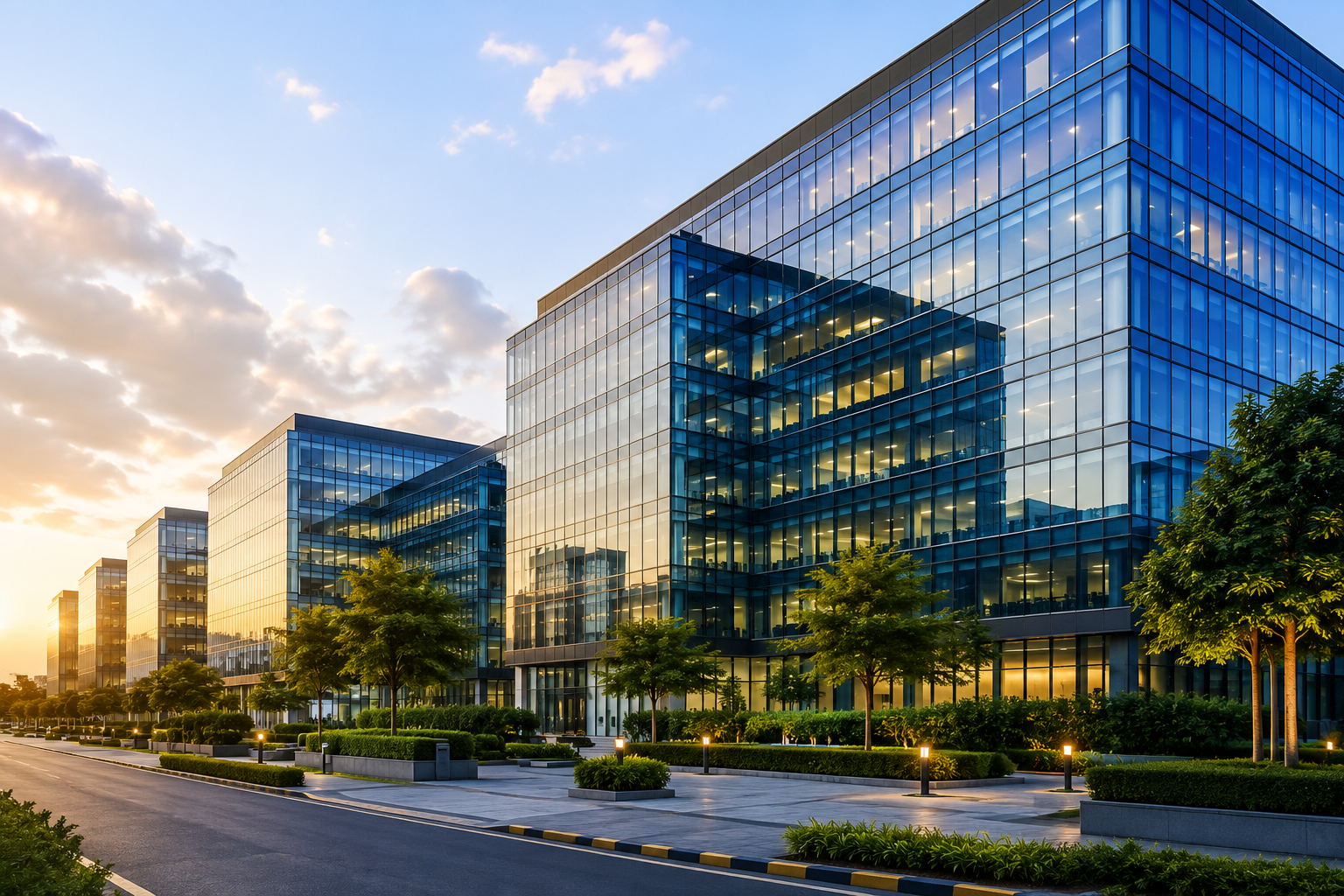
India’s commercial real estate sector has achieved an unprecedented milestone, driven by robust corporate expansion and a powerful surge in multinational activity. According to the comprehensive Q2 2026 market intelligence report released by Vestian, a leading global workplace solutions and property advisory firm, pan-India office space absorption soared to an all-time high of 23.9 million sq ft during the second quarter of 2026.
This historic milestone represents a 27% year-on-year growth compared to Q2 2025 and an 11% sequential increase from the previous quarter.
While demand scaled new heights, supply infrastructure witnessed a major post-winter rebound. New project completions across India's top seven commercial hubs jumped by 53% quarter-on-quarter to 14.9 million sq ft.
However, because leasing velocity heavily outpaced construction deliveries, the demand-supply gap widened to a massive 9.0 million sq ft. This structural imbalance has triggered a notable market shift, driving pan-India average vacancy rates down by 105 basis points and pushing average rental values up by 3% to 9% over the previous year.
Macroeconomic Overview: A Definitive Shift to a Developer-Driven Market
The broadening gap between commercial spatial supply and enterprise demand indicates that India's office ecosystem is transitioning into a developer-driven market. Property developers are scaling up construction activities across key industrial zones, yet the immediate demand for premium space continues to outstrip completions.
As high-quality office space becomes increasingly limited, major corporate tenants are executing pre-leasing agreements for under-construction properties to safeguard their long-term growth plans.
Regional Breakdown: Southern Hubs Lead National Spatial Absorption
Commercial leasing activity remained highly concentrated within India’s primary economic engines. Bengaluru, Delhi-NCR, and Hyderabad collectively commanded a dominant 63% share of total nationwide absorption in Q2 2026.
Southern commercial corridors—comprising Bengaluru, Chennai, and Hyderabad—strengthened their position, accounting for 54% of all leasing activity, up from 49% in Q1 2026. Conversely, western business hubs saw their market share ease from 35% to 25%, primarily due to a temporary moderation in large-scale leasing velocity across Mumbai.
On the corporate real estate supply side, infrastructure recovery was anchored by Bengaluru, Pune, Mumbai, and Delhi-NCR. Together, these four regions contributed nearly 85% of total new project completions during the quarter, with Bengaluru alone delivering 40% of the national supply.
Sectorial Dynamics: GCC Expansion and Flexible Workspaces Anchor Demand
The modern corporate tenant profile across India is anchored by technology enterprises, flexible workspace aggregators, and global captive centers:
IT & ITeS Dominance: The technology sector remains the primary engine of commercial demand, accounting for 41% of total spatial absorption during the quarter.
Flex Space Acceleration: Managed offices, co-working networks, and flexible workspaces held the second-largest market share at 22%. Flex operators ranked as one of the top two occupier segments across all seven cities and emerged as the single largest demand driver in Delhi-NCR.
Global Capability Centers (GCCs): GCC setups acted as a major catalyst for premium space, leasing 12.5 million sq ft to claim 52% of total national absorption. Bengaluru, Hyderabad, and Pune together accounted for 72% of this multinational footprint.
BFSI Steady Growth: Financial institutions and banking corporations secured a steady 8% share of the total leasing volume, supported by the ongoing expansion of domestic and international financial entities.
Sustainability Focus: The rise of corporate ESG mandates, alongside tenant preferences for sustainable office spaces, resulted in green-certified buildings securing 87% of total leasing volume, up from 85% in the previous quarter.
In-Depth Micro-Market Analysis
“India’s office market continued its strong growth momentum in Q2 2026, driven by resilient occupier demand," stated Shrinivas Rao, FRICS, CEO of Vestian. "To meet this rising demand, developers significantly scaled up construction activities across major cities, leading to substantial new project completions and launches. The ongoing expansion of Global Capability Centers (GCCs), along with steady demand from technology companies and managed office providers, is expected to keep the commercial office market buoyant moving forward.”
Bengaluru
The Silicon Valley of India retained its clear leadership position, commanding 27% of total pan-India absorption. Local demand was highly concentrated, with the Outer Ring Road (ORR) submarket driving 76% of the city's total leasing activity.
Delhi-NCR
Evolving into the second-largest office market during the quarter, Delhi-NCR experienced robust spatial demand. The micro-market of Gurugram led regional growth, contributing 67% to the capital region's total absorption, heavily supported by flexible office operators.
Hyderabad
The city's tech-focused Peripheral Business District West (PBD-West) dominated local activity, accounting for 96% of Hyderabad's absorption. Additionally, the city solidified its position as a global hub, contributing a significant 21% to the total pan-India absorption by GCCs.
Pune
Pune recorded the highest year-on-year demand growth among the top seven cities, with absorption surging by 178% compared to Q2 2025, driven by substantial requirements from tech enterprises and global engineering centers.
Chennai
Supported by technology firms and co-working providers, Chennai maintained one of the healthiest operational environments in the country, recording a remarkably tight vacancy rate of just 3.4%.
Mumbai & Kolkata
Kolkata saw its leasing activity more than double sequentially, with the Peripheral Business District (PBD) securing 96% of regional demand. Meanwhile, Mumbai recorded a quieter quarter, with an absorption of 2.1 million sq ft—its lowest in 12 quarters—though the BFSI sector remained a core pillar, driving 36% of the financial capital's activity.
About Vestian
Headquartered in Chicago, Vestian is a leading occupier-focused global workplace solutions and commercial property consultancy firm specializing in the office, residential, industrial, retail, and hospitality sectors. Operating across the United States, India, China, the United Kingdom, Sri Lanka, and the Middle East, Vestian delivers customized, strategic real estate advisory solutions. It is the only global property solutions firm to hold quality management and environmental health and safety certifications across ISO 9001, ISO 14001, ISO 45001, and ISO 37001 standards.