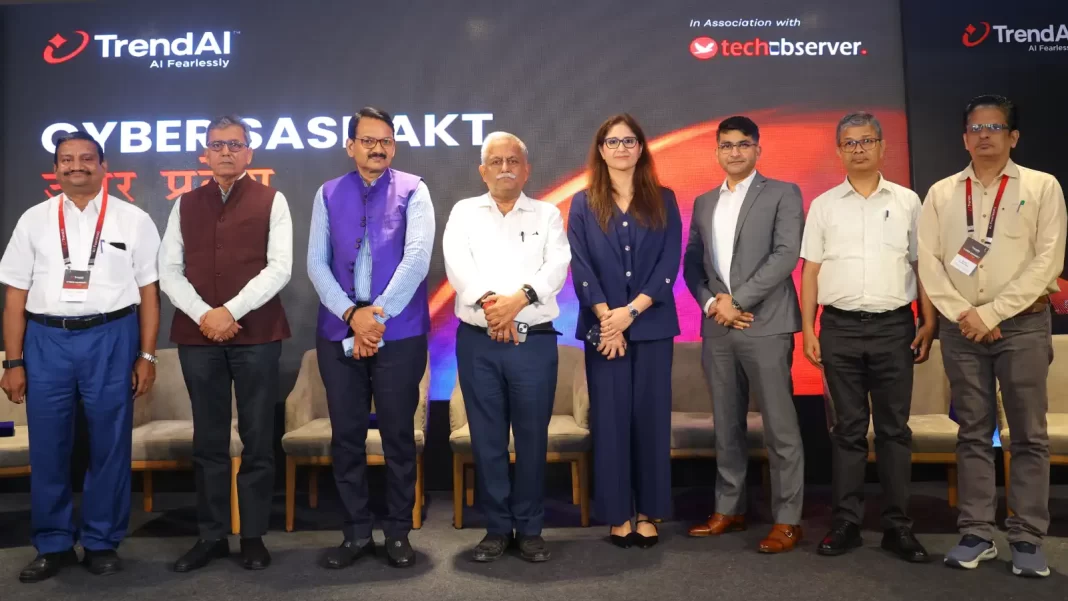
TrendAI, a global leader in AI-driven cybersecurity, in strategic partnership with Tech Observer, successfully hosted the Cyber Sashakt Uttar Pradesh conclave in the state capital of Lucknow. The high-profile event converged senior government dignitaries, elite cybersecurity analysts, and enterprise technology leaders to deliberate on safeguarding the state's expanding digital infrastructure, public data utilities, and systemic cyber resilience.
Organized under the definitive central theme, "Building a Secure Uttar Pradesh for Secure India," the conclave addressed the critical imperative of aligning Uttar Pradesh's rapid digital transformation with robust, predictive cybersecurity frameworks, institutional readiness, and stringent citizen data protection.
Aligning High-Speed Digitization with Sovereign Cyber Defense
As India's most populous state accelerates its evolution into a trillion-dollar sub-national economy, its digital attack surface expands exponentially. The conclave highlighted that securing digital assets is no longer just an IT operational requirement but a core strategic pillar of national security. With 25 crore (250 million) citizens increasingly relying on e-governance, digital banking, and connected public utilities, establishing an unbreachable digital fortress is paramount.
The discussions underscored that the traditional perimeter of security has permanently shifted. In an interconnected cloud-first ecosystem, public assets must be guarded using zero-trust architectures and automated threat-hunting capabilities to prevent systemic disruptions before they occur.
Urgent Calls for Mass AI Literacy and Academic Integration
Gracing the conclave as the Chief Guest, Shri Awanish Kumar Awasthi, Advisor to the Honourable Chief Minister of Uttar Pradesh, delivered a compelling address emphasizing the total virtualization of modern threats and the necessity of immediate, widespread AI literacy across all echelons of society.
"Everything is now in the digital domain. You do not need to physically move to create problems of any nature," stated Shri Awanish Kumar Awasthi. He urged students, working professionals, and public institutions to embrace artificial intelligence as an mandatory survival skill. "Whether you are an engineer, a doctor, or a social scientist, if you do not learn AI, your work will not move forward. I am 64 years old and I am trying to learn it myself. Please, study AI."
To support this vision, the Government of Uttar Pradesh is actively backing several future-ready capacity-building initiatives:
The Gorakhpur Center of Excellence: A specialized state hub dedicated entirely to advanced research in AI, cybersecurity architectures, unmanned aerial vehicles (drone technology), and industrial 3D printing.
Early-Age AI Curriculum: Introducing foundational artificial intelligence and digital hygiene education directly into early school years to cultivate an indigenously secure digital generation.
Hyperlocal Innovation Ecosystems: Encouraging regional tech startups and academic institutions to collaborate on building localized cyber defense tools tailored to Indian public infrastructure.
Shifting From Reactive Defense to Predictive, AI-Enabled Resilience
The operational philosophy of securing state-level data requires a profound shift in how threat intelligence is gathered and utilized. Security architectures must evolve beyond legacy, signature-based detection models that only react after an infiltration has occurred.
Key takeaways regarding the implementation of predictive AI-native defense models include:
Cybersecurity as a Citizen Trust Pact: Modern digital governance demands that information security be treated as an absolute commitment to citizen privacy, not merely a backend technical function.
Anomalous Behavior Isolation: Deploying machine learning models capable of analyzing baseline user behavior across massive public databases to instantly isolate and neutralize unauthorized lateral movements.
Predictive Threat Anticipation: Leveraging global threat intelligence networks to preemptively harden state infrastructure against emerging cross-border malware and ransomware strains.
Enforcing Strict Legal Compliance: Aligning state data repositories with national data protection legislations, ensuring public departments remain strictly accountable for data access management.
Combatting Digital Misinformation: Establishing rapid-response monitoring frameworks to neutralize coordinated disinformation and misinformation campaigns, which 40% of surveyed professionals identify as the leading ethical threat to social stability.
“In the case of government, cybersecurity is a trust commitment made to citizens," observed Sharda Tickoo, Country Manager, TrendAI India and SAARC. "As Uttar Pradesh builds its digital ambitions, we want that ecosystem to also be safe, secure and trusted. Cybersecurity has to move from incident response to early detection, risk anticipation and resilience. AI can help government organisations identify abnormal behaviour, prioritise threats and protect critical citizen services before disruption occurs.”
Institutional Perspectives on the Digitization of Global Crime
Echoing the necessity for immediate structural reinforcement, Dr. G.K. Goswami, Director of the UP State Institute of Forensic Science, issued a stark warning regarding the morphing landscape of modern unlawful activity:
“Physical crime has shifted to the digital space. You just put an 'E' before any crime and you can commit it.”
He further noted that upcoming regulatory compliance mandates would penalize institutional negligence, making data governance a binding legal obligation.
Expanding on the sheer scale of the administrative challenge, Dr. Omkar Rai, former Director General of the Software Technology Parks of India (STPI), commented:
“Uttar Pradesh is the largest state in the country, with 25 crore people. It is rapidly digitising its assets and delivering services to its citizens, and it must ensure that its digital installations are properly secured.”
Adding an urgent operational assessment, Shri Kumar Vineet, Special Secretary, Sports and Youth Welfare Department, highlighted the rising frequency of targeted network incidents across the subcontinent, demanding rigorous institutional coordination and stricter access controls across all state-managed nodes.
The conclave concluded with an explicit consensus: as Uttar Pradesh integrates advanced AI platforms into public service delivery and connected smart-city infrastructure, deep-tech cybersecurity must remain the central bedrock of citizen trust and administrative continuity.
About TrendAI
TrendAI™, the global AI security leader and dedicated enterprise business division of Trend Micro, empowers commercial enterprises and sovereign government institutions with comprehensive AI visibility and consolidated threat security. Actively trusted by the world's largest corporate entities and public sector frameworks across 185 countries, TrendAI™ secures the entire organizational lifecycle—safeguarding digital identities, hybrid cloud infrastructure, and massive data pipelines to let organizations innovate fearlessly.