Jio's ambitious LEO satellite constellation aims to revolutionize broadband connectivity, intensifying competition in the global telecom market and challenging established players.
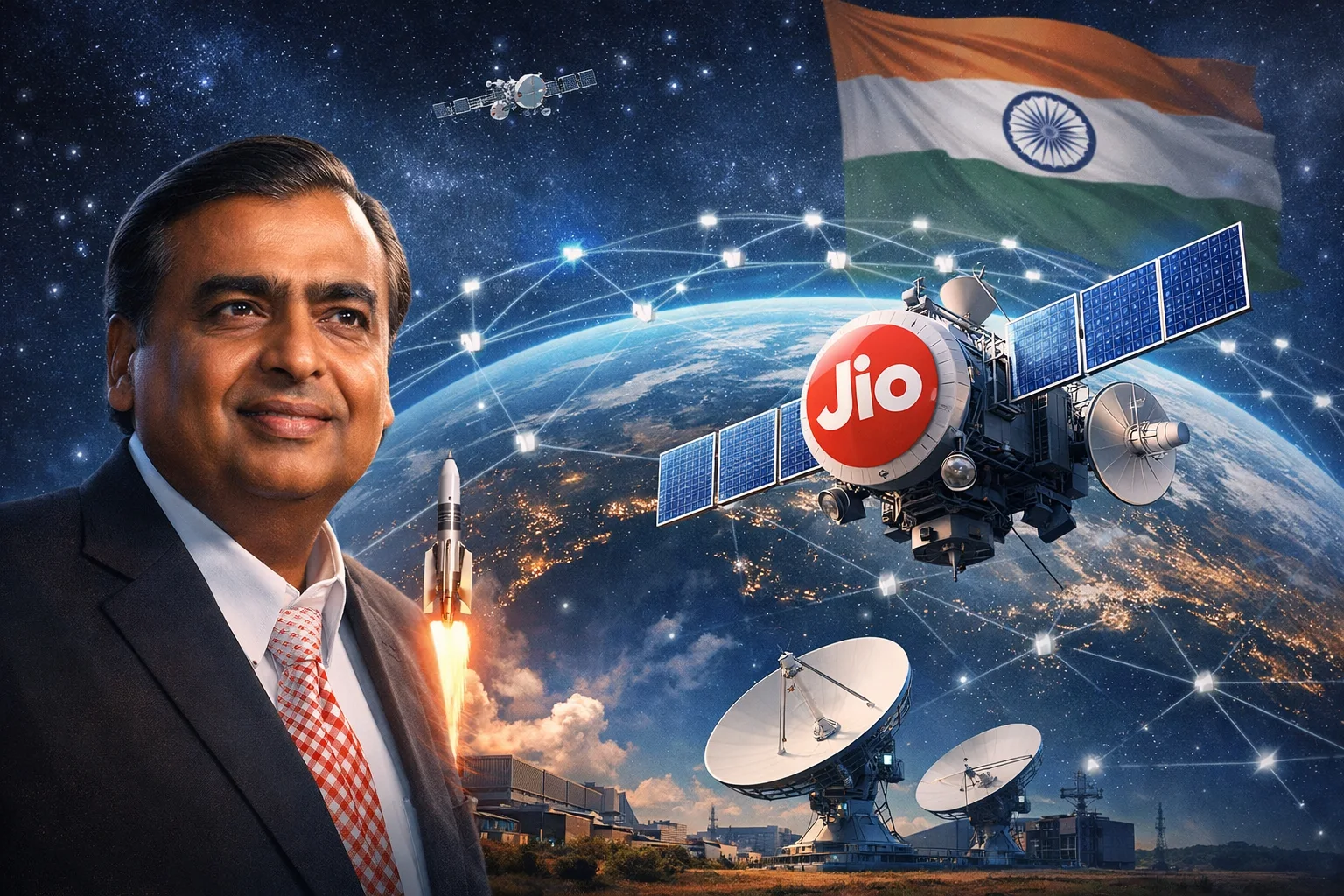
Reliance Jio Infocomm Ltd.’s ambitious plan to deploy a 1,650-satellite low Earth orbit (LEO) network for broadband services signals a significant escalation in the global race for ubiquitous connectivity, potentially reshaping market dynamics for both traditional telecommunications providers and emerging satellite internet ventures. This strategic pivot by India’s dominant digital services player could unlock vast, underserved markets while simultaneously intensifying capital expenditure pressures across the fiercely competitive global broadband landscape. The proposed constellation, designed to offer high-speed, low-latency internet, represents a formidable investment in next-generation infrastructure, extending Jio’s reach far beyond its terrestrial fiber and mobile networks. With a stated aim to deliver broadband access to remote and rural areas, as well as provide robust enterprise and maritime connectivity solutions, Jio is positioning itself as a comprehensive digital utility, challenging established players like Starlink, OneWeb, and Project Kuiper. This move underscores a broader industry trend where telecommunication giants are increasingly looking to space to circumvent geographical limitations and capture new revenue streams in an era of surging data demand. Deploying a LEO constellation of this magnitude involves intricate engineering, substantial financing, and complex regulatory navigation, particularly given the already crowded orbital environment. The 1,650 satellites would operate in a tightly coordinated network, facilitating seamless handovers and ensuring continuous coverage, a technical feat requiring advanced payload technology and ground station infrastructure. Reliance Industries Ltd., Jio’s parent company, has historically demonstrated a willingness to undertake massive, capital-intensive projects to gain market leadership, and this satellite initiative appears to follow that aggressive growth playbook.
What It Means
Jio’s foray into LEO broadband carries profound implications for the global telecommunications sector, potentially altering competitive paradigms and investment strategies. The company’s proven ability to disrupt markets with aggressive pricing and bundled services, as demonstrated in the Indian mobile sector, suggests a similar approach could be brought to satellite broadband. This could lead to a downward pressure on pricing for satellite internet services globally, benefiting consumers but compressing margins for existing operators. For traditional terrestrial broadband providers, Jio’s LEO network could present a dual challenge, both as a direct competitor in previously inaccessible regions and as an innovation benchmark. The strategic rationale extends beyond simple market expansion. For Jio, LEO connectivity reinforces its "Digital India" vision, aiming to bridge the digital divide and integrate remote populations into the broader digital economy. This aligns with government initiatives pushing for greater digital inclusion, potentially creating a favorable regulatory environment for the project within India. Furthermore, by owning a significant portion of its connectivity infrastructure, Jio enhances its operational resilience and reduces reliance on third-party satellite capacity, critical for maintaining service quality and cost control in a rapidly evolving market. The sheer scale of its potential customer base, particularly within India, offers a unique advantage in achieving economies of scale for satellite manufacturing and launch services.
A LEO constellation of 1,650 satellites could entail an investment north of $5 billion, factoring in satellite manufacturing, launch costs, ground infrastructure, and operational expenses over several years, placing it among the most capital-intensive private sector space initiatives globally.
Background
Reliance Jio’s ascent has been characterized by audacious capital deployment and strategic market disruption. Launched commercially in 2016, Jio rapidly transformed India’s mobile market by offering free voice calls and aggressively priced data, forcing incumbents to consolidate and adapt. This strategy, backed by billions in investment from its parent Reliance Industries, quickly propelled Jio to become India’s largest telecom operator by subscriber count. The company has since diversified into an expansive digital ecosystem encompassing fiber broadband, streaming services, e-commerce, and digital payments, establishing itself as a formidable force in India’s digital economy. The move into LEO satellite broadband builds on this foundation, extending Jio’s infrastructure play into the space domain. This is not the company’s first exploration into satellite technology; Jio Platforms Ltd., the digital arm of Reliance Industries, previously formed a joint venture with SES, a global satellite operator, to deliver broadband services via medium Earth orbit (MEO) satellites and GEO satellites. The 1,650-satellite LEO network, however, signifies a much larger, dedicated strategic commitment to building its own constellation, signaling a deeper integration of space-based assets into its core business model. This trend mirrors similar moves by other technology and telecommunications giants globally, recognizing the strategic importance of end-to-end control over connectivity infrastructure. The convergence of terrestrial and space networks is becoming a defining characteristic of next-generation telecommunications, promising seamless global coverage and enhanced resilience.
What Analysts Say
The financial implications of such a massive LEO investment are multi-faceted, presenting both immense opportunity and considerable risk. On one hand, the total addressable market for satellite broadband, particularly in regions lacking robust terrestrial infrastructure, remains substantial, offering a significant growth runway. Jio's established distribution network within India and its massive subscriber base could provide a faster ramp-up of LEO customers compared to new entrants. Leveraging its existing customer relationships and bundling LEO services with its other digital offerings could prove to be a powerful competitive differentiator. The potential for higher average revenue per user (ARPU) from enterprise, government, and maritime clients, which command premium pricing for resilient, high-bandwidth connectivity, further bolsters the investment thesis. However, the "bear case" hinges on the formidable execution challenges and intense competition. The LEO sector is already populated by well-funded, technologically advanced players like SpaceX’s Starlink, Eutelsat-backed OneWeb, and Amazon’s Project Kuiper, all vying for market share and orbital slots. Each requires enormous upfront capital expenditure and faces a prolonged path to profitability. Regulatory hurdles, including obtaining spectrum licenses and orbital debris mitigation approvals across multiple jurisdictions, are complex and time-consuming. Furthermore, the rapid pace of technological innovation in satellite design, launch capabilities, and ground terminal technology means that initial investments could face obsolescence risks, requiring continuous upgrades and further capital injections to maintain competitiveness. The delicate balance between aggressive expansion and sustainable financial returns will be crucial for Jio’s LEO venture. The project also needs to prove its economic viability against continually improving terrestrial alternatives, including 5G and fiber optic expansion, which benefit from lower latency for local traffic and often more favorable unit economics in densely populated areas. While LEO excels in remote connectivity, the global market for all-encompassing broadband solutions is increasingly fragmented, demanding nuanced value propositions. The successful realization of Jio’s 1,650-satellite LEO network will depend heavily on several critical factors, including the securing of necessary regulatory approvals across key markets, the finalization of strategic partnerships for satellite manufacturing and launch services, and the ability to attract sufficient capital for sustained deployment. Investors will closely watch initial funding rounds, potential anchor customers, and the competitive response from rival LEO operators and incumbent telecom providers globally. Key milestones to observe include the announcement of manufacturing contracts, launch schedules, and any indications of pricing strategy, which will ultimately determine the project’s market penetration and financial trajectory in this rapidly evolving frontier of global connectivity.
Frequently asked questions
What are Reliance Jio's plans for satellite broadband?
Reliance Jio plans to deploy a 1,650-satellite low Earth orbit (LEO) network to offer broadband services. This initiative aims to expand high-speed internet access, particularly in underserved regions, and challenge existing terrestrial and satellite providers.
What is a LEO network?
A Low Earth Orbit (LEO) network consists of satellites orbiting much closer to Earth than traditional geostationary satellites, resulting in lower latency and faster internet speeds, ideal for broadband.
How many satellites will Jio deploy for its LEO network?
Reliance Jio plans to deploy a constellation of 1,650 satellites for its ambitious Low Earth Orbit (LEO) network to provide broadband services.
Who are Jio's main competitors in satellite internet services?
Jio's main competitors in the satellite internet space include established players like SpaceX's Starlink and OneWeb, both of which are also building extensive LEO satellite constellations globally.
What impact will Jio's LEO network have on the global telecom market?
Jio's LEO network is expected to intensify competition in the global broadband market, potentially driving down costs, improving service availability, and accelerating innovation, especially in remote and underserved areas.
When is Jio's LEO satellite broadband service expected to launch?
While specific launch timelines are not explicitly detailed, the ambitious nature of Jio's 1,650-satellite LEO network project suggests a phased rollout of services in the coming years, targeting key markets.