Alternatives to OpenAI, Anthropic: With US prime AI off the table, India opts for fine China
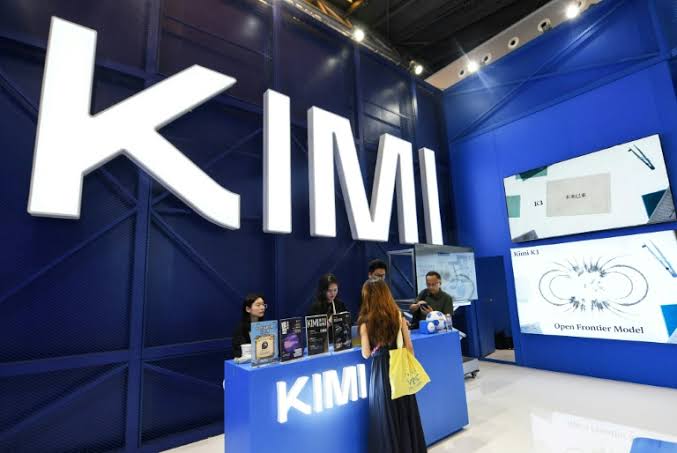
The global tech chessboard just got a lot more interesting, and for many in the West, perhaps a little more concerning. India, a nation rapidly cementing its status as a digital powerhouse and a critical market for technological innovation, appears to be making a calculated pivot in its pursuit of advanced artificial intelligence. With prime US-developed AI models from powerhouses like OpenAI and Anthropic increasingly perceived as "off the table" due to a complex web of geopolitical tensions and export controls, the world's most populous democracy is reportedly turning its gaze east, specifically towards China.
Here's what happened: India, needing to power its ambitious digital transformation and support its burgeoning startup ecosystem, has begun exploring and integrating AI solutions from Chinese providers. This isn't a mere commercial preference; it's a strategic re-orientation driven by the practicalities of access, cost, and the imperative for national digital sovereignty, which, for founders and consumers alike, means a shift in the underlying technology that will shape future products and services.
From an ecosystem-insider perspective, this move signals a significant realignment in the global AI landscape, one that I've been anticipating given the escalating tech rivalry between the US and China. India, traditionally seen as a key strategic partner for Western tech giants, finds itself navigating a difficult path. The country's demand for AI capabilities is immense, spanning everything from enhancing public services and driving e-commerce to fueling a vibrant startup scene pushing boundaries in fields like fintech, healthcare, and agritech. When access to leading-edge tools becomes restricted or unreliable, pragmatic solutions are sought elsewhere.
The "off the table" narrative for US AI isn't about outright bans but rather a confluence of factors: the increasing scrutiny on data handling, the opacity around certain proprietary models, and the looming threat of future export controls that could disrupt access. For a nation building its digital future, a stable and predictable supply of foundational technology is non-negotiable. This creates an opening for Chinese AI firms, which have invested heavily in their own large language models (LLMs) and AI infrastructure, to step in and fill the void, offering a range of alternatives that, while perhaps not always at the absolute bleeding edge of certain benchmarks, are robust, scalable, and often more amenable to local customization and data residency requirements.
This isn't a unilateral decision by India to abandon all Western tech. Rather, it's a pragmatic response to a fragmented global tech environment. Indian companies and government initiatives are now actively evaluating and deploying models from Chinese tech giants like Baidu (with its Ernie Bot), Alibaba (Tongyi Qianwen), and SenseTime. These are not merely academic exercises; these are foundational decisions that will influence the competitive landscape for Indian startups, the cost structures for enterprises, and the very nature of data sovereignty in the region. The implications for North American investors and tech companies are clear: a potentially massive market is either diversifying away or being forced to adopt alternatives that could entrench non-Western technological standards.
The Geopolitical Chessboard and the AI Race
To truly understand this pivot, we need to contextualize it within the broader geopolitical chessboard that's defining global tech. The US strategy of restricting advanced technology exports to China, particularly in critical areas like AI chips and sophisticated models, is designed to curb China's technological ascent and maintain American leadership. While understandable from a national security perspective, these actions inevitably create ripple effects far beyond their immediate targets. For countries like India, which are not direct adversaries but are caught in the crossfire, the reliability of the supply chain for advanced AI becomes a primary concern.
The restrictions, perceived or real, on accessing the most advanced US AI models force countries like India to "de-risk" their technological future. Relying solely on a single source, especially one subject to the vagaries of geopolitical tensions, is seen as a strategic vulnerability. This isn't unique to AI; we've seen similar dynamics play out in the 5G rollout, with many nations evaluating alternatives to Western equipment providers, and in the semiconductor industry, where countries are pouring billions into domestic chip manufacturing. India's move is a clear signal that digital sovereignty and technological self-reliance are paramount, even if it means seeking partnerships that might otherwise seem counter-intuitive to Western observers.
My read on this is that it represents a significant challenge to the notion of a globally interconnected, interoperable tech stack. As nations increasingly prioritize national interests and data sovereignty, the digital world risks fragmenting into distinct technological blocs. For a founder operating in this environment, it means navigating a much more complex landscape where product development isn't just about code and market fit, but also about geopolitical alignment and supply chain resilience. The choice of an underlying AI model is no longer purely a technical decision; it's a strategic one with long-term implications for market access and regulatory compliance.
Beyond US and China: India's Own Ambitions and Open Source
While India's turn to Chinese AI is a headline-grabber, it’s crucial to understand that this isn't a binary choice between East and West. India also harbors significant ambitions for its own indigenous AI development, aiming to build what I call "AI for Bharat" – models tailored to India's unique linguistic diversity, cultural nuances, and socio-economic challenges. Initiatives like BharatGPT are a testament to this drive, focused on creating large language models that can truly serve the hundreds of millions of Indians who don't primarily interact in English. This is a crucial element often missed in the Western narrative: India isn't just a consumer of technology; it's a rapidly maturing developer and innovator.
In this context, open-source AI models present a compelling third path. Models like Meta's Llama 2, which are openly available for research and commercial use (under certain licenses), offer a powerful alternative to proprietary solutions. They allow for greater customization, transparency, and, critically, data sovereignty, as organizations can host and fine-tune these models on their own infrastructure. For India, leveraging open-source foundations provides a pathway to build sophisticated AI capabilities without being beholden to any single national power. It allows Indian startups to innovate rapidly, reducing initial costs and fostering a collaborative environment, potentially even with global partners who are also investing in the open-source ecosystem.
The challenges, of course, are substantial: the need for massive computational infrastructure, high-quality diverse datasets for training, and a continuously expanding pool of AI talent. Yet, India's robust digital public infrastructure (DPI) – like Aadhaar and UPI – demonstrates its capacity for large-scale digital transformation. This foundation positions India uniquely to leverage and contribute to the open-source AI movement, potentially even collaborating with Chinese firms on common open-source projects while maintaining independent control over its fine-tuned models and applications.
What strikes me here is the nuanced strategic calculus at play. India isn't just making a pragmatic choice for today; it's laying the groundwork for its long-term technological independence and global influence. This diversification, while perhaps a blow to the immediate market share of US AI providers, might ultimately lead to a more resilient and globally distributed AI ecosystem. For North American tech companies and investors, this trend underscores the necessity of adapting to a multipolar world. The days of a single, dominant tech stack dictating global standards are rapidly fading. Understanding the nuances of these emerging tech blocs, and finding ways to engage with them, will be critical for future success.
Ultimately, India's strategic shift in AI partnerships signals a fundamental re-evaluation of national interests in the age of advanced technology. It highlights the growing tension between geopolitical alignment and technological necessity. For founders, particularly those in the startup world, the takeaway is clear: the future of AI will not be monolithic. It will be a mosaic of interconnected but distinct ecosystems, shaped by national policies, geopolitical realities, and the relentless pursuit of innovation. Navigating this fragmented landscape will require agility, foresight, and a keen understanding of global power dynamics, ensuring that the solutions we build are not only technologically superior but also geopolitically resilient.