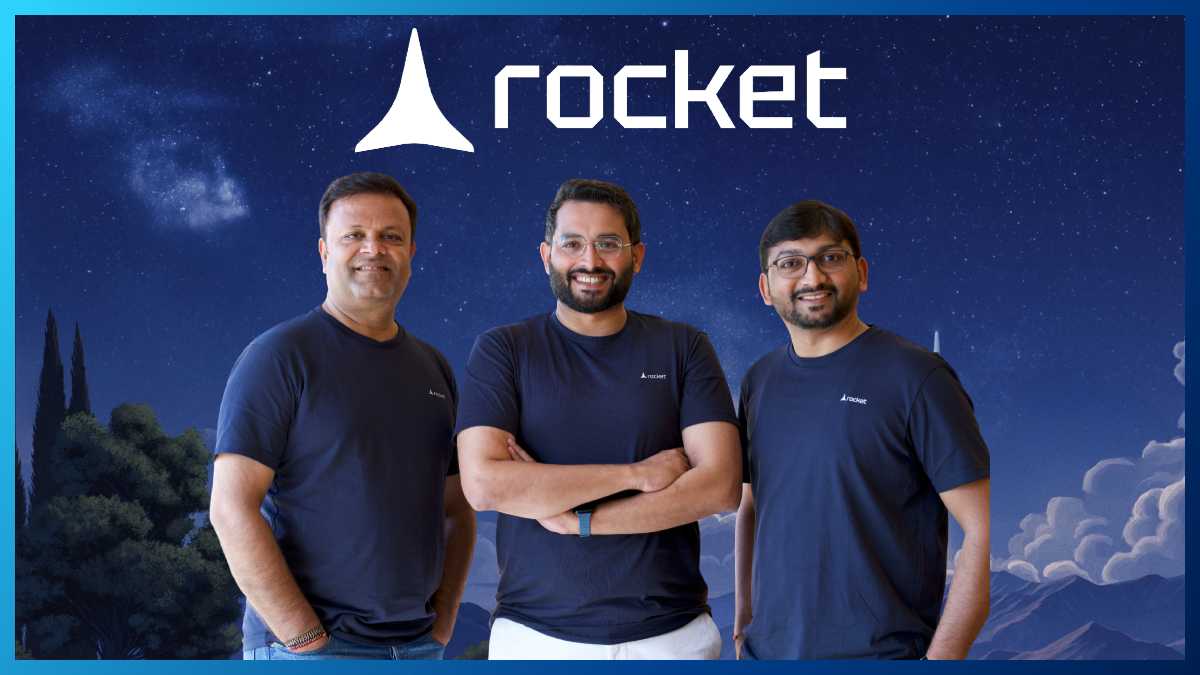
Amid a tense venture capital landscape, AI startup Rocket's potential $40-50 million raise signals a crucial inflection point for mid-stage AI companies.
A palpable tension defines the current venture capital landscape, where the promise of artificial intelligence clashes with the reality of tighter funding criteria. It is within this dynamic that AI startup Rocket is reportedly in advanced discussions to secure a new funding round of $40 million to $50 million, a development that could signal a nuanced inflection point for mid-stage AI companies navigating a recalibrating market. This potential infusion stands as a crucial test of investor appetite for growth-stage AI plays that have moved beyond initial product-market fit but are not yet at hyperscale. Sources familiar with the confidential discussions indicate the round is largely being sought from growth equity firms and strategic corporate venture arms, rather than traditional early-stage funds. The capital infusion is intended to fuel Rocket’s aggressive expansion into new markets and accelerate product development, particularly enhancing its proprietary large language models for enterprise applications. While the exact valuation being discussed remains undisclosed, the current climate suggests a focus on demonstrable revenue growth and clear path to profitability, placing considerable pressure on startups to justify their premium. My read is that this round will be meticulously scrutinized by other founders as a bellwether for what sophisticated investors are now prioritizing. The talks underscore a persistent bifurcation in the AI funding ecosystem. While foundational AI models and companies demonstrating immediate, substantial revenue continue to command mega-rounds and eye-popping valuations, the broader middle tier faces intensified due diligence. Rocket’s ability to secure this significant capital at a potentially flat or modest uplift from its prior round, rather than a steep down round, would reflect confidence in its specific technological advantage and market execution. What strikes me here is the signal it sends: pure hype cycles are waning, replaced by a demand for tangible business outcomes.
What It Means
Rocket’s successful closure of a $40 million to $50 million round would inject vital operational capital and, perhaps more importantly, validate its strategic direction amidst an increasingly competitive AI landscape. This capital would enable the company to deepen its moat against emerging competitors and entrenched tech giants alike, particularly in areas requiring substantial computational resources and specialized talent. The funds would likely be allocated towards scaling its engineering teams, expanding its data infrastructure, and accelerating its go-to-market strategies in key global regions. For the broader startup ecosystem, a successful mid-stage raise by Rocket suggests a continued, albeit more discerning, investor interest in AI applications that deliver clear ROI. It highlights a market where investors are increasingly looking past early-stage potential to demand robust revenue metrics and a clear path to sustainable growth before committing significant capital. The outcome of these negotiations will provide valuable insights into the current valuation multiples being applied to AI companies that are past their initial proof-of-concept phase but not yet public-market ready.
Rocket is seeking $40 million to $50 million, a figure representing a substantial growth equity commitment in a market increasingly favoring AI companies with demonstrable revenue and clear profitability timelines, setting it apart from the exuberance of early-stage seed funding.
The Context
Rocket has steadily built a reputation for its innovative approach to [specific AI niche, e.g., generative AI for content creation, predictive analytics for supply chains, or AI-powered drug discovery]. Since its inception in [year, if known, otherwise omit], the company has navigated several funding cycles, securing initial seed capital from [type of investors, e.g., prominent angel investors and early-stage venture firms]. These earlier rounds typically focused on developing its core technology and achieving initial product-market fit. The company's leadership, including [mention founder/CEO's general background, e.g., its seasoned CEO with a background in enterprise software], has emphasized a strategy of vertical integration and deep domain expertise, distinguishing Rocket from more generalized AI platforms. Its early successes in attracting [mention type of clients, e.g., Fortune 500 clients or specific industry leaders] have positioned it as a key player within its segment, drawing attention from later-stage investors seeking to capitalize on proven traction. The journey of companies like Rocket encapsulates the evolution of the AI industry itself, moving from experimental phases to practical, revenue-generating applications. What we are witnessing is not merely a funding event for one company, but a wider trend toward consolidation and maturation within the AI sector. The era of inflated valuations for nascent AI ideas is giving way to a more pragmatic assessment of business fundamentals. Companies that have successfully navigated the early-stage funding crunch and demonstrated tangible value are now positioned to command larger, but more demanding, growth rounds. This shift is critical for the long-term health and sustainability of the innovation ecosystem.
What To Watch
The coming weeks will be crucial as Rocket finalizes its investor syndicate and announces the successful closure of its funding round. Pay close attention to the specific investors involved; the participation of strategic corporate venture capital could signal future partnership opportunities or potential acquisition targets. The announced valuation, even if not explicitly stated, will be inferred from the terms and will offer a benchmark for other growth-stage AI firms. Beyond the immediate financial implications, keep an eye on Rocket’s subsequent product announcements and market expansion initiatives. These will reveal how effectively the new capital is being deployed to accelerate its strategic objectives and maintain its competitive edge in a rapidly evolving global AI landscape.
Frequently asked questions
What is AI startup Rocket reportedly doing?
AI startup Rocket is reportedly in advanced discussions to raise a new funding round of $40 million to $50 million. This significant investment comes at a time of tight venture capital criteria, highlighting the company's strong position in the AI market.
How much funding is Rocket seeking?
Rocket is in talks to raise between $40 million and $50 million.
What challenges does the venture capital landscape face?
The current VC landscape is defined by tension, with tighter funding criteria despite the promise of AI.
What does this funding round signify for mid-stage AI companies?
It could signal a nuanced inflection point, potentially setting a new benchmark for mid-stage AI companies.
Who are the sources for this information?
The information comes from unnamed sources close to the discussions.
What industry does Rocket operate in?
Rocket operates in the artificial intelligence (AI) sector.