Micron's meteoric rise to $1.27T market cap, fueled by AI demand for HBM chips, has analysts calling it the next Nvidia. Will its long-term deals protect it from a bust cycle?
Micron's Meteoric Ascent: Why Wall Street Sees the US Memory Maker as the Next Nvidia
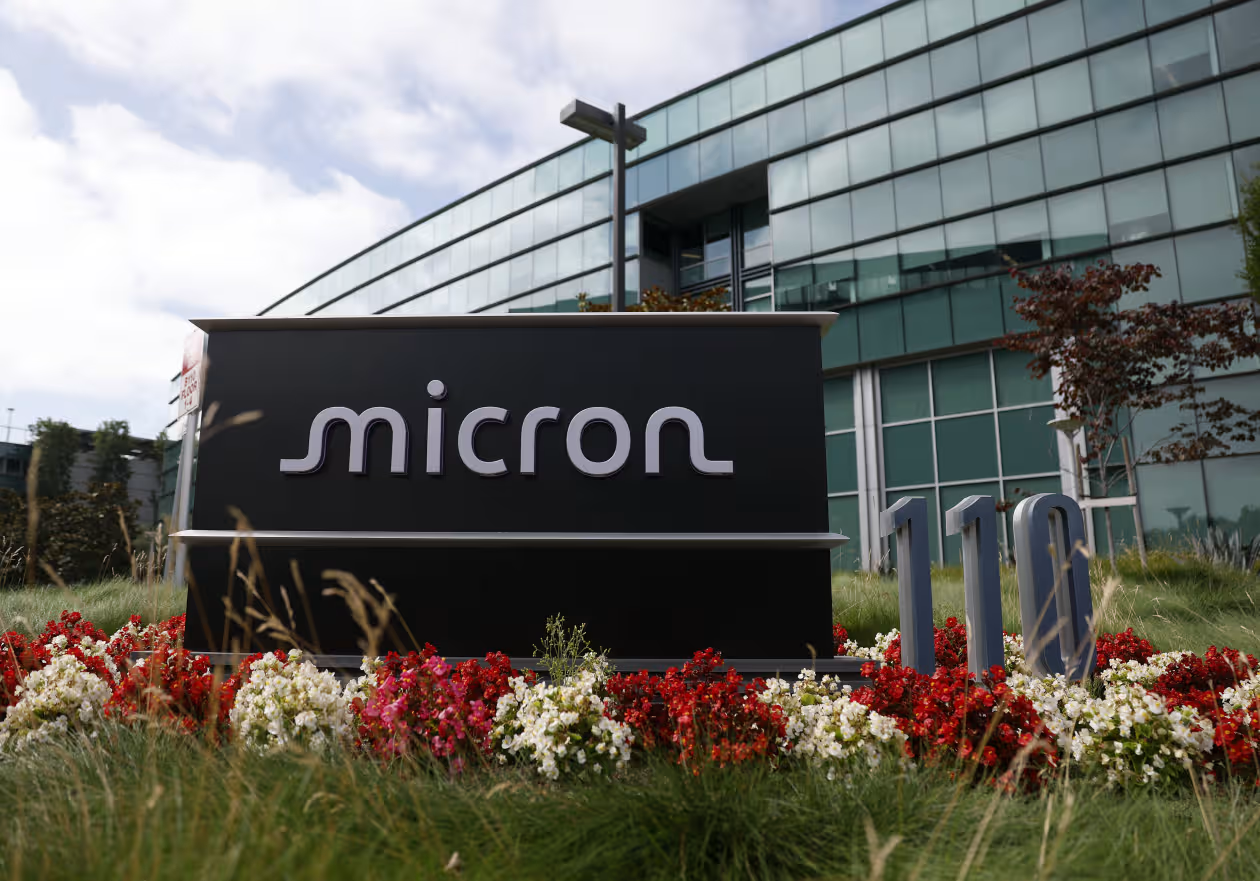
In a dizzying display of market confidence, Boise, Idaho-based memory chip maker Micron Technology recently achieved a feat that few would have predicted just a year ago: briefly surpassing the market valuations of tech giants Meta and Tesla. This isn't merely a fleeting moment of investor enthusiasm; it signals a profound shift in how Wall Street views the fundamental building blocks of the AI revolution, placing Micron at the heart of the next wave of computing infrastructure.
The numbers behind this surge are staggering. Micron's stock has soared over 236% in the past month alone, closing Friday at an astounding $1,132 a share. For a company that spent years trading below $100 a share before mid-2025, this explosive growth underscores a dramatic re-evaluation of its role in the global technology landscape, driven almost entirely by the insatiable demand for artificial intelligence.
Micron closed Friday with a market capitalization near $1.27 trillion, drawing close to Meta's $1.39 trillion and Tesla's $1.42 trillion. This re-rating isn't about traditional consumer memory cards; it's about the critical, often overlooked, role of High-Bandwidth Memory (HBM) and other advanced DRAM and NAND chips in powering the burgeoning AI data center buildout. A single AI server demands magnitudes more memory than a standard laptop, creating an unprecedented supply crunch that has been dubbed "RAMageddon."
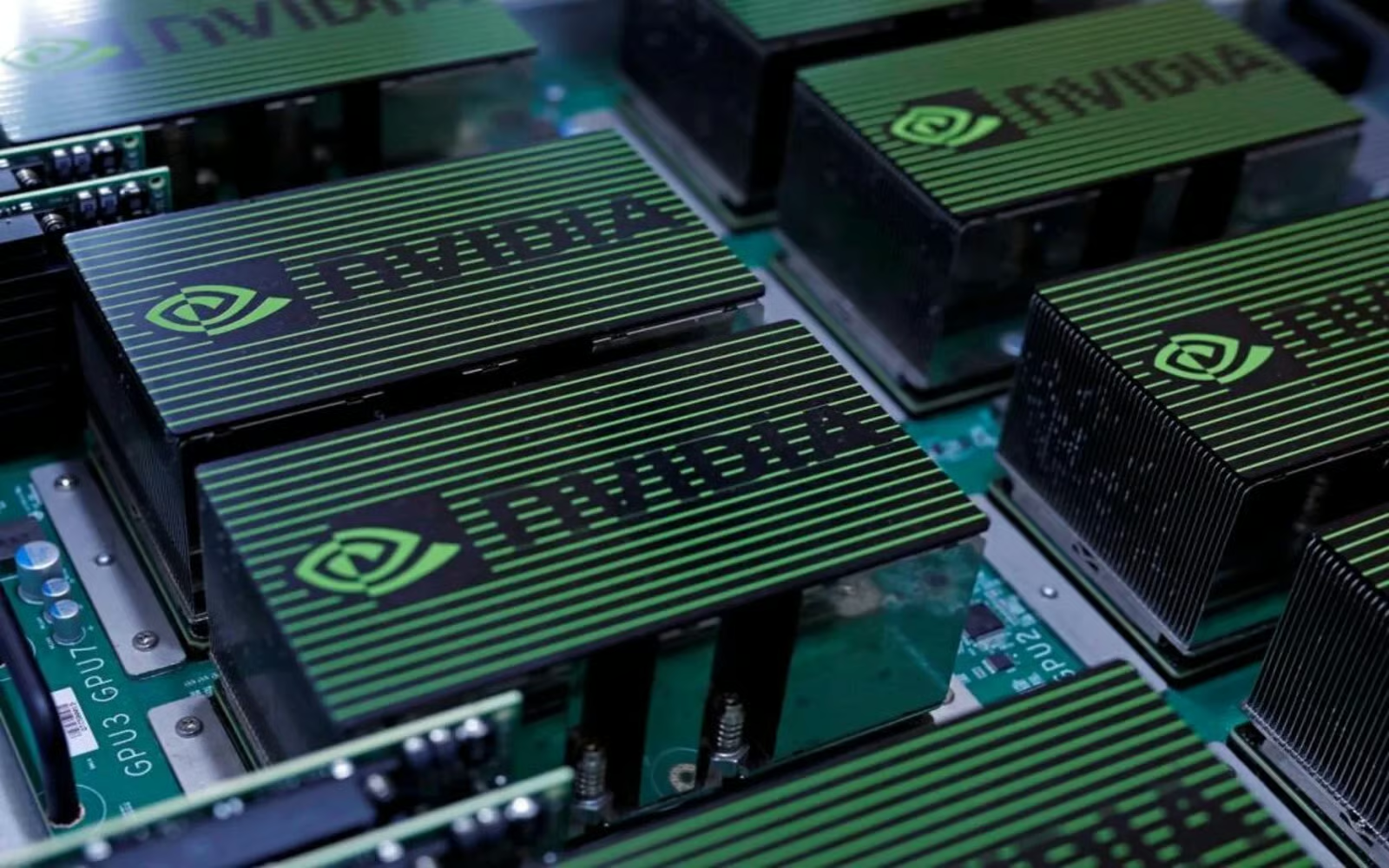
The primary beneficiaries of this memory famine are the companies at the forefront of AI innovation: Nvidia, which designs the GPUs that orchestrate AI computations, and the hyperscalers like Microsoft, Amazon AWS, Google, Meta, and Oracle, who are building vast AI infrastructures. Their ravenous appetite for memory has created a ripple effect, forcing even traditional PC and device makers such as Dell, HP, Apple, and Xbox to hoard chips, driving up prices across the board and further exacerbating the supply shortage, which is predicted to persist into 2027.
The AI Engine Fueling Micron's Rise
Micron's recent third-quarter earnings report served as a powerful testament to its pivotal position. The company quadrupled its year-over-year revenue to $41.45 billion, while profits skyrocketed from $1.88 billion to an astonishing $28.2 billion in the same period. This blockbuster performance, coupled with a robust fourth-quarter revenue forecast of between $49 billion and $51 billion, has further emboldened Wall Street in its quest to identify the next major beneficiaries of the AI boom beyond Nvidia.
Historically, the memory chip industry has been plagued by volatile boom-bust cycles. Building out new manufacturing facilities, or "fabs," is a capital-intensive and time-consuming endeavor. Often, by the time new capacity comes online, demand has softened, leading to oversupply, price erosion, and plummeting profits. This inherent cyclicality has long made memory makers a precarious investment, despite their foundational role in technology.
What strikes me here is Micron's proactive strategy to fundamentally de-risk this historical volatility. The company has emphasized a series of long-term strategic customer agreements (SCAs), notably with giants like Nvidia and AI lab Anthropic, spanning data center, consumer, and automotive segments. With 16 such agreements now in place, Micron isn't just selling chips; it's locking in demand and revenue visibility for years to come. This structural shift, from purely transactional sales to deeply integrated supply partnerships, suggests a more durable earnings growth trajectory than we’ve seen in previous cycles. It's a move that addresses the core problem of demand uncertainty, potentially transforming the very business model of memory manufacturing. This also has broader implications for US supply chain resilience in critical semiconductor components, a key strategic objective in a complex geopolitical landscape.
William Blair tech analyst Sebastien Naji echoed this sentiment, noting that demand growth continues to outpace the rate at which new cleanroom space, or advanced manufacturing facilities, can be brought online. His firm reiterated an "Outperform" rating, citing the strong likelihood of continued average selling price (ASP) growth and improved revenue visibility thanks to these expanding long-term agreements. This perspective highlights a key market dynamic: the sheer, urgent need for HBM and advanced memory means customers are willing to commit to long-term contracts, guaranteeing Micron a baseline of demand irrespective of short-term market fluctuations.
The Road Ahead: Can the Momentum Last?
The central question now facing investors and industry observers is whether Micron can truly sustain this growth trajectory and avoid the dreaded bust cycle that has characterized its past. While the long-term agreements offer a significant shield, the company's fortunes remain inextricably linked to the continued expansion of the AI market. Any slowdown in AI infrastructure buildout or a significant technological leap that reduces memory requirements could challenge its current valuation.
My read is that the current AI boom is not a fleeting trend but a foundational shift, and HBM memory is a non-negotiable component of high-performance AI systems. Micron's early and strong positioning in this critical segment, alongside competitors like Samsung and SK Hynix, solidifies its immediate relevance. The intensity of demand from hyperscalers creating their own AI systems, combined with Nvidia's leadership, creates a powerful tailwind. This also implies increased investment in manufacturing across the board for all major memory players, which could eventually lead to a more robust, albeit highly competitive, market.
Micron's ascent marks a fascinating inflection point, not just for the company, but for the perception of memory chips themselves. Once viewed as a commodity, memory is now rightfully recognized as a strategic asset, indispensable to the AI revolution. The company's ability to navigate the complexities of manufacturing scale, technological innovation, and strategic customer partnerships will determine if it can indeed maintain its newfound status as a Wall Street darling and a long-term anchor of the US semiconductor industry, proving that the intelligence in AI begins with memory.
Frequently asked questions
Why is Wall Street comparing Micron to Nvidia?
Wall Street sees Micron as a potential 'next Nvidia' due to its explosive growth driven by the AI data center buildout boom. Micron's memory chips, especially High-Bandwidth Memory (HBM), are critical for AI servers, leading to a massive surge in demand, revenue, and stock price, similar to Nvidia's earlier trajectory in the AI space.
How much has Micron's stock grown recently?
Micron's stock has soared over 236% in the past month alone, closing Friday at $1,132 a share. Its market capitalization briefly surpassed Meta and Tesla, reaching close to $1.27 trillion.
What types of memory chips does Micron make that are in high demand for AI?
Micron makes DRAM and NAND system memory chips, with High-Bandwidth Memory (HBM) being particularly critical for AI servers. The AI data center buildout has created a significant shortage of these chips.
What is "RAMageddon" and how does it affect Micron?
"RAMageddon" refers to the severe shortage of memory chips, predicted to persist into 2027, driven by high demand from AI system makers and hyperscalers. This lack of supply significantly benefits Micron by driving up prices and demand for its products, leading to blockbuster earnings.
How is Micron planning to avoid a typical memory chip "bust cycle"?
Micron is emphasizing a series of long-term supply agreements, including with Nvidia and Anthropic, across data center, consumer, and auto market segments. These strategic customer agreements are intended to provide more durable earnings growth and protect against sudden drops in demand or overcapacity.
What were Micron's recent financial results?
Micron delivered blockbuster third-quarter earnings, with revenue quadrupling year-over-year to $41.45 billion and profits skyrocketing from $1.88 billion to $28.2 billion. The company also forecasted strong fourth-quarter revenue of between $49 billion and $51 billion.