OpenAI's former CTO discusses "interaction models," "the blip," and AI governance in her first major media appearance in 18 months.
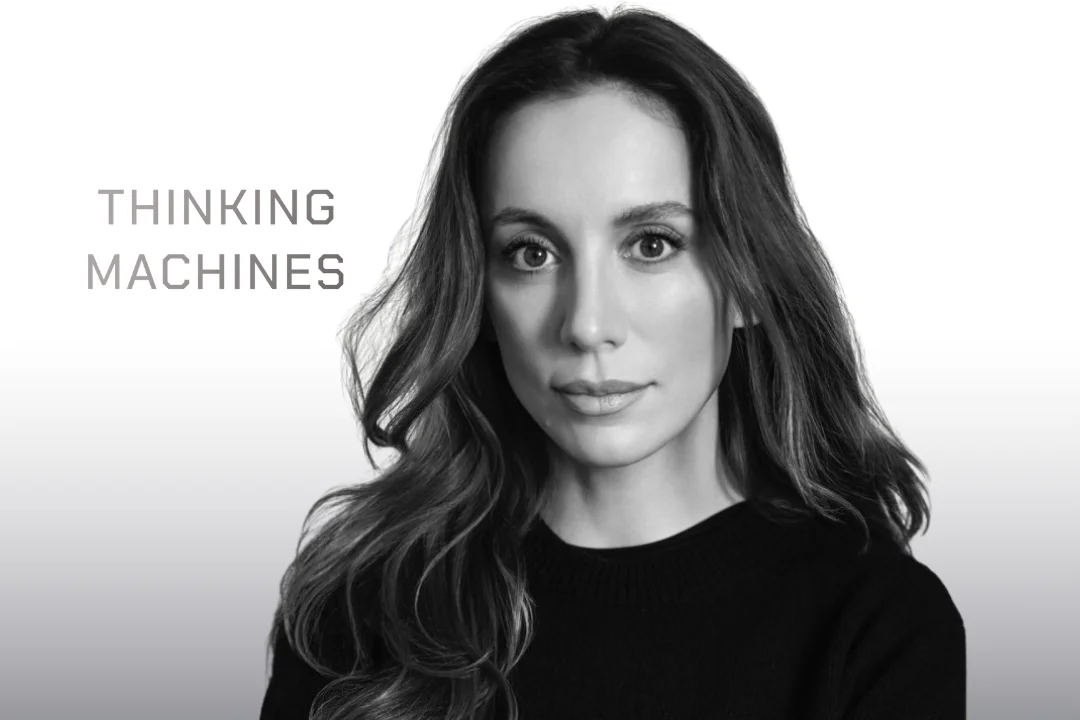
Mira Murati isn't a natural creature of the conference stage, a trait that has defined her public persona from her impactful tenure as CTO of OpenAI to the quieter genesis of her own venture. So when she recently engaged in a candid interview in San Francisco, marking her first major media appearance in approximately 18 months, the industry took notice. This rare public emergence signaled a pivotal moment, not just for Murati but for the future trajectory of AI, revealing the strategic groundwork laid by her company, Thinking Machines Lab, during its period of focused development.
Mira Murati, former OpenAI CTO, re-enters the public sphere with Thinking Machines Lab, unveiling "interaction models" to revolutionize human-AI communication.
Her new venture aims to address critical AI governance and talent challenges, shaping the future of AI development with a focus on real-time, continuous engagement.
For Mira Murati, the journey from leading the technical frontiers at OpenAI to founding Thinking Machines Lab has been one marked by an unwavering commitment to shaping AI's responsible evolution. What started as a small idea to push the boundaries of AI interaction beyond the turn-based prompt-and-response dynamic has matured into a significant undertaking. Her motivation stemmed from a deep understanding of the AI landscape's complexities and the urgent need for interfaces that mirror the fluidity of human communication.
Thinking Machines Lab has spent the better part of a year and a half operating largely in the background, a period dedicated to foundational work. This involved a strategic focus on raising capital, meticulously hiring top-tier researchers from across the globe, and quietly shipping its initial product, Tinker. Tinker, an API designed for fine-tuning open-source AI models, represents a crucial building block in their strategy.
The company's re-emergence comes at a time when the AI competitive landscape has intensified dramatically. OpenAI, where Murati spent six years as CTO, remains a constant fixture in global news cycles. Anthropic's momentum has captivated much attention, while Elon Musk's xAI, now integrated into SpaceX, is generating significant gravitational pull on investment and talent ahead of its anticipated public offering. In such an environment, maintaining a "heads down" approach eventually yields diminishing returns; at some point, a company must make noise to reaffirm its presence and vision in the market. Murati's interview served precisely this purpose, offering a glimpse into Thinking Machines Lab's distinctive path.
Murati previewed what Thinking Machines is calling "interaction models," describing them as a fundamentally different kind of AI interface. Unlike the predominant turn-based, prompt-and-response dynamic that defines most AI products today, these models are engineered to process continuous streams of audio, text, and video in rapid 200-millisecond intervals. The core idea is to enable AI to pick up on the subtle textures of human communication—the natural interruptions, the mid-thought corrections, and even the pauses for reflection—in something much closer to real time. While Murati framed this as a significant first step rather than a finished product, she deliberately refrained from specifying a release date, emphasizing the foundational nature of this innovation.
The interview also touched upon the chaotic week in November 2023 when OpenAI's board fired Sam Altman, an episode affectionately dubbed "the blip" internally. Murati, who served as interim CEO during that tumultuous five-day stretch, reflected on her decisions during that period. She articulated that her actions were guided by a clear imperative to protect the company's mission and its team, asserting that this through-line made her choices feel obvious even amidst the external perception of impending collapse. Murati contended that OpenAI would have "imploded" without her involvement during that critical period and its immediate aftermath. However, she candidly acknowledged that clarity of intent does not always equate to clarity about consequences. In retrospect, she admitted she would have pushed harder for more comprehensive information, a more robust transition plan, and greater transparency.
When questioned about her trust in her former boss, Murati gracefully sidestepped the direct inquiry, pivoting the conversation towards a more profound, industry-wide concern she reiterated multiple times: the problematic concentration of consequential decisions in too few hands. This concern extends beyond OpenAI to the entire AI industry. Murati emphasized that her worry is less about the character of any individual leader—though she acknowledged that character matters—and more about the absence of structural checks and balances. She posited that even well-intentioned individuals can make poor decisions, and organizations, however noble their initial aims, can drift without proper oversight. She suggested that too much emphasis has been placed on individual virtue and too little on robust governance structures.
The discussion also ventured into the recent departures of several high-profile researchers from Thinking Machines, a subject Murati has largely avoided publicly. She downplayed the significance, explaining that building a frontier AI lab from scratch compresses years of normal organizational volatility into mere months. She acknowledged that the allure of "nine-figure packages" has become standard currency in the intense war for AI talent, capturing the imagination of many. However, she suggested that compensation rarely tells the complete story of why individuals choose their paths. With a touch of humor, Murati conveyed her own competitive instincts by stating, "When I wake up in the morning, I am not thinking about how to kill the competitor."
Naturally, the conversation concluded with a broader reflection on the future of AI, including its implications for humanity. The promise of AI empowering humans has, for some, been overshadowed by anxieties surrounding mass job displacement and the potential misuse of advanced AI, such as in creating chemical weapons. Murati, with her measured perspective, pushed back against framing outcomes as inevitable dystopia or utopia. She argued that neither future is predetermined and that the current period is the critical juncture that will dictate which way things evolve. She reiterated, not for the first time during the interview, that if humans prematurely relinquish control, the future will look significantly different, and not necessarily for the better.
Mira Murati's re-emergence with Thinking Machines Lab is more than just a new chapter for a prominent figure in AI; it represents a deliberate and thoughtful approach to addressing some of the most critical challenges facing the industry today.
Frequently asked questions
What is Mira Murati's new company called?
Mira Murati's new company is called Thinking Machines Lab. It has been operating largely in the background, raising capital, hiring researchers, and developing new AI products like Tinker.
What are "interaction models" introduced by Thinking Machines Lab?
"Interaction models" are a new type of AI interface designed to process continuous streams of audio, text, and video in real-time, picking up on the nuances of human communication beyond typical prompt-and-response dynamics.
What did Mira Murati say about the "blip" at OpenAI?
Murati stated she felt clear about her decisions during the chaotic week when Sam Altman was fired, focusing on protecting the mission and team. She acknowledged that clarity of intent doesn't always equal clarity about consequences and would have pushed for more information.
What is Mira Murati's main concern about the AI industry?
Her primary concern is the concentration of consequential decisions in too few hands across the AI industry. She emphasizes the need for structural checks and better governance over individual virtue.
Why did Mira Murati make a public appearance after 18 months?
After a period of quiet development, Murati used her Bloomberg appearance to make noise and remind the market that Thinking Machines Lab exists, especially amidst intense competition for talent and attention.
How does Mira Murati view the future of AI?
Murati rejects inevitable dystopia or utopia, arguing that the current period will determine the outcome. She stresses that humans must not relinquish control too soon, or the future will be very different and not better.