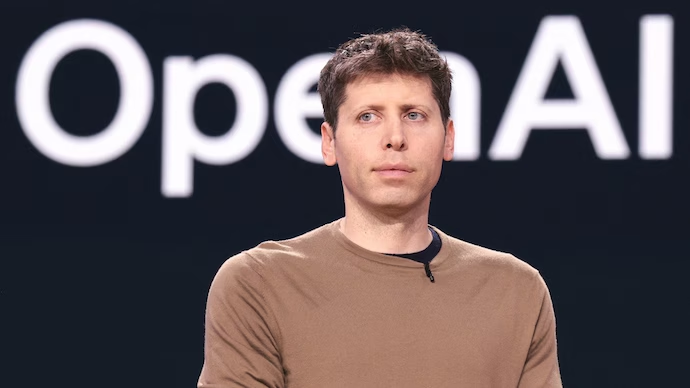
Despite a staggering $38.5 billion loss in 2025, more than the revenue of TCS or Infosys, Sam Altman's OpenAI pushes for a trillion-dollar IPO.
OpenAI Lost $38.5 Billion In 2025, But Its Trillion-Dollar Ambition Is Just Getting Started
Here's a paradox for anyone tracking the future of technology: one of the world's most talked-about tech companies, heralded as the vanguard of the AI revolution, is reportedly bleeding cash at an unprecedented rate. We're not talking about a modest dip; we're talking about figures that make even seasoned investors pause, yet the market continues to bet big on its future. Specifically, reports indicate that OpenAI, the company behind ChatGPT, racked up a staggering $38.5 billion in losses in 2025 alone. To truly grasp the scale of that figure, consider this: it's a sum larger than the annual revenues of established Indian IT behemoths like TCS or Infosys, firms with hundreds of thousands of employees and decades of global operation. This financial expenditure isn't accidental. It reflects a deliberate, aggressive strategy. OpenAI reportedly poured around $34 billion into research and development, building out its massive computational infrastructure, and rapidly expanding its world-class talent pool. This monumental investment saw its losses surge dramatically from approximately $5 billion incurred in 2024, signaling an accelerating commitment to its ambitious goals. The burn rate shows no signs of slowing, either. In the first three months of the current year, OpenAI is said to have consumed another $3.7 billion, a significant chunk against its reported $5.7 billion in revenue for the same period. This kind of financial outlay would typically trigger alarms in any conventional business, yet for OpenAI, it's seemingly part of the plan, a cost of doing business at the cutting edge of AI development. Indeed, CEO Sam Altman has been remarkably candid about his indifference to these eye-watering figures. In 2024, he famously stated, "Whether we burn $500 million a year or $5 billion – or $50 billion a year – I don’t care, I genuinely don’t." His reasoning is clear: the pursuit of Artificial General Intelligence (AGI), a state where AI can think like humans, is an inherently expensive endeavor, and for him, the financial cost is secondary to achieving that transformative technological leap.
The Relentless Pursuit of AGI
This isn't just a story about a company losing money; it's a window into the high-stakes, capital-intensive race for AGI. For those of us tracking the startup ecosystem, this kind of aggressive "burn-to-build" strategy is familiar in nascent, high-potential sectors. But with OpenAI, the scale is simply unprecedented. We're talking about a company that, despite these losses, managed to raise $122 billion in funding earlier this year, pushing its valuation to an astounding $730 billion. That's not just investor confidence; that's a conviction in a generational shift. The aggressive investment strategy is seen as the culmination of years of venture capital increasingly backing "deep tech" – technologies with long development cycles, massive infrastructure requirements, and often no immediate revenue path, but with the promise of disrupting entire industries. OpenAI is the poster child for this philosophy. Their losses are not a sign of failure, but rather a direct consequence of their singular focus: to outspend and out-innovate everyone else on the path to AGI. The investment isn't just in raw compute power or top-tier researchers, though those are certainly significant line items. It's also about building the foundational models that will underpin the next generation of software, services, and even human-computer interaction. The "cost of discovery" for something as profound as AGI is proving to be astronomical, and investors, acutely aware of the potential winner-take-all dynamics, are seemingly willing to foot the bill.
Redefining Value in the AI Age
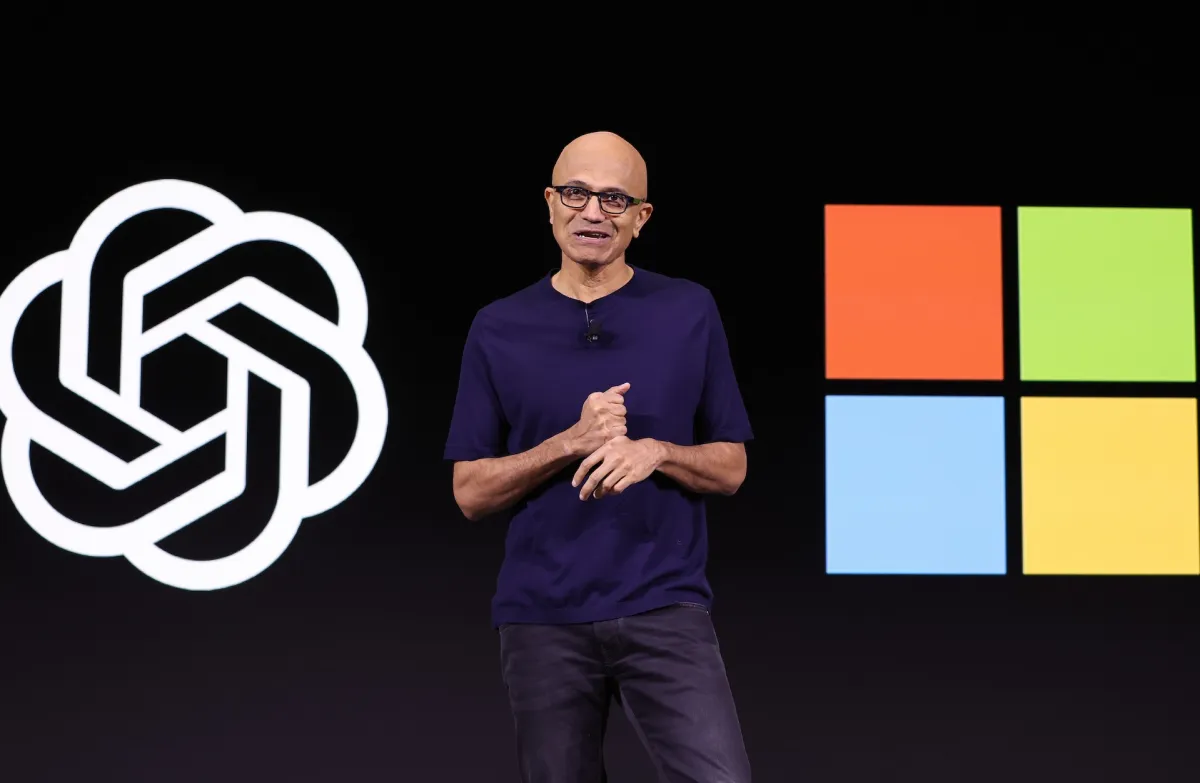
The figures prompt a recalibration of how "value" is understood in the modern tech economy. Traditional financial metrics, which would balk at a $38.5 billion loss, seem almost irrelevant when a company is simultaneously valued at hundreds of billions and poised for a trillion-dollar IPO. This isn't just about future earnings; it's about owning the foundational layers of a new technological epoch. Consider the competitive landscape: Anthropic, another major player in the AI space, is also aggressively fundraising and is already valued at $965 billion, with its own IPO on the horizon. These two companies alone are projected to reach trillion-dollar valuations when they go public, collectively dwarfing the combined $250 billion valuation of those very same Indian IT giants we used for comparison earlier. It underscores a stark reality: the capital requirements and perceived market opportunity in generative AI are creating a new class of hyper-valued, hyper-spending startups. This aggressive spending, while fueled by investor enthusiasm, isn't without its risks or implications for the broader tech ecosystem. For smaller AI startups, the sheer scale of investment required to compete at the frontier is a formidable barrier to entry. It suggests that while innovation might still spark in garages, scaling it to a foundational model level increasingly requires access to capital pools that only a select few can tap. Moreover, the concentration of such immense financial power and talent in a handful of companies like OpenAI raises legitimate questions about market consolidation and the future of innovation. While it accelerates the development of advanced AI, it also centralizes control over critical future technologies. This is a trend that founders and policymakers alike need to watch closely, as it shapes not just the tech landscape, but potentially the global economy itself. The narrative of "move fast and break things" has evolved. In the context of AGI, it's now "spend fast and build foundational intelligence." Microsoft's strategic investments in OpenAI, for instance, aren't just about gaining an edge; they're about securing a seat at the table of the next technological paradigm. This isn't merely a partnership; it's a symbiotic relationship where capital meets cutting-edge research, all aimed at a future that many believe is inevitable. Ultimately, while OpenAI's balance sheet might look alarming to the uninitiated, for those immersed in the venture and deep tech world, it's a testament to the audacious bets being placed on AGI. The upcoming IPOs of OpenAI and Anthropic will be pivotal moments, not just for these companies, but for the entire tech industry. They will either validate this high-burn, high-valuation model as the new blueprint for foundational tech, or they will offer a stark reminder that even the most ambitious visions eventually need to find a sustainable path to profitability. The market appears ready to embrace the long game.
Frequently asked questions
Hey Google, how much money did OpenAI lose in 2025?
OpenAI reportedly lost $38.5 billion in 2025. This figure represents a significant increase from the $5 billion loss incurred in 2024, driven by substantial investments in research, infrastructure, and hiring for AGI.
How do OpenAI's losses compare to Indian IT companies?
OpenAI's $38.5 billion loss in 2025 was higher than the annual revenue of major Indian IT giants like TCS ($30 billion) and Infosys ($19.28 billion). Its losses were three times the combined profit of the top five Indian IT firms mentioned.
Why is OpenAI losing so much money?
OpenAI is investing heavily in research, infrastructure, and hiring to develop artificial general intelligence (AGI). The company reportedly spent $34 billion in 2025 alone towards these efforts.
Is Sam Altman concerned about OpenAI's losses?
No, OpenAI CEO Sam Altman has stated he is not bothered by the company losing money. He claims he is willing to burn money to achieve artificial general intelligence (AGI), saying "I don't care" about the figures.
What are OpenAI's future financial plans despite the losses?
Despite significant losses, OpenAI has successfully raised $122 billion in funding and is currently valued at $730 billion. The company is also expected to file for an IPO soon, with ambitions to become a trillion-dollar company.
How does OpenAI's valuation compare to Indian IT giants?
OpenAI, with a valuation of $730 billion, and its competitor Anthropic ($965 billion), have valuations multiple times higher than the combined valuation of around $250 billion for the Indian IT majors mentioned in the article.