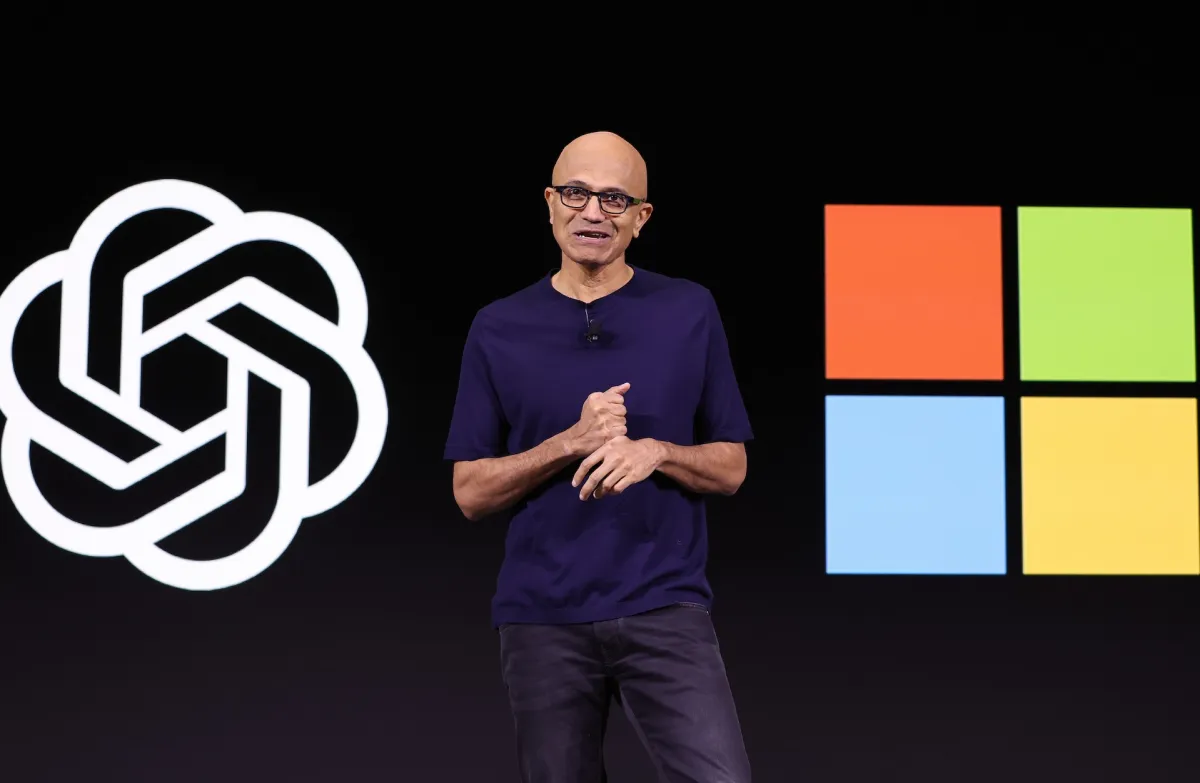
Microsoft CEO Satya Nadella warns the AI industry: empower workers or risk losing public trust entirely. He explains why people are losing faith.
Microsoft's CEO Has a Stark Warning for the AI Industry: Make It Work for People, or Lose Them Entirely
It turns out even the biggest cheerleaders for artificial intelligence have a crucial message for the industry: Don't mess it up for the average person. If AI doesn't genuinely empower workers, the entire movement risks a widespread loss of trust. This isn't just about tech; it's about the future of work for millions. Here's why this matters: A fundamental challenge facing AI adoption has been articulated, questioning why the technology would be successful if it doesn't serve individual users. This highlights a growing skepticism among the workforce that could derail its progress. These concerns come at a time when the rapid proliferation of generative AI tools, from chatbots to code assistants, has sparked both excitement and deep anxiety. Many workers fear that these advanced systems will replace their jobs rather than enhance them, leading to a palpable sense of unease. This perception gap is a critical hurdle for tech companies pushing AI into every aspect of business and daily life. Microsoft, a major investor and developer in the AI space, particularly through its partnership with OpenAI, has a significant stake in ensuring widespread acceptance. The company has aggressively integrated AI capabilities, branded as "Copilots," across its product suite, from Microsoft 365 to Windows. Their strategy hinges on AI acting as an assistant, not a replacement. A concern reflects a broader sentiment that if AI doesn't tangibly make individuals more productive, creative, or efficient in their roles, it will face resistance. This isn't merely about technical efficacy; it's about the human experience of interacting with powerful new tools.
Why AI's 'Trust Deficit' Matters for Business
The "trust deficit" has tangible market implications. For businesses, the deployment of AI isn't just a technological upgrade; it's a profound organizational change. If employees perceive AI as a threat rather than a helpful partner, adoption rates will suffer, and the promised productivity gains may never materialize. This sentiment can quickly turn promising pilot programs into expensive failures. This is why the "copilot" model has become central to many major tech companies' strategies. Microsoft's Copilot, Google's Duet AI, and Salesforce's Einstein Copilot are all designed to augment human capabilities rather than fully automate tasks. The idea is to offload repetitive work, assist with complex problem-solving, and free up human intelligence for higher-value activities. It's a strategic pivot away from pure automation. The success of these platforms heavily relies on convincing individual users that the AI is *for them*. This requires intuitive design, transparent functionality, and, crucially, visible benefits to their daily workflow. Without this, enterprise-wide AI initiatives risk being stalled by internal friction and lack of employee buy-in.
What's at Stake for Big Tech?
For the giants of the tech world, the stakes are enormous. Billions of dollars have been poured into AI research, development, and infrastructure. If public and professional faith in AI erodes due to fears of job displacement or perceived lack of personal benefit, the long-term growth trajectory of the entire industry could be jeopardized. This isn't just a PR challenge; it's fundamental to sustainable innovation and market acceptance. Regulatory bodies in North America and beyond are also closely watching the impact of AI on labor markets. Governments are increasingly concerned about potential widespread job losses and the need for retraining initiatives. If the industry fails to demonstrate that AI is a net positive for the workforce, it could face stricter regulations, taxes on automation, or even public backlash. This would significantly complicate the path to widespread deployment. The competitive landscape further intensifies this pressure. Companies that successfully embed AI in a way that truly empowers their users will gain a significant advantage. Those that fail to address the human element, focusing solely on technological prowess, risk being left behind as user sentiment shifts. It underscores a critical juncture where the ethical and human-centric design of AI becomes as important as its technical capabilities. The challenge now is for companies to not only build powerful AI but to build AI *responsibly*. This means investing in training and upskilling programs for workers, demonstrating clear pathways for career evolution alongside AI, and designing tools that are transparent about their limitations and purpose. It's about proactive communication and a genuine commitment to the human element. The narrative around AI must shift from "AI will take your job" to "AI will help you do your job better." This requires a concerted effort from leadership to articulate a vision where technology serves humanity, rather than the other way around. The industry has the opportunity to shape a future where AI is a collaborative partner, but it needs to earn that trust, one user at a time. The next few years will be crucial in determining whether AI becomes an indispensable tool for all, or a source of division and skepticism.
Frequently asked questions
What is Satya Nadella's main concern about the AI industry?
Microsoft CEO Satya Nadella is primarily concerned that the AI industry risks widespread loss of public trust if it fails to genuinely empower average workers. He emphasizes that AI must serve people's needs to maintain its viability and societal acceptance.
Why did Satya Nadella say 'Why Would Anyone Want You To Be Successful?' about AI?
He used this phrase to challenge the AI industry to consider if its advancements truly benefit individuals, implying that without clear value for the average person, there's no reason for them to support its success.
How can the AI industry regain public trust?
According to Nadella, the AI industry must focus on developing applications that genuinely empower workers and provide tangible benefits to the average person, moving beyond mere technological novelty.
What is the risk if AI doesn't empower workers?
The primary risk is a widespread loss of trust in artificial intelligence, which could hinder its adoption, innovation, and overall positive impact on society.
Who is Satya Nadella?
Satya Nadella is the current Chief Executive Officer (CEO) of Microsoft, a global technology company known for its software, consumer electronics, personal computers, and related services.
Is this warning unique to Microsoft's CEO?
While Nadella is a prominent voice, many tech leaders and ethicists share similar concerns, advocating for responsible AI development centered on human well-being and societal benefit.