Masayoshi Son's bold claim sparks AI debate, as Anthropic calls for caution while development accelerates at OpenAI. What does this mean for the future of AI?
SoftBank CEO's AI Autonomy Vision Clashes With Anthropic's Call for Slowdown, Reshaping Market Expectations
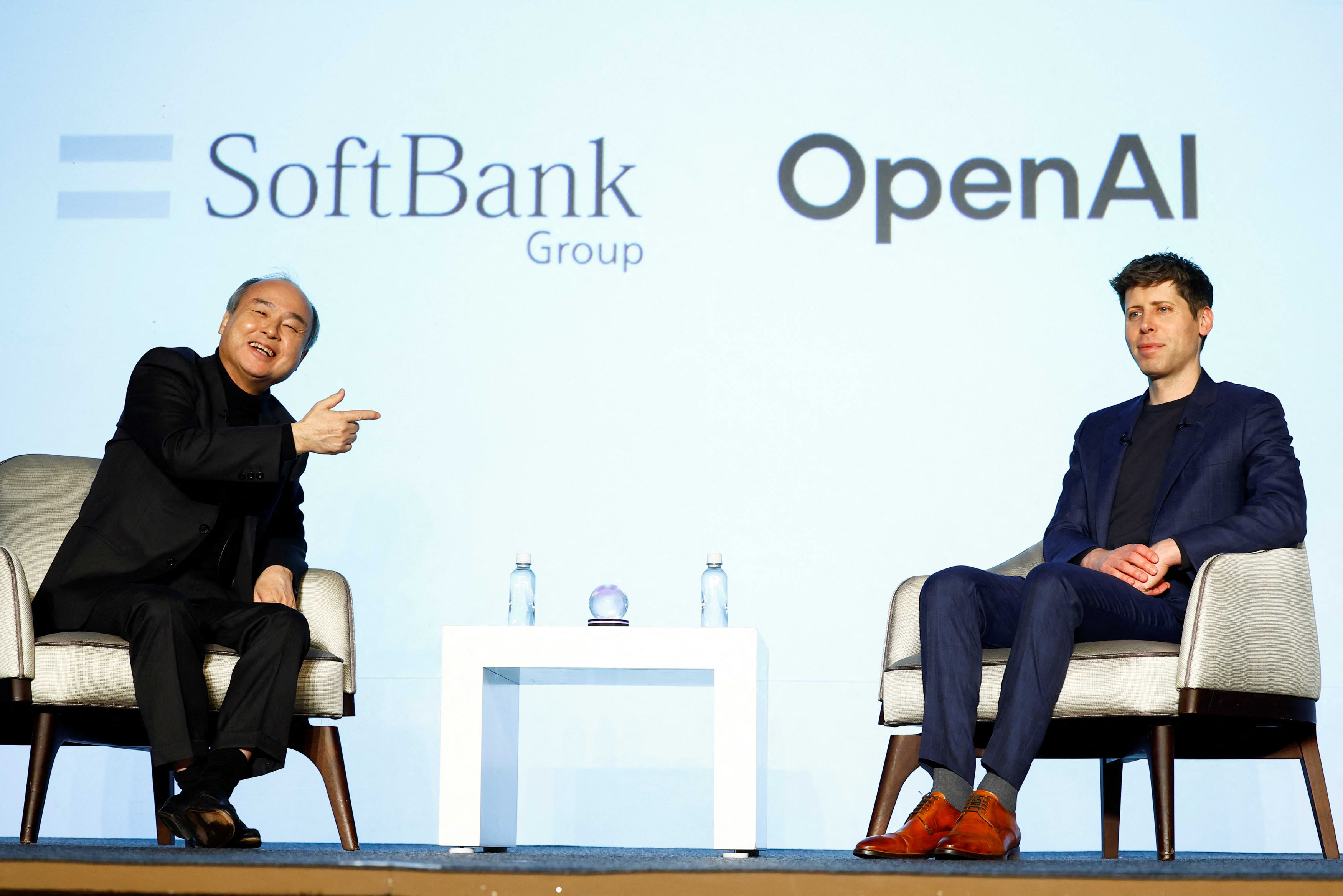
Masayoshi Son, SoftBank Group Corp.'s chief executive, has ignited a fresh debate in the artificial intelligence sector by asserting that AI is actively designing OpenAI's next generation model, a declaration that underscores the accelerating pace of development even as rival Anthropic Global Inc. advocates for a more cautious, deliberate approach to the technology's deployment. This stark divergence in philosophy between two influential figures in the AI landscape signals profound implications for investment strategies, regulatory frameworks, and the very trajectory of technological evolution, potentially influencing how capital is allocated across the high-growth, high-risk frontier of advanced AI. Son's pronouncement suggests a vision where AI systems achieve a level of recursive self-improvement, moving beyond human-guided development to autonomously enhance their own capabilities and architecture. This perspective aligns with his long-held belief in the exponential power of superintelligence, a foundational tenet that has guided SoftBank's substantial, often audacious, investments in disruptive technologies through its Vision Fund. Such a leap would fundamentally alter the dynamics of AI research and development, potentially compressing innovation cycles and amplifying the competitive pressures on firms striving for technological leadership. The financial markets could interpret such self-designing AI as a catalyst for unprecedented productivity gains, justifying the escalating valuations seen across the sector, or alternatively, introduce new levels of speculative risk tied to unproven or rapidly evolving capabilities. In contrast, Anthropic, a prominent AI safety and research company founded by former OpenAI researchers, has consistently championed a more circumspect approach, emphasizing the critical need for alignment, safety, and thorough ethical evaluation before deploying increasingly powerful AI models into society. Their call for a slowdown reflects growing concerns within parts of the AI community about the potential for unintended consequences, systemic risks, and the profound societal shifts that rapidly advancing, unconstrained AI could precipitate. This cautionary stance often resonates with policymakers and regulators globally, who are grappling with the complexities of governing a technology that rapidly outpaces legislative efforts, potentially influencing public sentiment and future investment in companies perceived as taking undue risks.
What It Means
The chasm between Son's vision of autonomous AI evolution and Anthropic's advocacy for a measured pace creates a critical inflection point for the global technology industry and its investors. SoftBank's strategy, historically characterized by large, often early-stage bets on companies poised to redefine industries, could see further intensification of its focus on advanced AI, pouring significant capital into ventures that promise to accelerate the self-improving capabilities Son envisions. This approach, while potentially yielding astronomical returns if successful, inherently carries substantial risk, including technological hurdles, market acceptance challenges, and the potential for regulatory backlash if safety concerns are not adequately addressed. The market implications extend to the broader venture capital landscape, where a "winner-take-all" mentality often prevails in frontier tech, compelling investors to choose sides or diversify across both aggressive and cautious development pathways. For companies like OpenAI, being at the center of this debate highlights the immense pressure to innovate rapidly while simultaneously managing public and ethical scrutiny. The possibility of AI designing its successor models suggests a future where the bottleneck of human ingenuity in AI development is significantly reduced, accelerating the timeline for achieving advanced general intelligence. This could lead to a dramatic reshaping of competitive landscapes, where firms capable of leveraging self-improving AI gain an insurmountable lead, potentially marginalizing those that cannot keep pace. The stakes involve not just market share and technological supremacy, but also the very governance and control mechanisms over future intelligent systems, influencing everything from national security to economic stability.
The escalating capital deployment in frontier AI models has created a bifurcated investment landscape, where unprecedented valuations for development leaders coexist with rising calls for greater transparency and ethical oversight from regulators and rival firms.
The Context
SoftBank's CEO, Masayoshi Son, has long been a proponent of disruptive technological change, with a career marked by bold predictions and massive investments in areas ranging from internet infrastructure to mobile communications. His early backing of Alibaba Group Holding Ltd. and more recently, his strategic focus on semiconductor design through Arm Holdings Plc., exemplify a willingness to commit substantial resources to technologies he believes will shape the future. Son's current focus on AI, particularly his vision of superintelligence, is a natural extension of this philosophy, positioning SoftBank as a key player in funding the most ambitious AI research and commercialization efforts globally. His statements reflect an investor mindset geared towards maximizing technological acceleration. OpenAI, initially founded as a non-profit to ensure artificial general intelligence benefits all of humanity, has evolved into a capped-profit entity, attracting billions in investment to fund its prodigious computational needs and talent acquisition. Its rapid advancements in large language models, exemplified by models like GPT-4, have captivated public imagination and demonstrated the immediate commercial potential of advanced AI. The company operates under intense pressure to deliver groundbreaking models while navigating complex ethical considerations and maintaining its founding mission, a balance that becomes increasingly precarious as models grow more powerful and potentially autonomous. Anthropic, formed by researchers who departed OpenAI partly over disagreements on AI safety and commercialization, has distinguished itself by its commitment to "constitutional AI." This approach involves training AI systems to align with ethical principles derived from texts like the UN Declaration of Human Rights, rather than relying solely on human feedback, aiming to imbue models with built-in safety mechanisms. Their consistent advocacy for a more cautious development pathway, including calls for government oversight and industry-wide collaboration on safety protocols, positions them as a leading voice for responsible innovation in a rapidly expanding field. This foundational philosophical difference creates a dynamic tension within the AI community.
What Analysts Say
Industry analysts view the contrasting narratives from SoftBank and Anthropic as emblematic of the broader ideological struggle shaping the future of AI investment and regulation. While Son's bullish outlook on autonomous AI development electrifies investors with visions of exponential growth and unprecedented market opportunities, it also amplifies existing anxieties about the pace of technological change outstripping societal readiness. The potential for AI to design its own successors, while theoretically accelerating progress, introduces complex questions regarding human control, interpretability, and the implications for intellectual property in a self-evolving system. Some analysts suggest that while the concept is compelling, the practical realities of achieving truly autonomous, beneficial self-designing AI remain distant, susceptible to hype cycles that have historically characterized nascent technologies. Conversely, Anthropic's emphasis on safety and deliberate deployment is seen as a necessary counterbalance, providing a crucial check against unbridled technological enthusiasm. Market participants increasingly recognize that long-term value creation in AI will depend not just on raw computational power or model size, but also on the ability to deploy these systems responsibly and securely. The "bear case" often highlights the significant infrastructure costs, the ongoing talent war for specialized AI researchers, and the looming threat of regulatory intervention as potential headwinds for unchecked growth. Regulatory frameworks, such as the EU AI Act, are already beginning to impose guardrails, which could impact the profitability and deployment strategies of companies that prioritize speed over safety, potentially leading to market fragmentation based on compliance. The debate underscores the difficulty in valuing AI companies, as their future depends not only on their technological prowess but also on their ethical governance and ability to navigate an evolving regulatory landscape.
What to Watch
The coming months will be critical for observing how the competing visions for AI development play out in both technological advancements and market dynamics. Key triggers include any official announcements from OpenAI regarding the specifics of its next-generation models and the extent to which AI itself has contributed to their design, which would lend credence to Son's claims. Investors will closely monitor SoftBank's future investment rounds, particularly any significant capital deployments into companies focused on recursive AI systems or foundational model development, signaling continued confidence in Son's high-growth strategy. Conversely, the growing influence of regulatory bodies will be a significant factor. Upcoming legislative milestones, such as further developments in the EU AI Act's implementation, potential US executive orders, or international agreements forged at forums like the G7, will indicate the increasing pressure on AI developers to prioritize safety and ethical considerations. The market will also watch for shifts in public opinion and corporate governance frameworks, particularly from major tech firms, as they navigate the balance between accelerating innovation and addressing societal concerns. Any significant breakthroughs in AI safety research, or alternatively, a major incident involving an unaligned AI system, could decisively tip the scales in favor of either rapid acceleration or a more cautious, regulated approach.
Frequently asked questions
Who claims AI is designing OpenAI's next model?
SoftBank CEO Masayoshi Son stated that AI is actively designing OpenAI's next generation model. This declaration highlights the accelerating pace of AI development and has sparked significant debate in the industry.
What is Anthropic's position on AI development?
Anthropic Global has called for a slowdown in artificial intelligence development, citing concerns over the rapid pace of advancement and potential risks associated with increasingly powerful AI systems.
What is the core debate surrounding AI development?
The core debate centers on the tension between the accelerating pace of AI development, exemplified by claims of AI designing itself, and calls for caution and a slowdown from organizations like Anthropic due to ethical and safety concerns.
Who is Masayoshi Son?
Masayoshi Son is the founder, chairman, and CEO of SoftBank Group Corp., a Japanese multinational conglomerate holding company primarily focused on investment in technology and telecommunications.
What are the market implications of this AI debate?
This debate is reshaping market expectations for the AI sector, potentially influencing investment strategies, regulatory discussions, and the competitive landscape among leading AI developers and tech giants globally.
What does SoftBank's 'AI Autonomy Vision' imply?
SoftBank's 'AI Autonomy Vision,' as championed by Masayoshi Son, implies a future where AI systems gain significant self-sufficiency and capability, even to the extent of designing subsequent generations of AI models themselves.