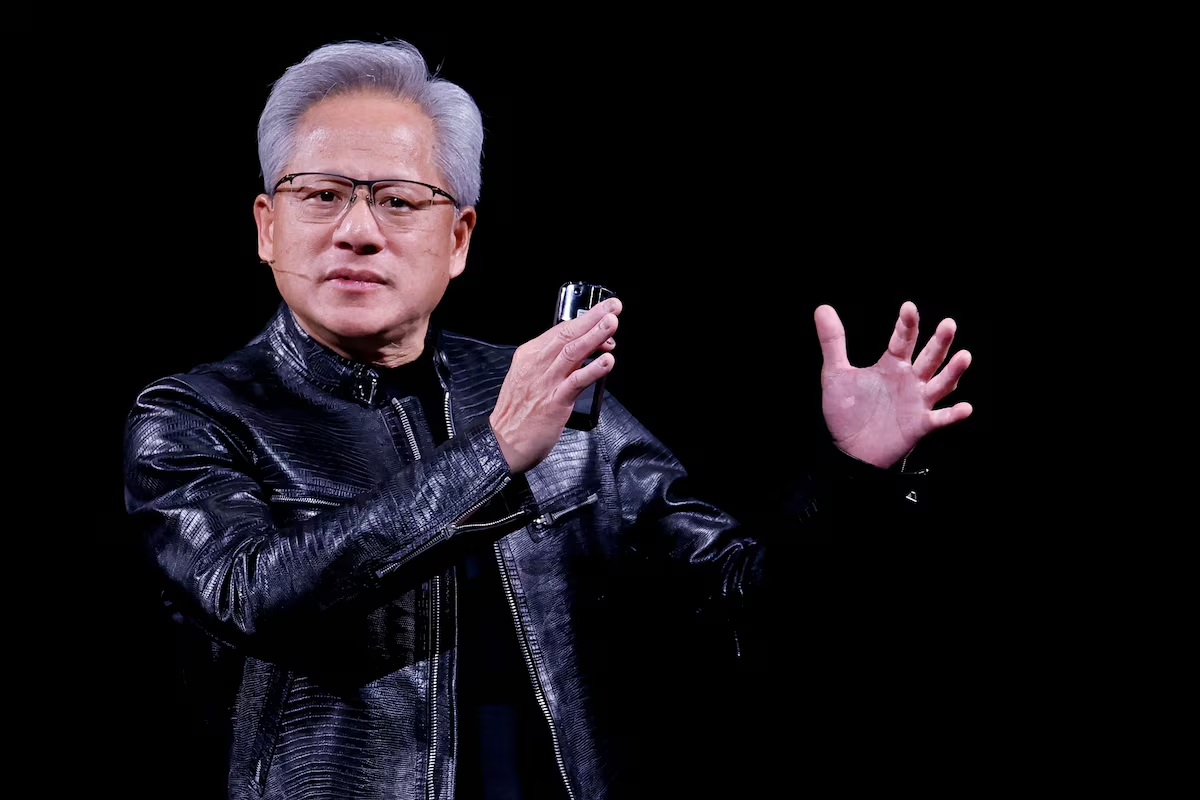
Jensen Huang's intensive South Korea tour cements NVIDIA's partnerships with LG, Samsung, Hyundai, driving AI tech and impacting stock markets.
What is driving the latest surge in AI-related partnerships and market volatility, particularly concerning NVIDIA and key Asian industrial players?
NVIDIA is deepening its strategic ties with LG Group, focusing on humanoid robotics, data centers, and the automotive sector, as its CEO Jensen Huang undertakes an intensive visit to South Korea, a critical hub for advanced technology and manufacturing.
TradingKey - During the Asian trading session on June 8, Jensen Huang, the CEO of NVIDIA, confirmed during a visit to the LG Twin Towers in Yeouido, Seoul, that NVIDIA is collaborating with LG Group. This partnership is set to jointly advance developments across three pivotal sectors: humanoid robotics, data centers, and the automotive industry. This announcement comes amidst a broader strategic tour of South Korea by Huang, highlighting the region's increasing importance in the global AI and technology landscape.
LG Group, a Korean industrial conglomerate, operates a highly diversified portfolio that spans electronics, chemicals, and telecommunications. This extensive operational footprint has allowed LG to accumulate significant industrial expertise, particularly in areas crucial for the advancements targeted by this collaboration, including AI infrastructure, smart homes, and sophisticated automotive components. The synergy between NVIDIA's foundational AI and computing prowess and LG's diversified industrial capabilities and manufacturing strength forms the bedrock of this announced strategic alliance.
Advancing Humanoid Robotics and Intelligent Systems
One of the cornerstone areas of this collaboration is humanoid robotics, a field poised for transformative growth. LG Electronics, a flagship subsidiary of LG Group, has already made significant strides in this domain. The company has developed its own physical AI model, leveraging NVIDIA's Isaac GR00T foundation. This foundational model provides the core intelligence for robots, enabling them to understand and interact with their environment in increasingly sophisticated ways. Furthermore, LG Electronics is actively utilizing NVIDIA's advanced robotics platforms to drive a range of intelligent robot verification projects. These projects are critical for testing and refining the performance and safety of next-generation robotic systems before their widespread deployment.
A tangible demonstration of LG Electronics' progress in robotics was showcased at CES in January 2026, where the company unveiled 'LG CLOi,' a home robot. This innovative robot is powered by the NVIDIA Jetson Thor platform, an embedded AI supercomputer designed for advanced robotics and autonomous machines. The integration of NVIDIA Jetson Thor highlights the computational power and AI capabilities embedded within LG's robotic initiatives, enabling features such such as advanced perception, navigation, and human-robot interaction. Looking ahead, LG Electronics has ambitious plans to establish a mass production system for actuators within this year. Actuators are core components of robotic joints, essential for enabling movement and manipulation. This strategic move signifies LG's commitment not only to developing the intelligence behind robots but also to controlling the critical hardware supply chain, ensuring scalability and robust performance for its future robotic endeavors.
Revolutionizing Data Centers with AI Computing and Cooling
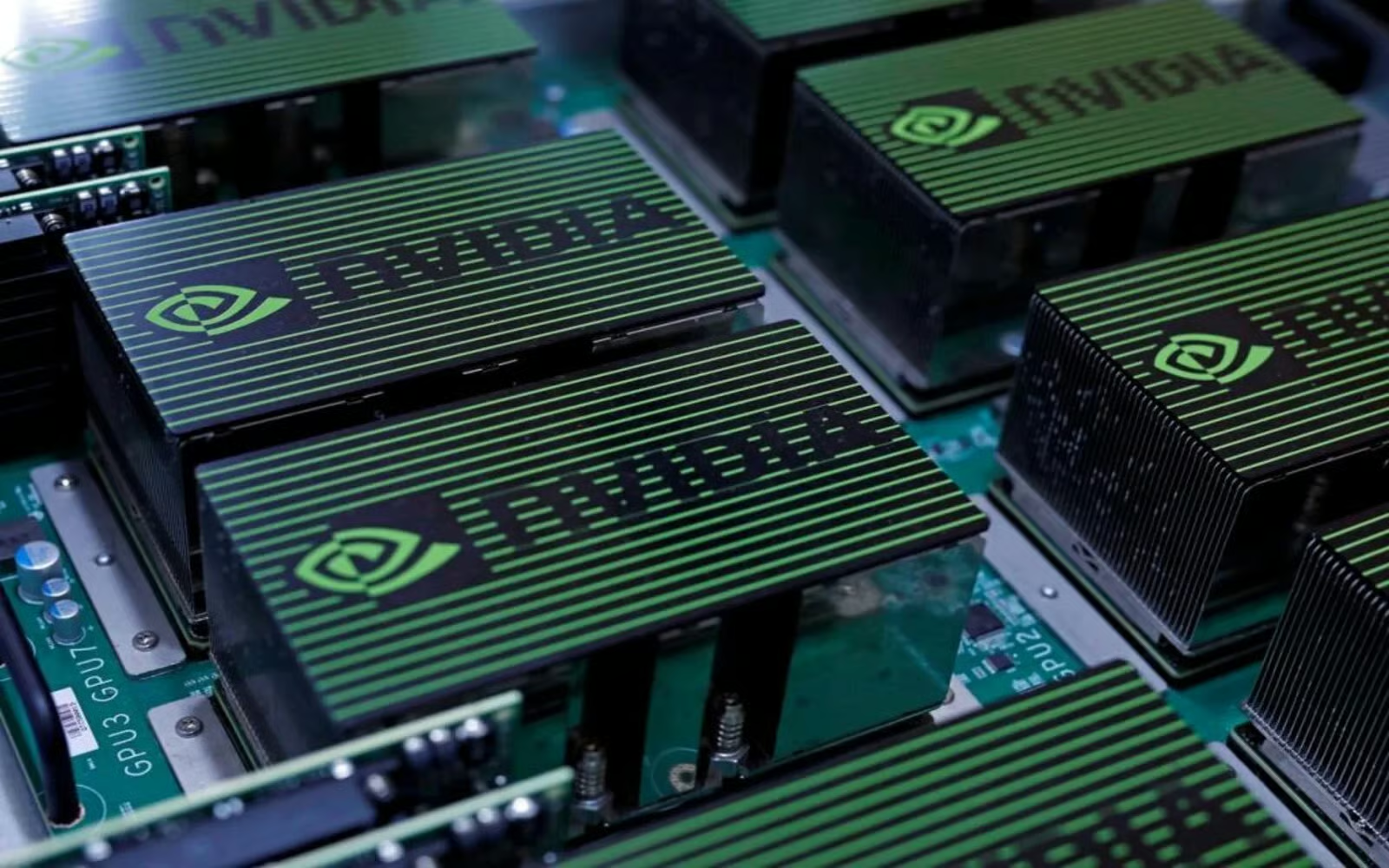
The collaboration extends significantly into the realm of data centers, an area fundamental to the proliferation of AI across all industries. This partnership encompasses advancements in AI computing infrastructure and crucial cooling solutions, which are becoming increasingly vital for managing the immense heat generated by high-performance AI processors. LG Group recently made a landmark announcement regarding its plans to procure 10,000 NVIDIA Blackwell GPUs. This represents the largest single purchase of NVIDIA GPUs in LG Group's history, underscoring LG's profound commitment to its AI transformation initiatives. The total investment associated with this procurement and the broader AI transformation is projected to reach trillions of Korean won, signaling a massive strategic redirection of resources towards becoming a leader in AI-driven operations and services.
The Blackwell GPU architecture, representing NVIDIA's latest generation of AI accelerators, is designed to deliver unprecedented performance for large language models, complex AI training, and data analytics. By integrating 10,000 of these cutting-edge GPUs, LG Group is positioning itself at the forefront of AI computational power, enabling it to develop and deploy advanced AI models and services across its diverse business units. The focus on cooling solutions alongside computing infrastructure also highlights a pragmatic understanding of the practical challenges associated with operating large-scale AI data centers. Efficient cooling is not merely an operational detail but a critical enabler for sustaining high performance and energy efficiency in AI supercomputing environments, ensuring the longevity and reliability of this significant investment.
LG Group's NVIDIA Blackwell GPU Procurement:
Quantity: 10,000 units
Significance: Largest single purchase of NVIDIA GPUs in LG Group's history
Investment: Trillions of Korean won
Purpose: Drive LG's AI transformation across diversified portfolio
Market Volatility and LG Electronics Stock Performance
The backdrop to this significant partnership announcement was a period of considerable market turbulence. On the Monday of the announcement, the KOSPI index experienced a dramatic tumble of over 8% in early trading, triggering a Level 1 circuit breaker. This broad market decline was exacerbated by a plunge of more than 10% in the Philadelphia Semiconductor Index on the preceding Friday, coupled with intensifying fears of interest rate hikes across global markets. Against this challenging economic environment, LG Electronics shares saw an intraday decline of more than 14% on Monday, marking its third consecutive trading session of losses.
However, as news of the strategic partnership between NVIDIA and LG gained traction throughout the trading day, a notable shift occurred. The stock rebounded from its intraday lows, briefly recovering to near 290,000 KRW before noon. This positive development significantly helped stem the earlier decline, narrowing the stock's overall loss for the day to approximately 6% at its peak recovery. As of press time, LG Electronics shares were down approximately 8%, trading at 278,000 KRW. The positive development of the collaboration between NVIDIA and LG significantly offset the panic selling that characterized the morning session, demonstrating the market's positive reaction to strategic alliances in the high-growth AI sector.
Analyzing LG Electronics' recent performance, its shares had surged more than 200% year-to-date prior to these market movements. This substantial rally had resulted in significant short-term valuation pressure, making the stock susceptible to profit-taking and broader market corrections. Coupled with a systemic sell-off in global tech stocks driven by macroeconomic concerns, the decline on Monday could have deepened further. The news of the NVIDIA partnership provided crucial support, acting as a buffer against a more severe downturn and underscoring the perceived value of such strategic technological collaborations in mitigating market pressures.
Jensen Huang's Intensive South Korea Visit: A Strategic Tour
Jensen Huang's visit to South Korea was characterized by a packed itinerary, highlighting the country's strategic importance for NVIDIA's global ambitions in AI, semiconductors, and beyond. His engagements spanned various industry giants, underscoring the breadth of NVIDIA's partnerships and interests in the region.
On the morning of June 8, approximately at 10:00 a.m., Huang arrived at the LG Twin Towers. He was personally greeted in the lobby by LG Group Chairman Koo Kwang-mo, an indication of the high-level importance attached to this visit and the ongoing collaboration. In the afternoon of June 8, Huang was scheduled to continue his high-profile engagements with a meeting with Samsung Electronics Vice Chairman Jun Young-hyun at the Shilla Seoul. Discussions with Samsung Electronics were expected to cover critical areas such as High Bandwidth Memory (HBM) supply, AI accelerators, and potential robotics collaboration. Samsung's role as a key memory supplier and its own extensive semiconductor manufacturing capabilities make it a crucial partner for NVIDIA's ecosystem.
Huang's itinerary also included engagements earlier in the week. On the evening of June 5, he had dinner in Seoul with a powerful contingent of South Korean business leaders, including SK Group Chairman Chey Tae-won, LG Group Chairman Koo Kwang-mo, and Naver Board Chairman Lee Hae-jin. This gathering of leaders from diverse sectors — telecommunications, electronics, and internet services — signals NVIDIA's interest in integrating its AI technologies across a wide array of industries within the Korean economy. On June 7, Huang had lunch with Hyundai Motor Group Executive Chair Euisun Chung. Their discussions focused on autonomous driving and robotics cooperation, areas where NVIDIA's AI platforms are pivotal for developing next-generation automotive technologies. Later that same afternoon, Huang also met with executives from prominent gaming companies Krafton and NCSOFT, indicating NVIDIA's continued engagement with the gaming industry, a foundational market for its GPU technology.
Beyond these strategic meetings, Huang made a significant announcement on June 5. He confirmed that three major memory manufacturers — SK Hynix, Samsung Electronics, and Micron — have all successfully passed HBM4 qualification. This critical milestone means these companies are now poised to move into the mass production phase for HBM4, the next generation of high-bandwidth memory crucial for powering advanced AI accelerators. This announcement is vital for NVIDIA, as reliable and high-volume supply of HBM is essential for meeting the burgeoning global demand for its AI GPUs.
Key Takeaways from Jensen Huang's South Korea Visit
Deepened LG Partnership: Focus on humanoid robotics, data centers, and automotive sectors.
LG Electronics' Robotics Advances: Developing physical AI with NVIDIA's Isaac GR00T, showcasing 'LG CLOi' with Jetson Thor, planning actuator mass production.
Major Data Center Investment: LG Group to procure 10,000 NVIDIA Blackwell GPUs, a historic purchase worth trillions of won.
Market Impact: LG Electronics stock rebound from significant intraday decline following partnership news, mitigating broader market and tech sector sell-offs.
Extensive Industry Engagements: Meetings with leaders from LG, Samsung, SK, Hyundai, Naver, Krafton, and NCSOFT underscore South Korea's strategic importance.
HBM4 Qualification: Announcement that SK Hynix, Samsung Electronics, and Micron have passed HBM4 qualification, securing future memory supply for AI GPUs.
The intensive nature of Jensen Huang's visit and the breadth of his engagements underscore South Korea's pivotal role in NVIDIA's global strategy. From securing advanced memory supply chains to forging deep partnerships in emergent fields like humanoid robotics and autonomous vehicles, NVIDIA is strategically positioning itself to capitalize on and drive the next wave of AI innovation. The collaboration with LG Group, in particular, leverages LG's extensive industrial expertise and manufacturing capabilities, creating a powerful alliance that could significantly accelerate developments in critical technology sectors and reshape the competitive landscape for AI and robotics globally.
Frequently asked questions
What is the main focus of NVIDIA's collaboration with LG Group?
NVIDIA and LG Group are primarily collaborating on humanoid robotics, data centers, and the automotive sector. This partnership aims to leverage NVIDIA's AI technology with LG's industrial expertise to advance these key areas.
What specific NVIDIA technology is LG Electronics using for robotics?
LG Electronics is utilizing NVIDIA's Isaac GR00T foundation and robotics platforms for its physical AI models and intelligent robot verification projects. Its 'LG CLOi' home robot is powered by the NVIDIA Jetson Thor platform.
What is LG Group's major investment in NVIDIA GPUs?
LG Group recently announced plans to procure 10,000 NVIDIA Blackwell GPUs, marking its largest single purchase of NVIDIA GPUs in history, with a multi-trillion won investment for AI transformation.
How did LG Electronics' stock react to the partnership news?
LG Electronics shares initially plunged over 14% but rebounded significantly after news of the NVIDIA partnership gained traction, narrowing its decline to about 6% before settling around 8% down.
Who else did Jensen Huang meet during his South Korea visit?
Besides LG Group, Jensen Huang met with Samsung Electronics Vice Chairman Jun Young-hyun, Hyundai Motor Group Executive Chair Euisun Chung, SK Group Chairman Chey Tae-won, Naver Board Chairman Lee Hae-jin, and executives from Krafton and NCSOFT.
What other major announcement did Jensen Huang make regarding semiconductors?
On June 5, Jensen Huang announced that SK Hynix, Samsung Electronics, and Micron have all passed HBM4 qualification and are moving into the mass production phase for these advanced memory chips.