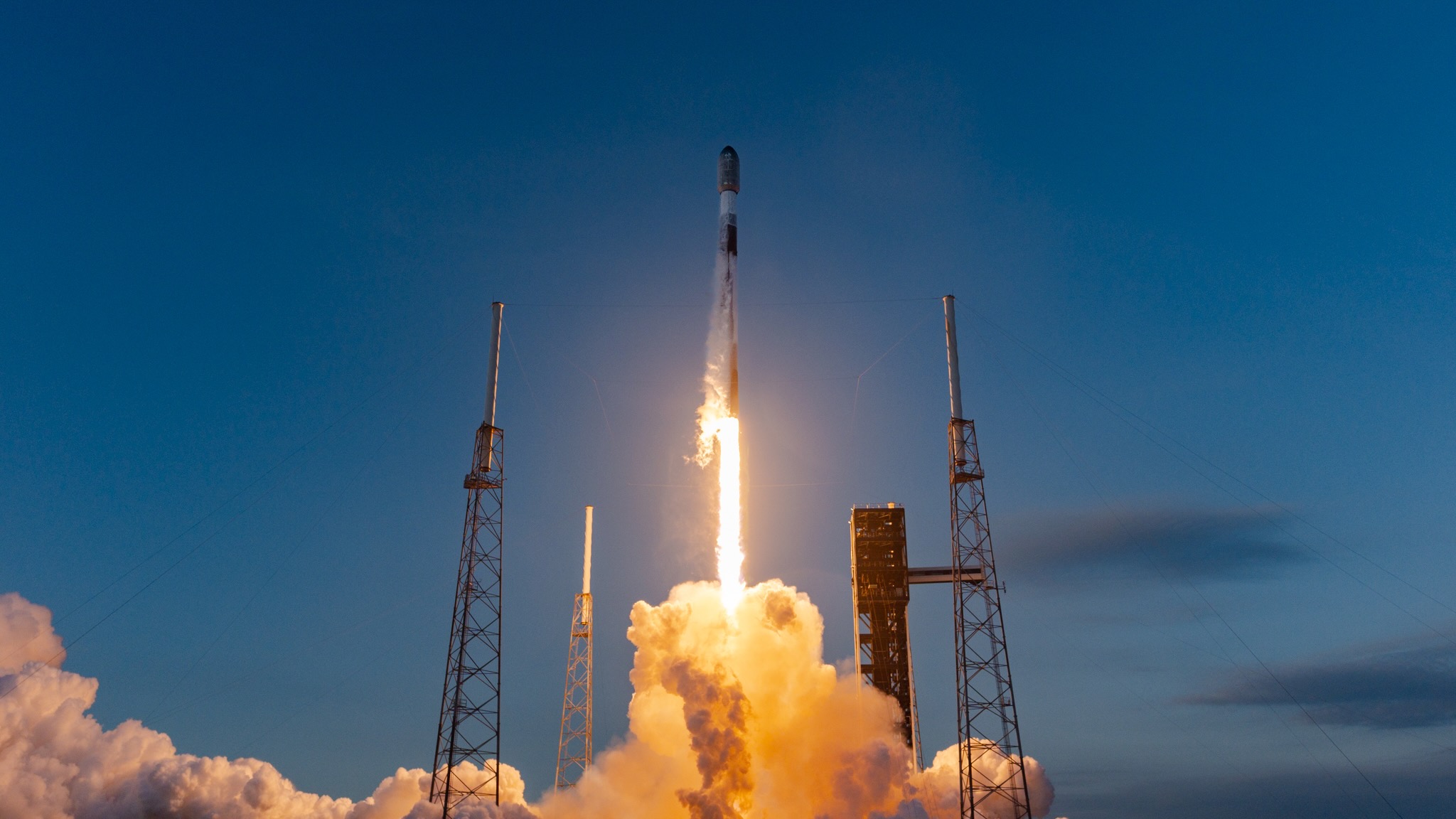
SpaceX's 'Starmind' signals a major industry shift, bringing advanced AI directly to low Earth orbit for transformative data services.
SpaceX Unveils 'Starmind' AI Megaconstellation, Signaling Shift to In-Orbit Data Processing
SpaceX has officially named its forthcoming artificial intelligence megaconstellation 'Starmind,' a move poised to significantly reshape the satellite industry by integrating advanced AI processing directly into its low Earth orbit infrastructure and opening new avenues for high-value data services. This strategic branding underscores the company's ambition to expand beyond broadband connectivity, potentially disrupting cloud computing and intelligence markets while challenging established players in remote sensing and data analytics. The 'Starmind' initiative represents a logical evolution for SpaceX, leveraging its extensive Starlink satellite deployment and robust launch cadence to establish an unparalleled orbital compute platform. While specific technical specifications and deployment timelines remain largely undisclosed, the concept involves a network of AI-enabled satellites capable of processing vast datasets at the edge, reducing latency and bandwidth requirements for terrestrial data transfer. This on-orbit intelligence could unlock new applications in defense, environmental monitoring, autonomous systems, and scientific research, offering real-time insights previously hindered by computational limitations on Earth. The financial implications for SpaceX are substantial, projecting potential new revenue streams that diversify its reliance on launch services and Starlink subscriptions, thereby enhancing its formidable private market valuation. The development signals a growing trend of integrating advanced processing capabilities directly into space assets, moving away from merely relaying raw data to ground stations for analysis. This paradigm shift, from data transport to data intelligence, positions SpaceX as a pivotal player in the emerging space economy's high-margin segments. Competitors in the satellite communications and Earth observation sectors will likely face pressure to accelerate their own on-orbit processing initiatives, given the clear strategic advantages offered by immediate, localized data analysis. The move also intensifies the competitive landscape with traditional terrestrial data centers and cloud providers, as some compute tasks could migrate to space, offering unique security and resiliency benefits.
What It Means
The introduction of Starmind fundamentally alters the competitive dynamics within both the space sector and the broader data economy. By embedding sophisticated AI directly into its satellite network, SpaceX is creating a vertically integrated ecosystem that promises to deliver insights with unprecedented speed and scale, circumventing the bottlenecks of ground-based processing. This could lead to a significant re-evaluation of how industries reliant on global data acquisition, from agriculture to logistics to national security, leverage satellite infrastructure. The ability to perform complex analytics, object detection, or predictive modeling in orbit before transmitting only actionable intelligence could drastically reduce the data downlink burden and unlock capabilities currently impractical due to latency or volume. This strategic pivot positions SpaceX to capture a share of the rapidly expanding AI market, particularly for applications requiring pervasive, low-latency intelligence in remote or contested environments. It also presents a direct challenge to existing satellite imagery and data analytics firms, which typically rely on ground-based processing of raw satellite feeds. The move suggests a future where satellite operators are not just providers of bandwidth or raw data, but are integral components of global computational infrastructure, offering "AI-as-a-service" from orbit. Investor sentiment in related sectors, particularly those focused on terrestrial edge computing or traditional satellite data services, will likely scrutinize the potential for market disruption and assess their own innovation roadmaps to counter this orbital computing advantage.
SpaceX's Starlink division alone was reportedly valued at approximately tens of billions of dollars, reflecting investor confidence in its global broadband capabilities, a foundation upon which the Starmind AI constellation is expected to build and significantly augment.
Background
SpaceX's journey towards Starmind has been a long-term strategic trajectory, rooted in the foundational success of its Starlink megaconstellation. Launched with the primary objective of providing global broadband internet, Starlink has deployed thousands of satellites into low Earth orbit since 2019, establishing an unparalleled network density. This infrastructure, initially designed for communication, has always held the inherent potential for additional capabilities, particularly given the advanced inter-satellite laser links that enable rapid data transfer between spacecraft without needing to route through ground stations. The company’s continued investment in rapid prototyping, iterative design, and mass production for its Starlink satellites has created an agile platform ripe for advanced functionalities beyond basic connectivity. The concept of in-orbit data processing is not entirely new within the aerospace community, but SpaceX's scale and aggressive deployment pace offer a unique advantage. Elon Musk, the company's founder, has frequently articulated a vision for SpaceX that extends beyond space transportation, hinting at capabilities that leverage its orbital assets for a broader range of services. The naming of 'Starmind' formalizes this ambition, signalling a dedicated effort to integrate AI chipsets and sophisticated algorithms directly into future generations of its satellites. This evolution aligns with broader industry trends seeing miniaturization of powerful processors and increased demand for real-time data insights, particularly from remote or inaccessible locations globally. The company's established manufacturing capabilities and experience with complex orbital deployments provide a robust foundation for this ambitious expansion.
The Stakes
The stakes for Starmind are profoundly high, encompassing both immense opportunity and significant challenges. On the upside, a successful deployment could establish SpaceX as a dominant force in the nascent space-based AI sector, offering unparalleled computational power and data intelligence from orbit. This could generate multi-billion-dollar revenue streams by serving high-value clients across defense, climate science, resource management, and autonomous transportation, creating entirely new markets for space-derived insights. The ability to process sensitive data in orbit could also offer enhanced security and data sovereignty benefits for government and enterprise clients, making it a compelling alternative to ground-based cloud infrastructure in certain critical applications. However, the technical hurdles are formidable. Integrating powerful AI processors into space-hardened systems requires overcoming challenges related to radiation tolerance, thermal management, and power consumption within the size and weight constraints of a satellite. The development of robust, fault-tolerant AI models capable of operating autonomously in orbit, along with secure software updates and maintenance protocols, presents a complex engineering task. Furthermore, regulatory frameworks for orbital AI processing are still nascent, potentially leading to geopolitical complexities and international scrutiny regarding data collection, privacy, and the weaponization of intelligence. Competitors like Amazon's Project Kuiper, OneWeb, and various national space agencies are also investing heavily in advanced satellite capabilities, ensuring a fiercely competitive landscape where innovation, cost-efficiency, and regulatory compliance will be paramount for long-term success. The market will be closely watching for further technical disclosures from SpaceX regarding the specific AI hardware and software architectures planned for Starmind, as well as any pilot programs or partnerships that could offer concrete examples of its capabilities. Key milestones will include the launch of initial Starmind-specific satellites, the demonstration of on-orbit AI processing, and any subsequent commercial service announcements. Regulatory filings with bodies like the Federal Communications Commission (FCC) and international telecommunications unions will also provide crucial insights into the constellation's scale and operational parameters, offering early indicators of its potential impact on both the aerospace and global data markets.
Frequently asked questions
What is Starmind?
Starmind is the official name of SpaceX's new artificial intelligence megaconstellation, designed to integrate advanced AI processing directly into its low Earth orbit satellites. This initiative aims to revolutionize data services and processing capabilities in space.
Who named the AI megaconstellation Starmind?
SpaceX officially named its forthcoming artificial intelligence megaconstellation 'Starmind'.
What will Starmind do?
Starmind will integrate advanced AI processing directly into low Earth orbit infrastructure, enabling in-orbit data processing and opening new avenues for high-value data services.
How will Starmind impact the satellite industry?
Starmind is poised to significantly reshape the satellite industry by shifting data processing from ground stations to space, creating more efficient and advanced data services directly in orbit.
Where will Starmind operate?
Starmind will operate as a megaconstellation of satellites in low Earth orbit (LEO).
What is an AI megaconstellation?
An AI megaconstellation refers to a large network of hundreds or thousands of satellites, typically in low Earth orbit, equipped with artificial intelligence capabilities to perform in-orbit data processing and provide advanced services.