Elon Musk's company revealed AI1, a 230-foot satellite with 120kW compute, crucial for its record $1.75T IPO and future orbital AI network.
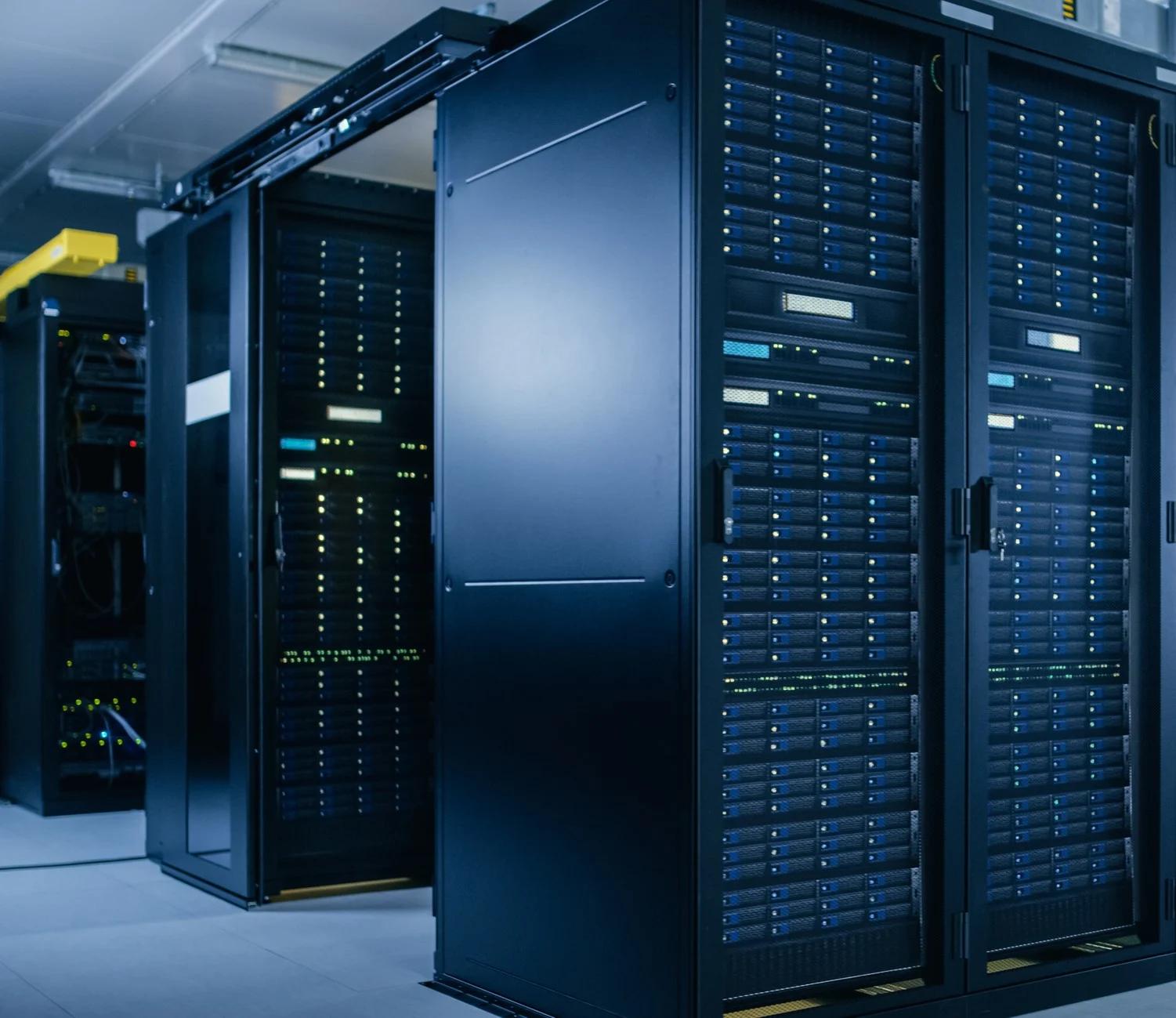
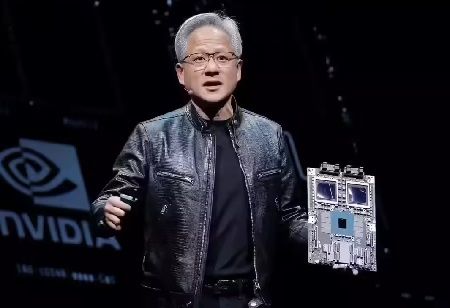
SpaceX has offered investors a critical glimpse into the future of its ambitious orbital compute venture, revealing the design of its AI1 satellite, a move that directly underpins the company’s staggering $1.75 trillion valuation target for its impending public offering. This tangible demonstration of an in-orbit AI data center isn't merely an engineering feat; it's a strategic play to redefine global AI infrastructure, challenging terrestrial data center paradigms and opening new frontiers for high-performance computing. The newly unveiled AI1 satellite, measuring an impressive 70 meters (230 feet) tip to tip and standing 20 meters (66 feet) tall when deployed, is engineered to deliver 120 kilowatts of average compute output, bursting to 150 kilowatts at peak demand. Its power is derived from 150-kilowatt solar panels, achieving an output density of 250 watts per square meter. A significant design challenge for space-based computing—thermal management—has been addressed with a sophisticated liquid-radiator architecture, featuring redundant pumping loops and robust shielding against micrometeoroid impacts, leveraging existing technology developed for the Starlink V3 satellite program. While the hardware is designed to be versatile, CFO Bret Johnsen confirmed that Nvidia components will power the initial units, tying this nascent space venture directly into the dominant terrestrial AI hardware ecosystem. Elon Musk underscored the architectural efficiency of the AI satellite, noting its relative simplicity compared to Starlink's complex antenna systems. This focus on streamlined design extends to manufacturing, with SpaceX announcing a new Gigasat facility in Bastrop, Texas. This expansive 1,000-acre site, capable of supporting upwards of 11 million square feet of manufacturing capacity, signals an intent to scale orbital compute infrastructure at an unprecedented pace, mirroring the mass production ethos of Starlink. This aggressive scaling is crucial, as the company has filed to deploy up to one million data center satellites, aiming to create a truly ubiquitous, space-based compute network.
What It Means
From my vantage point within the startup ecosystem, SpaceX’s foray into orbital AI compute is nothing short of a paradigm shift. This isn't just about putting servers in space; it’s about decentralizing the most critical infrastructure of the AI age and creating a new class of edge computing that transcends terrestrial limitations. For founders building AI-driven applications, particularly those requiring ultra-low latency or operating in geographically remote areas, this could unlock previously impossible use cases, from real-time global environmental modeling to sophisticated autonomous systems operating across vast regions. The strategic agreements with giants like Google and Anthropic to sell access to this compute infrastructure before it's fully operational demonstrates the perceived value and the urgent demand for novel AI compute solutions. It’s a clear signal that the leading players are betting on space as the next frontier for computational advantage. This move fundamentally alters the competitive landscape for traditional cloud providers, forcing them to consider how their ground-based empires will interact with or be challenged by a distributed, orbital compute fabric. The potential for data sovereignty and new regulatory frameworks will also be a fascinating, complex area to watch as this develops.
SpaceX is targeting a $1.75 trillion valuation in its upcoming IPO, underpinned significantly by its orbital compute ambitions and the potential to host a million data center satellites.
The Context
SpaceX’s journey from disrupting launch services with reusable rockets to establishing a global internet constellation via Starlink has always been characterized by audacious goals and relentless execution. The orbital compute initiative is a natural, albeit highly ambitious, evolution of this vision, leveraging the foundational infrastructure and manufacturing prowess developed for Starlink. The company’s IPO, targeting a $75 billion raise, would be the largest in history, reflecting the market’s appetite for moonshot ventures with potentially transformative returns. The early 2027 target for initial orbital compute demonstrations, a timeline that even predates the "as early as 2028" window cited in its IPO filing, indicates an accelerated development cycle driven by the immense demand for AI compute. These initial flights are slated as proof-of-concept missions, validating the core technology before revenue-generating services commence. This phased approach is typical for complex space endeavors, but the speed and scale planned are unprecedented. My read is that this accelerated timeline is critical for securing market leadership in a rapidly evolving AI landscape where compute capacity is the ultimate bottleneck.
The Technical Hurdles and Market Realities
While the vision is compelling, the path to a fully operational orbital compute network is fraught with technical and logistical challenges. Thermal management in the vacuum of space, exposed to extreme temperature fluctuations and radiation, remains a formidable engineering hurdle, even with redundant liquid-radiator systems. Power generation and storage for sustained high-performance computing, alongside the complexities of data transfer and network latency, will require continuous innovation. Furthermore, the sheer scale of deploying and maintaining a constellation of one million satellites presents unprecedented operational and financial demands. There's also the question of cybersecurity in an orbital environment, where physical access is impossible and vulnerabilities could have global implications. From a market perspective, while demand for AI compute is skyrocketing, the long-term cost-effectiveness of orbital versus terrestrial solutions, particularly as ground-based efficiency continues to improve, will be a critical factor. However, SpaceX’s track record demonstrates an unparalleled capacity for iterative innovation and cost reduction in space technologies, suggesting that these challenges, while significant, are not insurmountable for the company. The regulatory environment for such a vast constellation, including orbital debris mitigation and spectrum allocation, will also require significant international collaboration and policy development. Investors will be closely watching the IPO debut this Friday on the Nasdaq under the ticker SPCX, with shares set to price at $135 apiece. Beyond the initial public offering, key milestones include the late-2027 target for the first orbital compute demonstrations, which will serve as a crucial validation of the underlying technology. Further announcements regarding expanded partnerships with AI developers and cloud providers, coupled with progress on the Gigasat manufacturing facility’s output, will provide ongoing indicators of SpaceX’s trajectory. The long-term success of this venture will hinge not only on technological execution but also on the company's ability to seamlessly integrate its space-based compute with existing terrestrial networks, fundamentally reshaping how global enterprises access and utilize AI at scale.
Frequently asked questions
What is SpaceX's AI1 satellite?
The AI1 is SpaceX's first orbital data center satellite, designed to provide compute power in space for AI applications. It measures 230 feet and delivers 120 kilowatts of average compute, drawing on hardware from Starlink.
What is the purpose of SpaceX's AI data centers in orbit?
SpaceX aims to deploy a network of orbital data centers to sell access to compute infrastructure for AI companies like Google and Anthropic. This initiative is central to its upcoming IPO and future revenue generation.
How powerful is the AI1 satellite?
The AI1 satellite is designed to sustain 120 kilowatts of compute output on average and can burst to 150 kilowatts at peak draw. Its solar panels are rated at 150 kilowatts total.
Where will SpaceX manufacture these AI satellites?
SpaceX will manufacture the AI satellites at a new facility called Gigasat, located in Bastrop, Texas. This site already produces Starlink user terminals and has significant manufacturing capacity.
When does SpaceX plan to demonstrate orbital compute?
SpaceX has set a late-2027 target for its first orbital compute demonstrations. These initial missions will serve as proof-of-concept flights to confirm the underlying technology works.
What is the financial significance of this orbital compute initiative for SpaceX?
The orbital compute initiative is a cornerstone of SpaceX's pitch to investors, targeting a $75 billion raise at a $1.75 trillion valuation. This would make it one of the largest IPOs in history, with shares debuting under the ticker SPCX.