President Trump is weighing government ownership in leading AI firms like OpenAI and Anthropic, with industry leaders set to discuss the plan at the White House.
President Donald Trump has thrown a curveball into the future of artificial intelligence, announcing he's mulling the idea of the government taking ownership stakes in leading AI companies. This isn't just a wonky policy proposal; it's a potentially monumental shift that could reshape how regular Americans benefit from, or are impacted by, the coming AI revolution, especially as industry giants prepare to go public.
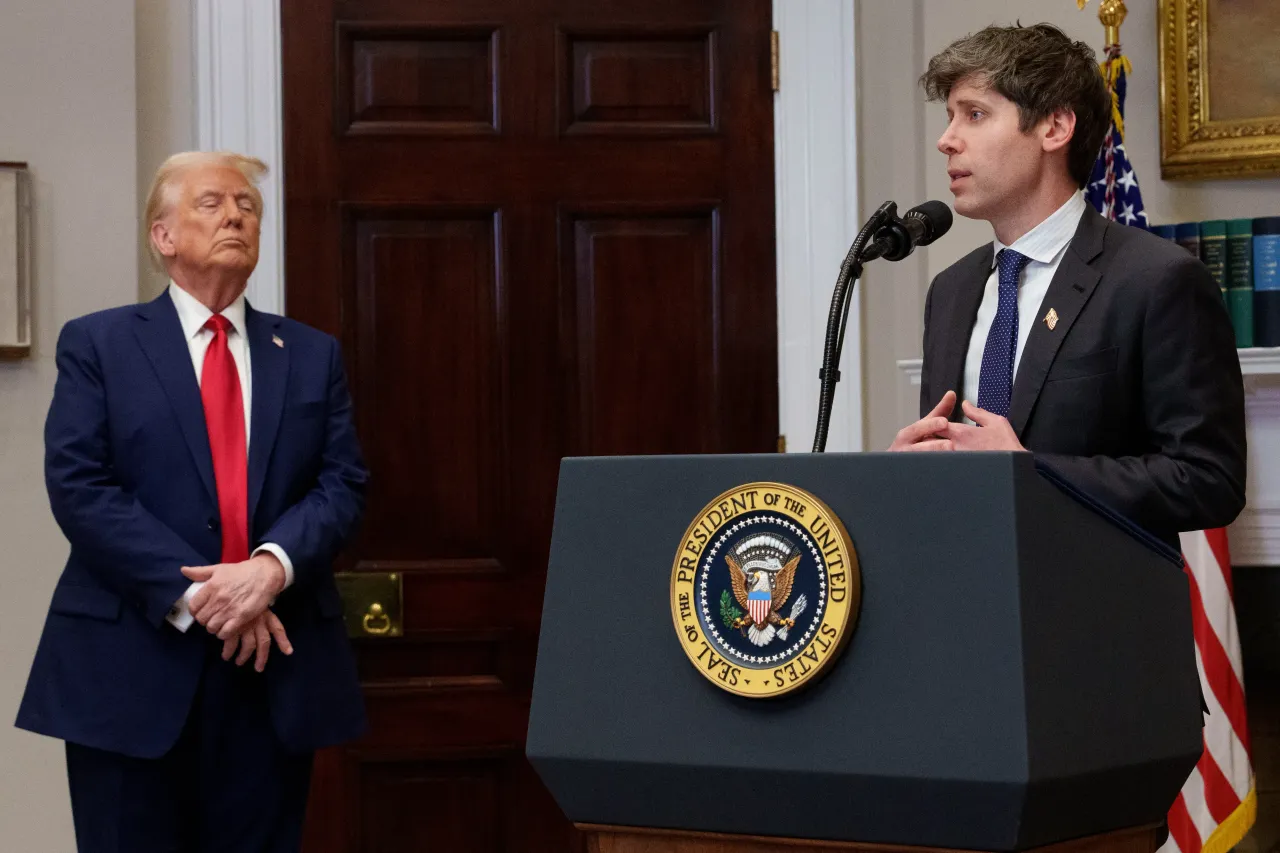
The President revealed the consideration aboard Air Force One on Friday, stating that leaders from "all the big" AI companies are expected at the White House as early as next week to hash out the specifics. This unprecedented move aims to create a "partnership with the American public," allowing citizens to directly share in the burgeoning success of artificial intelligence.
This isn't the first time the Trump administration has ventured into government stakes in private industry, having previously taken positions in major companies like chipmaker Intel. Such actions have notably departed from long-held American traditions shielding private firms from direct government intervention, signaling a new era of state involvement in critical sectors. The timing of this latest proposal is particularly salient, coming as three of the industry's most prominent players – Elon Musk's SpaceX, Anthropic, and OpenAI – are gearing up for hotly anticipated initial public offerings (IPOs), poised to potentially become new trillion-dollar entities in the coming months.
The prospect of AI unleashing explosive economic growth, yet simultaneously displacing a significant number of jobs, casts a long shadow over the technology's rapid advancement. Many tech and political leaders are actively grappling with how to manage this duality, seeking mechanisms to ensure that the benefits of AI are broadly distributed rather than concentrated among a select few. The idea of government stakes is being framed by supporters as a powerful way to not only share these proceeds but also to mitigate the potential economic fallout for a wide spectrum of the American populace.
Indeed, public sentiment reflects a deep-seated unease about AI's trajectory. Recent surveys indicate that most Americans are pessimistic about the technology's future impact. A May poll from YouGov and The Economist found that over 70 percent of American adults believe AI is developing too quickly, and a notable 51 percent expressed more pessimism than optimism regarding AI's long-term societal effects. This widespread anxiety underscores the political urgency behind proposals to ensure a more equitable distribution of AI's wealth and impact.
Why this matters
The concept of government stakes in AI isn't entirely new within the industry's inner circles. OpenAI Chief Executive Sam Altman has reportedly been engaged in discussions with President Trump and other White House officials on this very idea since the early part of Trump's second term. Altman's vision, according to a person familiar with the outreach, involves his company potentially donating a portion of itself to a government fund, with the hope that other major AI firms would follow suit, creating a collective mechanism for public benefit. These discussions were first brought to light by the news site NOTUS. The idea gained further traction for OpenAI executives after Altman spent time raising funds abroad, particularly in the Middle East and Asia, observing the structures of sovereign wealth funds in various nations and becoming interested in how governments were taking stakes in such strategically important technologies.
This proposal from the White House aligns, in spirit, with similar ideas emerging from other corners of Washington. Senator Bernie Sanders, an independent from Vermont, for instance, unveiled his own proposal earlier this week. Sanders advocates for the U.S. government to acquire significant stakes in leading AI companies through a newly established American sovereign wealth fund, coupled with representation on the boards of these firms. He discussed this specific version of the concept with Altman during a recent meeting on Capitol Hill. Sanders articulated his rationale in an interview, saying that "the American people understand that the economic system is rigged, the rich are getting richer, working people are going nowhere in a hurry." He stressed that existing anxieties across the country, particularly regarding economic fairness, are only compounded by the rapid rise of AI, leaving many feeling "powerless." Both Trump's and Sanders' proposals, despite their political differences, converge on the fundamental goal of finding a way for the public to share in the immense wealth generated by AI, particularly as fears intensify over the technology's capacity to displace large numbers of workers.
The reaction and what's next
While the notion of public ownership gains momentum in some quarters, it has also ignited sharp criticism from others within the tech and political spheres. OpenAI, Anthropic, SpaceX, and Google, recognized as the leading public AI company, did not immediately respond to requests for comment regarding Trump’s proposal or the anticipated White House meeting, indicating the sensitivity and complexity surrounding the issue. The prospect of direct government involvement raises new and profound questions about the traditional relationship between the federal government and some of the most powerful and innovative companies within the U.S. economy, potentially blurring lines that have historically been kept distinct.
David Sacks, a prominent tech investor and former White House AI czar, vehemently dismissed Sanders' vision for public stakes in AI companies in a recent social media post. Sacks argued that government ownership of the industry would inevitably lead to what he described as "Chinese-style censorship and surveillance," a chilling prospect for many advocates of open and unfettered technological development. He warned that the "nationalization of AI will accelerate the corporate-government fusion we’re already sliding toward," suggesting a dangerous convergence of corporate power and state control. Sacks also directed a pointed caution to those on the political right who might be tempted by increased government involvement in AI as a means to manage its societal impacts. He asserted that "conservatives are right to fear where this is all headed but ought to think more carefully about how regulations they are flirting with now... are widely celebrated among those with a long history of lust for Big Government," implying that such measures could inadvertently empower the very bureaucratic expansion they typically oppose.
The debate over government intervention in AI is further complicated by differing views on regulation. Some leading tech figures, who notably backed Trump in the 2024 presidential race, voiced concerns over President Joe Biden’s previous attempts to regulate and gather information from AI companies, viewing them as overly intrusive. In contrast, President Trump recently signed an executive order establishing a mechanism for tech firms to voluntarily provide the federal government with early access to powerful AI systems. This approach aims to allow ample time to prepare for potential security risks without imposing mandatory disclosures, reflecting a more collaborative, less confrontational stance compared to previous administrations' regulatory pushes.
OpenAI itself has previously floated a more formalized concept of public benefit. In April, the company outlined a proposal for a "Public Wealth Fund," designed specifically to enable individuals who typically lack the means to invest in the stock market to still reap financial benefits from the AI industry's burgeoning success. This framework suggests a desire within some leading AI firms to proactively address wealth distribution concerns, perhaps preempting more forceful government mandates. The ongoing discussions, from the White House to Capitol Hill and within the boardrooms of tech giants, signify a pivotal moment for how the future of artificial intelligence will be governed, funded, and ultimately shared with the American public. The precise form this "partnership with the American public" will take, and the extent to which it reshapes the fundamental relationship between government and private enterprise, remains one of the most significant questions facing the nation's economic and technological landscape.
Frequently asked questions
What is President Trump proposing for AI companies?
President Trump is considering the U.S. government taking ownership stakes in leading artificial intelligence companies. This initiative aims to allow the American public to share in the economic success and growth of the burgeoning AI industry, especially as major firms like OpenAI and Anthropic prepare to go public.
Which AI companies are mentioned in the discussion?
SpaceX, Anthropic, and OpenAI are specifically mentioned as leading players preparing to go public, and their leaders are expected to discuss the proposal with the White House. Google is also noted as a leading public AI company.
Who is Sam Altman and what is his involvement?
Sam Altman is the chief executive of OpenAI. He has been discussing the idea of government stakes with Trump and other White House officials, with a vision for OpenAI to donate a portion of itself to a government fund.
What are the arguments for government stakes in AI?
Supporters believe government stakes can help share the proceeds of AI's growth with the public, soften economic consequences from job displacement, and address public anxiety about the technology's impact.
What are the concerns regarding government intervention in AI?
Critics, such as tech investor David Sacks, worry that government ownership could lead to "Chinese-style censorship and surveillance" and an acceleration of "corporate-government fusion," raising questions about federal overreach.
Has a similar proposal been made by other politicians?
Yes, Senator Bernie Sanders (I-Vermont) has outlined his own proposal for the U.S. government to take significant stakes in leading AI companies through a new American sovereign wealth fund and have representation on their boards.