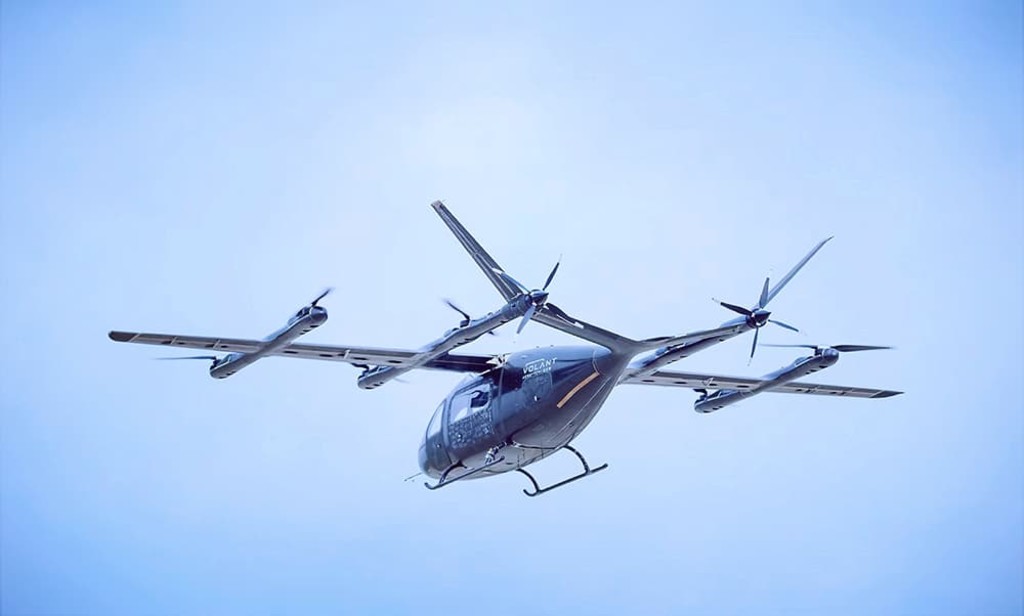
Volant's Series C+ funding ignites personal air travel dreams, fueling development of electric vertical take-off and landing aircraft.
Chinese eVTOL Startup Volant Lands $148 Million to Accelerate Air Taxi Future
The futuristic dream of personal air travel, once confined to science fiction, just got a significant jolt from across the Pacific. Volant, a Chinese startup making electric vertical take-off and landing aircraft, commonly known as eVTOLs, has successfully closed a Series C+ funding round, pulling in a hefty $148 million. This isn't just a win for a single company; it’s a clear signal that the global race to put "flying taxis" in our skies is intensifying, with serious implications for commuters, logistics, and tech innovation worldwide, including right here in North America. This latest capital injection of $148 million is a substantial war chest for Volant, signaling a critical transition point for the company. It moves them beyond early-stage research and development squarely into the demanding, expensive phases of rigorous testing, regulatory certification, and ultimately, manufacturing at scale. For anyone watching the burgeoning urban air mobility sector, this kind of financial backing is the fuel needed to turn ambitious blueprints into tangible aircraft ready for the skies. Volant, like many of its global counterparts, is working to revolutionize how we move people and goods, aiming to alleviate congested city streets and offer faster, more environmentally friendly alternatives to ground transportation. Their vision aligns with a broader industry trend towards electric aviation, promising quieter operations and zero operational emissions. While the idea of air taxis might still feel far off to many North American consumers, investments like Volant's push the entire industry closer to reality, shaping the competitive landscape that will eventually deliver these services to global markets. The funding round itself, a Series C+, indicates that Volant has already demonstrated significant progress and is now gearing up for commercialization, a phase that demands immense financial muscle and technical prowess. The company's success in securing such a significant amount of funding also underscores the sheer scale of ambition within the Chinese aerospace sector. China has shown a strong strategic interest in leading advanced technology fields, and eVTOLs represent a convergence of electric propulsion, autonomous systems, and advanced manufacturing. For North American companies like Joby Aviation, Archer Aviation, and Beta Technologies, who are also pouring billions into developing their own eVTOL solutions, Volant's well-funded progress means a more robust and innovative competitor in the global marketplace. This isn't just about who gets to market first; it's about who can offer the most efficient, safest, and most cost-effective solutions in a sector that demands both technological superiority and broad public acceptance.
Why This Investment Takes Flight
The $148 million raised by Volant in its Series C+ round is more than just a number; it's a strategic resource that addresses some of the most formidable challenges facing the eVTOL industry. Developing a new aircraft from scratch is an extraordinarily capital-intensive endeavor, even for traditional planes, let alone a revolutionary new category of electric vehicles intended for dense urban environments. This funding will primarily be directed towards scaling up Volant's operations, pushing their aircraft through the complex and lengthy certification processes required by aviation authorities, and establishing manufacturing capabilities. Certification is arguably the biggest hurdle for any eVTOL company. Aviation regulators, globally, are still developing the frameworks for these new types of aircraft, which blend elements of helicopters, drones, and fixed-wing planes. Proving that an eVTOL is safe, reliable, and meets stringent performance standards requires extensive testing, meticulous documentation, and significant financial resources. The $148 million allows Volant to invest heavily in flight test programs, develop robust safety systems, and build the necessary data and expertise to satisfy regulators. For North American citizens and investors, this is a crucial step towards ensuring that any future air taxi service is not only innovative but also incredibly safe. Without such substantial funding, many eVTOL concepts would simply remain concepts, unable to bridge the gap between prototype and commercial product. Furthermore, this investment positions Volant to accelerate its journey towards commercialization. Once certified, companies face the challenge of manufacturing aircraft at scale, building charging infrastructure, and developing operational models for air taxi services. This requires establishing supply chains, setting up assembly lines, and training personnel—all areas where a $148 million cash injection provides a powerful advantage. It signals to potential partners, suppliers, and future customers that Volant is a serious contender with the financial stability to execute its ambitious plans. The sheer scale of this investment indicates a belief among Volant’s backers that the company is on a viable path to not just build a flying vehicle, but to build an entire ecosystem around it.
The Global Air Taxi Race Heats Up
The funding success of Volant throws a brighter spotlight on the intensely competitive global landscape for eVTOLs. While North American companies like Joby and Archer often capture headlines, the race is decidedly international, with significant players emerging from Europe and Asia. China, in particular, is not merely participating; it's aiming to lead. Companies like EHang are also making strides, but Volant's recent funding underscores the depth of investor confidence in Chinese innovation and its potential to disrupt global transportation. For North American consumers, businesses, and policymakers, Volant's rise serves as a potent reminder that the future of urban air mobility will be shaped by global forces. While regulatory environments and market entry strategies may differ, the core technology, safety standards, and operational efficiencies developed by one player can influence the entire industry. A strong Chinese competitor means that North American companies must continually innovate and refine their offerings to stay competitive, potentially leading to faster advancements and more compelling services for everyone. This cross-border competition is a powerful catalyst for progress, pushing all players to achieve breakthroughs in battery technology, autonomous flight systems, and aerodynamic design. The distinct advantage for many Chinese startups often lies in a large domestic market with a government keenly interested in adopting new technologies. While North America grapples with fragmented local regulations and public perception challenges, China's centralized approach could potentially accelerate the deployment of eVTOL services in its major cities. This doesn't mean Volant will immediately launch services in New York or Toronto, but their ability to rapidly scale and gain operational experience in their home market could give them a significant competitive edge in the long run. The lessons learned and technologies perfected in one market can often be adapted for others, creating a feedback loop that benefits the entire global industry. As the industry matures, the focus will shift from purely technological achievement to practical deployment. This means addressing concerns around noise, air traffic control integration, and the cost of services for everyday users. For these flying vehicles to become a ubiquitous part of urban life, they must be affordable, accessible, and seamlessly integrated into existing transportation networks. The $148 million injection into Volant is not just about building aircraft; it is about building the infrastructure and operational models that will make air taxis a reality. This includes developing vertiports, charging stations, and the software systems needed to manage numerous aerial vehicles operating safely above our cities. The long-term vision extends beyond passenger transport, with eVTOLs also poised to revolutionize logistics and cargo delivery, particularly for urgent medical supplies or time-sensitive freight in congested areas. Volant's substantial funding allows them to explore these multifaceted applications, potentially diversifying their revenue streams and accelerating the overall adoption of eVTOL technology. For North American businesses reliant on efficient supply chains, these developments are worth watching closely, as they could unlock entirely new possibilities for rapid, point-to-point delivery. Ultimately, the successful funding of Volant is a significant milestone in the journey towards an air mobility future. It underscores the immense investor confidence in this nascent industry and reinforces the understanding that the race to dominate the skies of tomorrow is a truly global one. While significant hurdles remain, from regulatory approvals to public acceptance, the consistent flow of capital into companies like Volant suggests that the question is no longer if air taxis will fly, but when, and which companies will lead the charge in making them a part of our daily lives. The skies are becoming a new frontier for innovation, and the competition is only getting started.
Frequently asked questions
What is Volant and what type of aircraft do they develop?
Volant is a Chinese startup specializing in electric vertical take-off and landing (eVTOL) aircraft. These futuristic vehicles are designed for urban air mobility, aiming to provide personal air travel and air taxi services.
How much funding did Volant raise in its latest round?
Volant successfully raised $148 million in its Series C+ funding round.
What is the purpose of this new funding for Volant?
The funding will be used to accelerate the development of Volant's eVTOL aircraft and advance the future of air taxi services.
What does eVTOL stand for?
eVTOL stands for electric vertical take-off and landing, referring to aircraft that use electric power to hover, take off, and land vertically.
What is the significance of Chinese startups in the eVTOL market?
Chinese startups like Volant are significant players in the global eVTOL market, contributing to innovation and competition in the rapidly developing urban air mobility sector.
When can we expect Volant's air taxis to be available?
While specific timelines are still developing, the new funding round aims to expedite the research, development, and eventual commercialization of Volant's air taxi services.