Indian startup Equal AI raises $30M Series B to empower users with an AI call assistant, tackling spam, scams, and unwanted calls.
Indians are drowning in a sea of phone calls. From relentless spam and sophisticated scams to urgent delivery updates and persistent financial service pitches, the daily onslaught on mobile phones is a significant source of frustration and wasted time for millions. Now, a startup named Equal AI has secured a hefty $30 million in funding to tackle this problem head-on, promising to screen calls and tell you why someone is ringing, so you don't have to pick up every time.
Here's what happened: Equal AI announced today it has raised $30 million in Series B funding, a significant vote of confidence in its mission to bring AI-powered call screening to the masses. The round was co-led by prominent investors Prosus Ventures and Tomales Bay Capital, with additional participation from Think Investments and Valiant Fund, pushing the company’s total funding to over $42 million to date.
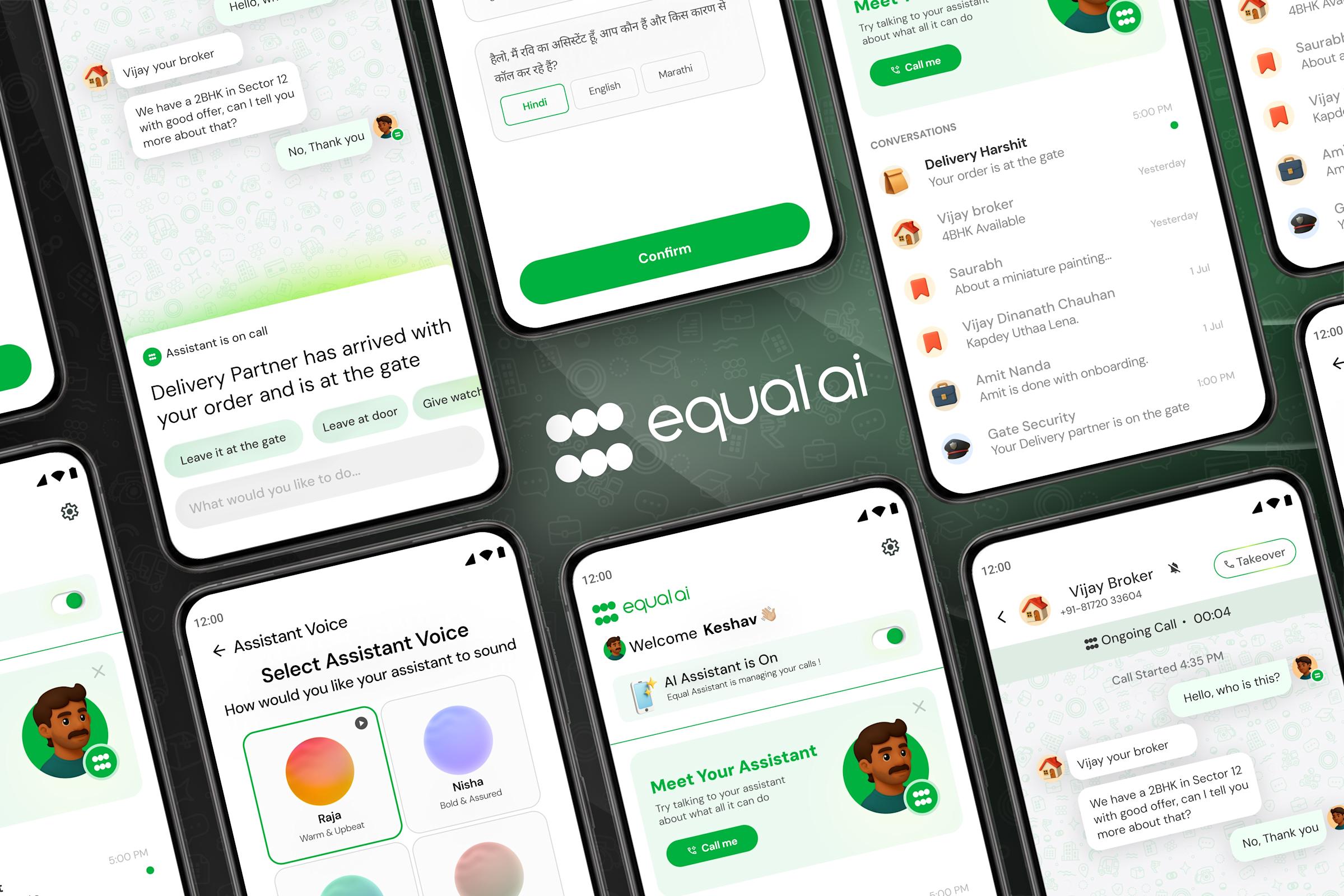
The core of Equal AI's offering is a smart assistant designed to act as your digital gatekeeper. Available on Android, the app intercepts unknown calls, engages with the caller, and then presents the user with a concise summary of who is calling and, crucially, why. This isn't just another caller ID; it's an intelligent filter that aims to save users from the mental burden of constantly vetting incoming calls.
Since its launch last year, the app has seen impressive growth, accumulating over a million monthly active users and more than 300,000 daily active users. For those who frequently deal with deliveries or customer service, the app offers quick reply options like "Leave the delivery near the door" or "Give it to the neighbor," which the AI then reads back to the caller. Users can also type custom messages, and for transparency, every screened call is recorded and transcribed, complete with a summary available within the app.
Beyond Caller ID: Why Intent Matters
The problem Equal AI is solving is particularly acute in India, a market characterized by high mobile penetration, a booming digital economy, and a less regulated telemarketing environment compared to many Western nations. Consumers there are inundated with calls ranging from legitimate services like banks and e-commerce platforms to aggressive sales tactics and outright fraud. While existing solutions like Truecaller, a widely used app that identifies callers, and the government's Calling Name Presentation (CNAP) system provide a layer of identification, knowing the name of the caller is often not enough.
This is where Equal AI steps in, moving beyond simple identification to understanding intent. It's a significant shift from "who is calling?" to "why are they calling?" This distinction is critical in a market where even legitimate businesses can make dozens of follow-up calls for a single transaction, like buying car insurance or applying for a loan. The sheer volume and variety of these interactions make traditional call screening methods inefficient and exhausting for individuals.
Keshav Reddy, who founded Equal AI in 2022 and comes from the family behind the Indian conglomerate GVK, explained this rationale. The company originally focused on data-sharing for financial services and KYC verification but pivoted to a customer-facing AI assistant because of the overwhelming number of calls users received. This pivot underscores a deep understanding of local market pain points and the necessity for a localized solution.
Developing such a system for India also means tackling linguistic diversity. Equal AI uses a sophisticated mix of speech recognition, automatic speech recognition (ASR), and speech generation models to handle the common phenomenon of code-mixing, where multiple languages are blended in a single conversation. The company says it has built support for over 10 languages, a crucial feature for serving a diverse population.
The Race for Your Digital Assistant
Equal AI isn't operating in a vacuum. The concept of an AI assistant managing communications is gaining traction globally. Tech giants like Google and Apple have their own call screening products, and Truecaller, a household name in India, has been building out its own AI assistant features. In the U.S., a16z-backed privacy startup Cloaked also launched call screening last year. This competitive landscape highlights a clear trend: individuals are increasingly looking for tools to help them manage digital noise and reclaim their time.
What differentiates Equal AI, according to Thiago Viana, global co-head at Prosus Ventures, is its deep understanding of the local context. Viana stated that Equal AI’s understanding of local context gives it an edge. This localized approach is particularly important for AI assistants, where nuances in language, culture, and specific regional problems can make or break adoption. Prosus itself has a track record of investing in AI assistant startups focused on local markets, including Spain-based Luzia and Latin America-based Zapia.
However, Prosus's experience also serves as a cautionary tale: both Luzia and Zapia were impacted by Meta's ban on third-party AI bots on WhatsApp, revealing the risks of platform dependency. This lesson appears to have informed Equal AI's strategy. Instead of building on an existing messaging platform, the company chose to develop its own app centered around call screening, thereby avoiding similar dependencies and giving it greater control over its product and user experience.
Equal AI’s $30 million Series B highlights a profound shift in consumer tech: utility apps are no longer just identifying data; they are managing intent. While Truecaller built an empire on the passive database of "who" is calling, Equal AI is capturing the active monetization frontier of "why." Tackling India’s chaotic, multilingual telecom space requires localized voice AI, not generic global models. However, the trannched, milestone-heavy funding structure signals that investors are demanding execution, not just AI hype. Equal's biggest challenge isn't tech adoption—it's surviving the eventual platform counter-attack when Google and Apple inevitably bake deep intent screening directly into Android and iOS dialers.
The funding round itself showcased an interesting structure, with the $30 million being raised in three tranches, each with a different valuation depending on whether predetermined targets are met. This growing but still uncommon approach allows startups to advertise the highest valuation achieved, even if the bulk of the equity was sold at a lower one. While Equal AI declined to provide specific valuation figures, this structure reflects a dynamic funding environment and a focus on performance-based milestones.
Looking ahead, Equal AI has ambitious plans. The app currently screens only unknown calls, but the company intends to introduce the ability to screen calls from known numbers as well. Beyond screening, the vision extends to making the AI assistant proactive, taking actions on a user’s behalf—such as texting a delivery person an address (with explicit consent) or even making outbound calls to book appointments. An iOS version of the app is also in the works, alongside a paid subscription tier offering more advanced features.
This evolution from a reactive screening tool to a proactive personal assistant marks a significant step towards a future where AI helps individuals navigate their digital lives with greater autonomy and less stress. As the digital world becomes increasingly noisy, services like Equal AI promise to be essential in giving users back control over their time and attention, fundamentally changing how we interact with our phones and the world around us.
Frequently asked questions
What is Equal AI and what problem does it solve for Indian consumers?
Equal AI is an Indian startup that has developed an AI assistant to screen incoming phone calls. It addresses the significant problem in India of consumers receiving numerous unwanted calls, including spam, scams, and relentless service pitches, by intercepting calls and providing users with a summary of the caller's intent.
How much funding has Equal AI raised?
Equal AI has raised $30 million in Series B funding, bringing its total funding to over $42 million to date.
Who are the key investors in Equal AI's latest funding round?
The Series B round was led by Prosus Ventures and Tomales Bay Capital, with participation from Think Investments and Valiant Fund, as well as several individual investors including PhonePe's founder Sameer Nigam.
How does Equal AI's call screening app work?
The app receives calls on the user's behalf, gathers information, and displays the reason for the call. Users can then respond with quick reply options or custom messages, which the AI reads back to the caller. The app also records and transcribes calls.
What distinguishes Equal AI from competitors like Truecaller or Google's call screening?
Equal AI emphasizes its deep understanding of local Indian context, including support for over 10 languages and code-mixing. It also built its solution as a standalone app to avoid platform dependency, unlike some competitors.
What are Equal AI's future plans for its call assistant?
Equal AI plans to introduce screening for known numbers, enable the AI assistant to take proactive actions like texting delivery people, launch an iOS version of the app, and offer a paid subscription tier with more features.