Indian AI firm Sarvam reaches unicorn status with a massive funding boost, poised to revolutionize critical sectors like agriculture and insurance across India.
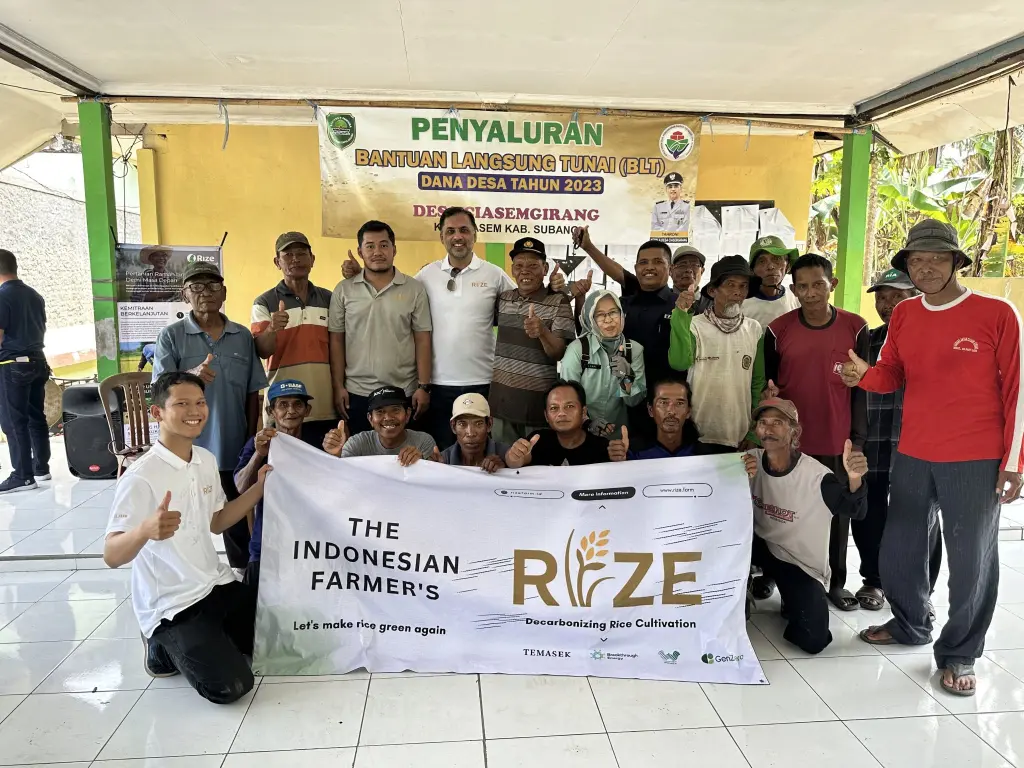
In the bustling landscape of India, where millions navigate daily life in a myriad of languages and distinct cultural contexts, the promise of artificial intelligence often feels distant, designed for different realities. Yet, for 17 million farmers engaged in critical government data collection initiatives, and 45 million insurance customers nationwide seeking policy renewals, AI is becoming a tangible, multilingual partner. This profound real-world impact is at the heart of Sarvam's journey, an Indian AI startup that has just rocketed into the coveted unicorn club, underscoring a pivotal shift in the global AI narrative.
The Bengaluru-based company recently announced a significant milestone: the first close of its Series B funding round, securing $234 million. This investment propels Sarvam to a post-money valuation of $1.5 billion, officially making it one of India's newest AI unicorns. The round was spearheaded by HCLTech, a global technology powerhouse, which committed a substantial $150 million, acquiring a 10.46% stake. The financing round also saw participation from Bessemer Venture Partners, alongside continued backing from existing investors Khosla Ventures and Peak XV Partners, signaling strong confidence in Sarvam's vision and execution.
Founded by Vivek Raghavan and Pratyush Kumar, Sarvam has carved a unique niche by focusing on developing AI models, inference infrastructure, and enterprise AI products specifically tailored for Indian languages and diverse local use cases. This commitment to 'AI for India' has been a cornerstone of its strategy, differentiating it in a global market often dominated by models trained predominantly on Western datasets. The company's recent releases, including foundational models like Sarvam 105B, Sarvam 30B, and Sarvam Vision, demonstrate its capability to build sophisticated AI from the ground up, designed to understand and interact with the nuances of India's linguistic and cultural tapestry.
The practical application of Sarvam's technology is already evident across various sectors. Its conversational AI platform now manages more than 2 million interactions daily, while its inference platform handles over 10 million API calls every day. These figures are not just impressive statistics; they represent a significant scaling of AI-driven engagement across critical services. The startup has secured deployments spanning banking, insurance, government, and defence sectors, showcasing the versatility and robustness of its offerings. The engagement with farmers for government-led data collection and supporting insurance policy renewals for millions highlights AI's potential to drive efficiency and accessibility on an unprecedented scale.
This latest capital infusion is earmarked for ambitious expansion and research. Sarvam plans to significantly advance its research into next-generation frontier models, specifically focusing on agentic AI, coding, and cybersecurity applications. Beyond research, the funding will also enable the company to expand access to large-scale compute infrastructure, a critical resource for developing and deploying advanced AI. Furthermore, it aims to accelerate enterprise and government deployments, extending its reach and impact across the nation.
Pratyush Kumar, co-founder of Sarvam, articulated the company's guiding philosophy: "Research-led innovation to create AI that works at India's scale is a very large opportunity. Building on this template, we are innovating on a full-stack offering for enterprises to own and operate their own sovereign AI." This statement not only underscores the vast potential within India but also introduces the critical concept of 'sovereign AI,' a theme gaining increasing traction globally.

The Rise of Sovereign AI and India's Strategic Imperative
Sarvam's ascent to unicorn status, particularly with its focus on homegrown foundation models, is not merely a business success story; it reflects a broader, strategic imperative unfolding worldwide: the pursuit of sovereign AI. Sovereign AI refers to a nation's ability to develop, control, and deploy its own artificial intelligence infrastructure and models, tailored to its unique data, linguistic diversity, ethical frameworks, and national security requirements. For countries like India, with its colossal population, rich linguistic diversity, and rapidly expanding digital economy, achieving AI sovereignty is paramount.
The importance of sovereign AI stems from several factors. Firstly, data privacy and security are central concerns. Relying heavily on foreign-developed AI models often means data processing occurs outside national borders, raising questions about data governance and the potential for surveillance or misuse. Secondly, economic independence is a key driver. Developing indigenous AI capabilities reduces reliance on external vendors, fosters local innovation, creates high-skill jobs, and ensures that the economic benefits of the AI revolution are retained domestically. Thirdly, national security and ethical alignment are critical. AI systems embedded in critical infrastructure, defense, or public services must align with national values and be resilient to external interference.
India's push for sovereign AI is underpinned by government initiatives like the 'IndiaAI' mission, which aims to catalyze the development of a robust AI ecosystem, focusing on compute infrastructure, data platforms, and indigenous innovation. The sheer scale of India presents unique challenges and opportunities. Training AI models on India-specific datasets, capturing the nuances of its 22 official languages and hundreds of dialects, is a formidable task that global models often struggle with. Sarvam's commitment to building models from scratch, specifically for Indian languages and use cases, directly addresses this gap, making AI truly accessible and effective for the Indian populace.
This trend is not unique to India. Nations across the globe, from European Union member states to countries in the Middle East, are exploring or actively investing in their own AI capabilities. France, for instance, has announced initiatives to build its own national large language model, while the UAE has launched projects like Falcon LLM to establish its AI footprint. These efforts underscore a growing realization that AI is not just another technology; it is a foundational layer for future economic growth, societal organization, and national power. For India, a nation striving to be a global technology leader, homegrown AI is not just an aspiration but a necessity to ensure its digital future is built on its own terms.
Beyond the Horizon: Agentic AI, Coding, and Cybersecurity
Sarvam's plans to invest in agentic AI, coding, and cybersecurity applications point towards the next frontier in artificial intelligence. Agentic AI represents a significant leap from current generative models. While today's AI can generate text, images, or code, agentic AI systems are designed to understand complex goals, break them down into sub-tasks, plan sequences of actions, execute them, and even self-correct based on feedback. Imagine an AI agent that can not only write code but also test it, debug it, and deploy it, or an agent that can autonomously manage and optimize complex business processes.
The focus on coding applications is particularly pertinent in an era where software development is central to almost every industry. AI-powered coding assistants can dramatically increase developer productivity, automate repetitive tasks, and even generate entire blocks of code. For a country like India, with its vast talent pool in software engineering, enhancing coding capabilities with AI can further solidify its position as a global IT hub, enabling developers to tackle more complex and innovative projects.
Cybersecurity is another critical domain ripe for AI transformation. As cyber threats become more sophisticated, traditional rule-based security systems struggle to keep pace. AI can analyze vast amounts of network data, detect anomalies, predict potential attacks, and even automate defensive responses in real-time. Integrating AI into cybersecurity applications can provide a proactive, intelligent defense mechanism essential for protecting national digital infrastructure, critical enterprise data, and individual privacy. Sarvam's foray into these advanced areas suggests a strategic long-term vision to not just apply AI but to push the boundaries of what AI can achieve, particularly within an Indian context.
Sarvam achieves unicorn status with a $234 million Series B funding round, valuing it at $1.5 billion.
HCLTech led the round with a $150 million investment, acquiring a 10.46% stake.
The company focuses on developing AI models tailored for Indian languages and use cases, with deployments in banking, insurance, government, and defense.
Funding will advance research in agentic AI, coding, and cybersecurity, and expand compute infrastructure.
Sarvam's success highlights India's strategic push for "sovereign AI" to ensure national control over its AI infrastructure and data.
HCLTech's Strategic Investment and Market Context
HCLTech's decision to lead Sarvam's funding round with a significant investment is indicative of a broader trend: established technology giants are increasingly looking to partner with or acquire innovative AI startups to accelerate their own AI capabilities and secure a foothold in emerging markets. For HCLTech, this investment provides a strategic entry point into India's burgeoning AI ecosystem and access to Sarvam's specialized expertise in Indian language models and enterprise AI solutions. Such partnerships are crucial for bridging the gap between cutting-edge research and large-scale enterprise adoption, combining the agility of a startup with the market reach and resources of a global conglomerate.
The funding round comes two years after Sarvam's $41 million Series A funding in December 2023, led by Lightspeed, with participation from Peak XV Partners and Khosla Ventures. This rapid progression from Series A to unicorn status underscores the intense investor interest in foundation models and companies addressing the unique demands of large, diverse markets like India. The unaudited revenue of Rs 45.1 crore for FY26 reported by Sarvam, while modest for a unicorn, points to the high growth potential and the strategic value investors are placing on future market dominance and technological leadership rather than immediate profitability in deep tech AI.
The broader market implications of Sarvam's success are significant. It signals confidence in India's ability to produce world-class AI innovation, tailored to its specific needs. It also demonstrates the viability of a business model focused on localization in a globalized AI landscape. As AI continues to permeate every facet of human activity, the ability to build and deploy systems that are culturally relevant, linguistically adept, and aligned with national interests will become an increasingly valuable asset. Sarvam's journey from a Bengaluru startup to a global AI unicorn serves as a powerful testament to the potential of homegrown innovation in shaping the future of artificial intelligence, not just for India, but as a model for other nations seeking to establish their own AI sovereignty.
Frequently asked questions
What is Sarvam and its recent achievement?
Sarvam is an Indian AI startup that recently achieved unicorn status, meaning it reached a private valuation of over $1 billion, after a significant funding round.
Who led Sarvam's $234 million funding round?
The $234 million funding round for Sarvam was led by HCLTech, a prominent technology company.
What impact does Sarvam's AI have in India?
Sarvam's AI solutions are designed to address the unique linguistic and cultural contexts of India, impacting millions of farmers involved in government data collection and insurance customers seeking policy renewals.
Which sectors benefit from Sarvam's AI technology?
Sarvam's AI technology primarily benefits the agriculture sector, assisting farmers with data collection, and the insurance industry, helping customers with policy renewals.
Why is AI important for India's diverse population according to the article?
The article highlights that AI is crucial for India's diverse population because it can bridge the gap between advanced technology and daily life for millions who navigate various languages and cultural contexts, making AI accessible and relevant.
What does achieving 'unicorn' status mean for a company like Sarvam?
Achieving 'unicorn' status means a privately held startup has reached a valuation of $1 billion or more, signifying significant growth and investor confidence in its future potential.