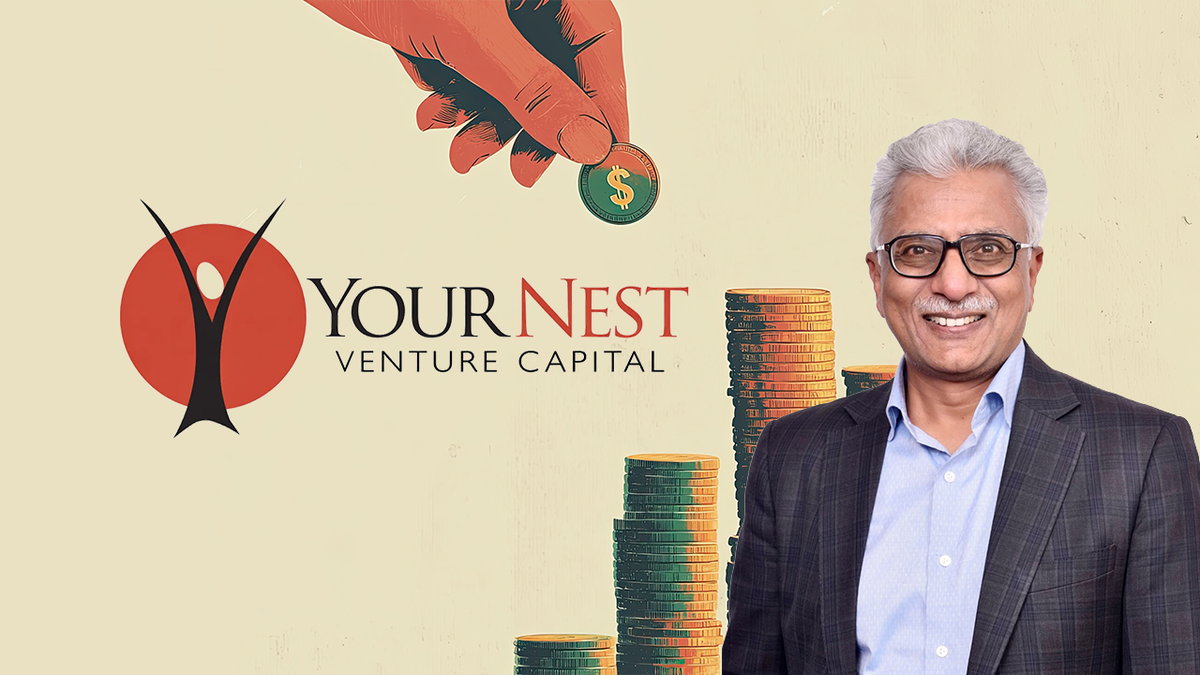
The YourNest Continuum Fund I, anchored by HDFC AMC, will invest Rs 60-90 Cr in 7 top-performing portfolio companies like Miko & Dozee.
Ever wondered what happens to a successful startup when its venture capital fund reaches the end of its life cycle? It’s a crucial question for founders, investors, and even the broader economy, as many promising companies need more time and capital to mature than a typical 10-year fund allows. This challenge is precisely what deeptech-focused venture capital firm YourNest is addressing with the recent close of its Rs 400 crore (approximately $48 million USD) continuation fund, a strategic move that reflects a growing trend in venture capital worldwide, including right here in North America.
This significant financial injection, officially named YourNest Continuum Fund I, is designed to provide critical ongoing support for a select group of the firm's top-performing portfolio companies. It ensures that these high-potential ventures can continue their growth trajectory towards major exits like strategic acquisitions or public listings, rather than being forced into premature sales or fire sales due to fund expiration. For the average person, this means that innovative technologies and services developed by these startups have a better chance of reaching the market and making a real impact.
Anchored by HDFC AMC Select Fund of Funds I, the new vehicle plans to deploy approximately Rs 60–90 crore (around $7.2-$10.8 million USD) across a portfolio of seven promising startups. These include names like Miko, an AI-powered robotics company; Dozee, which focuses on health tech; and Exponent Energy, innovating in rapid electric vehicle charging. The fund aims to keep these companies within the YourNest ecosystem for another five to seven years, a period crucial for deeptech ventures to fully realize their potential and secure substantial returns for their investors.
YourNest, founded in 2011 by Sunil Goyal, has built its reputation on backing deep technology innovations across diverse sectors such as artificial intelligence, enterprise software, healthcare technology, mobility, and consumer technology. This latest fund underscores a strategic shift in how venture capital firms manage their portfolios, offering a solution to the perennial problem of liquidity for aging, yet still valuable, assets. It’s a practical response to the reality that groundbreaking technologies often require longer development cycles and market penetration times than traditional VC fund structures are designed for.
What You Need To Know About Continuation Funds
Continuation funds are a relatively newer, but rapidly gaining traction, mechanism within the private equity and venture capital world. Essentially, they allow a fund manager (the GP, or General Partner) to move a handful of high-performing assets from an existing, older fund into a new, separate fund. This new fund often raises fresh capital from new limited partners (LPs), and crucially, offers existing LPs from the original fund a choice: they can either cash out their stake in the transferred assets, receiving liquidity, or they can roll their existing stake into the new continuation fund, maintaining their ownership.
This structure provides a dual benefit. For existing investors in the original fund, it’s a much-needed opportunity to unlock liquidity from investments that might otherwise be locked up for an extended period due to a sluggish IPO market or fewer strategic acquisition opportunities. Imagine being invested in a company that’s growing impressively but hasn’t yet had an exit event; a continuation fund offers a way to realize some returns without forcing the sale of a valuable asset. For the venture capital firm itself, it allows them to continue managing and nurturing their most successful companies, extending their ownership and increasing the potential for outsized returns without the pressure of a looming fund expiration date. This mechanism is particularly relevant in sectors like deeptech, where the path to market leadership and a significant exit can often take more than a decade.
The rise of continuation funds signals a broader maturation of the venture capital industry. As the asset class has grown, so too has the need for more sophisticated financial instruments to manage portfolios. Traditional venture funds, with their fixed 10-year lifespans (often extended by a few years), can create an awkward situation where highly promising companies are still in their growth phase when the fund is ready to wind down. Sunil Goyal, founder of YourNest, highlighted this by explaining that continuation funds are becoming an important mechanism for creating liquidity in venture capital while retaining ownership in quality assets that have already crossed early-stage technology and market-validation risks. This is not just an emerging market phenomenon; leading VC firms in Silicon Valley and across North America have been increasingly adopting these structures to navigate the extended timelines for tech exits.
The Evolving VC Landscape in North America and Beyond
The trend of continuation funds is especially pertinent in the current global economic climate, characterized by higher interest rates and a more cautious public market, which has collectively slowed down the pace of IPOs and large-scale M&A activities. Many North American venture firms have experienced extended holding periods for their portfolio companies, making liquidity a pressing issue for their LPs. For venture capital firms, these funds offer a valuable tool to optimize returns and manage their portfolio through different market cycles, effectively bridging the gap between a startup's long-term potential and a fund's finite lifespan.
Indeed, the concept mirrors some developments seen in the larger private equity world, where secondary transactions have long been a common way to manage portfolio assets. However, in venture capital, where assets are often less mature and harder to value, continuation funds are a more tailored solution. They allow GPs to actively manage a concentrated pool of their best assets, rather than simply selling off a diversified chunk of an older fund’s portfolio to a secondary buyer. This approach lets firms double down on their winners, leveraging their deep understanding of the companies and the sectors they operate in.
The broader investment landscape also shows a dynamic interplay of capital allocation. While established funds look for sophisticated liquidity solutions like YourNest's continuation fund, new capital continues to flow into nascent sectors and early-stage opportunities. We see this with funds like Atom XVII, which is targeting Rs 75 crore (around $9 million USD) for a new Category II Alternative Investment Fund focused specifically on India's consumer sector, aiming for pre-Series A investments. This indicates a robust appetite for early-stage risk in specific, high-growth consumer segments, often beyond Tier-I cities, a strategy that resonates with the search for untapped market potential familiar to North American seed and Series A investors.
Similarly, the success of companies like Korean FMCG startup Gimi Michi, which raised $1 million in seed funding to build an authentic Korean food brand for Indian consumers, highlights the power of cultural trends to drive new market opportunities. The company's rapid growth and strong repeat purchase rates, particularly in Tier II and Tier III cities, demonstrate how specific consumer niches, fueled by phenomena like K-dramas and K-pop, can become lucrative investment areas. This mirrors how cultural shifts and demographic changes in North America often spur new product categories and investment theses, from plant-based foods to hyper-local services.
Even in more established segments like gourmet retail, there's significant activity, as evidenced by Foodstories securing Rs 50 crore ($6 million USD) led by Nikhil Kamath. This funding, aimed at expanding digital business, strengthening delivery networks, and growing its retail footprint, underscores the enduring appeal of premium consumer experiences and omnichannel strategies. The blend of experiential physical stores with a robust digital backbone is a playbook that has seen considerable success among high-end retailers and direct-to-consumer (D2C) brands across major North American cities.
Ultimately, YourNest's move is more than just an isolated transaction; it's a clear signal of venture capital's evolution. As the industry matures, and as companies take longer to scale and exit, mechanisms like continuation funds will become increasingly vital. They represent a sophisticated approach to portfolio management, balancing the need for investor liquidity with the imperative to continue supporting high-potential companies. For entrepreneurs, this means more pathways to sustained growth, while for limited partners, it promises more flexible and potentially lucrative exit strategies. This trend is set to redefine how venture capital operates, making it more resilient and adaptable to the ever-changing dynamics of the global tech and startup ecosystem.
Frequently asked questions
What is the YourNest Continuum Fund I?
The YourNest Continuum Fund I is a Rs 400 crore continuation fund launched by deeptech-focused venture capital firm YourNest. It aims to provide liquidity to existing investors and continue supporting high-growth portfolio companies.
Which companies will the YourNest Continuum Fund I invest in?
The fund will deploy Rs 60–90 crore across seven top-performing portfolio startups, including Miko, Dozee, Exponent Energy, Twid, Opkey, and Thriwe.
Who anchored the YourNest Continuum Fund I?
The new fund is anchored by HDFC AMC Select Fund of Funds I, providing significant backing for its investment strategy.
What is the purpose of a continuation fund?
Continuation funds allow venture capital firms to provide liquidity to existing investors while retaining ownership in quality assets that have matured beyond early-stage risks, enabling continued investment in high-growth companies.
What is YourNest's investment focus?
Founded in 2011 by Sunil Goyal, YourNest focuses on deeptech investments across sectors like artificial intelligence, enterprise software, healthcare technology, mobility, and consumer technology.
How long will the fund remain invested in these companies?
The new vehicle will allow YourNest to remain invested in these high-growth companies for another five to seven years as they scale towards strategic acquisitions or public listings.