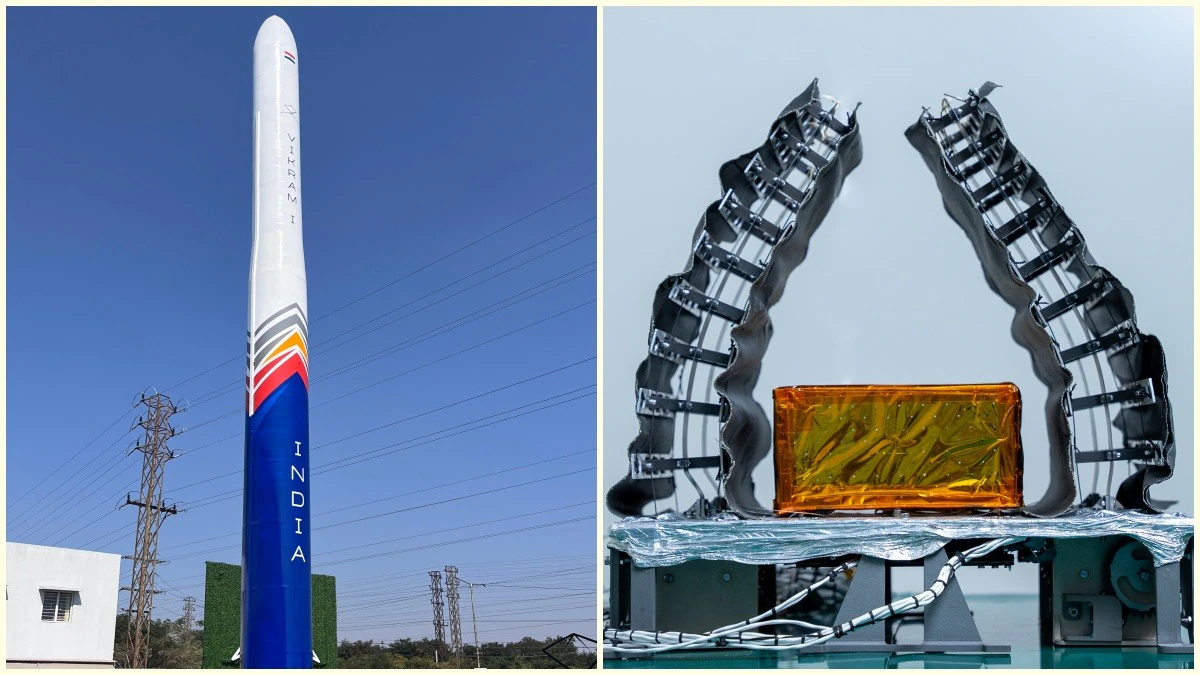
India's Vikram-1 rocket embarks on its first orbital mission, pioneering space debris solutions and advancing commercial satellite services.
A new era for commercial space is dawning as the Vikram-1 rocket prepares for its maiden orbital flight, carrying payloads critical to both the future of satellite services and the urgent challenge of space debris. This launch represents a significant leap for private space ventures, demonstrating advanced capabilities that could redefine access to orbit and kickstart sustainable space operations.
At the heart of this mission is the deployment of a Cosmoserve debris-removal technology demonstrator and a pioneering satellite from Grahaa, showcasing two vital facets of the burgeoning space economy. The success of this flight is more than just a technical milestone; it signals a pivotal moment for international collaboration and innovation in addressing the rapidly increasing congestion in Earth's orbit.
Vikram-1, developed by the India-based private aerospace company Skyroot Aerospace, is poised to become a key player in the small-lift launch vehicle market. Its inaugural mission aims to validate the rocket's performance and reliability, a critical step for any new entrant in the highly competitive commercial launch sector.
The Cosmoserve payload is particularly noteworthy. It represents a tangible step toward tackling the mounting problem of space junk, a growing concern for governments and private operators alike. This demo mission will test technologies designed to track, approach, and potentially de-orbit defunct satellites or fragments, a capability that is becoming indispensable for maintaining a usable orbital environment.
Meanwhile, the Grahaa satellite, likely focused on Earth observation, internet-of-things (IoT) connectivity, or specialized communication services, highlights the sustained demand for cost-effective access to space. Companies like Grahaa rely on efficient and reliable launch providers to deploy their constellations, which in turn power a myriad of terrestrial applications from precision agriculture to global logistics.
This maiden flight underscores a significant trend: the democratization of space access. While government agencies traditionally dominated space exploration, private companies are now driving innovation, lowering costs, and accelerating development cycles. This shift is attracting substantial venture capital, particularly from North America, as investors eye the vast potential of the space economy.
Why Is Space Debris a Growing Global Problem?
The sheer volume of objects orbiting Earth has reached a critical point. Numerous active satellites are now joined by a significant number of pieces of defunct hardware—everything from spent rocket stages and non-functional satellites to tiny fragments from collisions. Concerns exist about a potential "Kessler Syndrome," a cascading chain reaction where collisions generate more debris, eventually rendering certain orbital bands unusable.
This isn't just an abstract concern for scientists. The functionality of modern life, from GPS navigation and global communication to weather forecasting and financial transactions, relies heavily on satellites. A significant loss or damage to these orbital assets due to debris could trigger widespread economic disruption and even national security risks. Ensuring the longevity of these critical systems necessitates proactive debris removal solutions.
North American companies and governments are acutely aware of this threat. The U.S. Space Force actively tracks orbital objects, and organizations like NASA invest in debris research. Furthermore, private entities in the U.S. and Canada are developing their own debris mitigation and removal technologies, seeing both a necessity and a significant market opportunity in orbital clean-up. The Cosmoserve mission, while originating elsewhere, resonates deeply with these ongoing efforts.
What This Means for the Global Space Market and Investment
The Vikram-1 launch, with its dual demonstration of launch capability and debris-removal technology, speaks directly to two of the hottest segments in the global space market: affordable small-satellite launches and space sustainability services. The demand for small satellite deployment is exploding, driven by mega-constellations like SpaceX's Starlink and Amazon's Project Kuiper, as well as a growing number of smaller, specialized payloads.
For North American investors, this presents a compelling narrative. Venture capital firms are pouring substantial funds into space tech, recognizing the long-term potential. Companies like Rocket Lab and Relativity Space, both based in the U.S., exemplify the success stories in the small-lift launch sector, attracting significant funding and achieving impressive launch cadences. Skyroot's entry adds to this competitive landscape, pushing innovation and potentially driving down costs further for satellite operators globally.
The space debris market, while nascent, is also attracting serious attention. Estimates suggest the orbital debris removal market could be worth a significant amount in the coming decades, as regulatory bodies begin to mandate de-orbiting plans for new satellites and legacy junk accumulates. Companies offering services ranging from tracking to active removal are becoming attractive targets for investment, as they address a problem that affects every spacefaring nation and commercial entity.
The regulatory environment is also evolving. The U.S., for instance, is pushing for stricter guidelines on space sustainability, urging satellite operators to have clear plans for de-orbiting their spacecraft at the end of their operational lives. This creates a strong incentive for companies like Cosmoserve to develop viable, cost-effective solutions, as compliance will become a non-negotiable aspect of operating in orbit.
The success of Vikram-1 will not only validate Skyroot's rocket technology but also serve as a crucial testbed for Cosmoserve's approach to orbital clean-up. This is an industry where demonstration missions are paramount; proving a concept in the harsh environment of space is the only way to build confidence and attract commercial contracts.
Grahaa's satellite, on the other hand, represents the end-user side of the equation—the ever-expanding need for space-based services. Whether for advanced imaging, global internet access, or monitoring remote assets, these satellites are the backbone of a data-driven world. Reliable and frequent access to orbit is their lifeblood, making launch providers like Skyroot indispensable.
Skyroot Aerospace’s upcoming "Mission Aagaman"—the maiden orbital test flight of the Vikram-1 rocket—marks a crucial milestone for India’s deep-tech and spacetech landscape. Moving beyond its 2022 sub-orbital milestone, Skyroot is actively asserting itself in the highly competitive global small-lift launch sector, providing satellite operators with a dependable all-carbon composite alternative. What stands out on this mission isn't just the deployment capability, but the strategic composition of its payload manifest. Manifesting Cosmoserve’s "Embrace" robotic arm demonstrator alongside Grahaa Space’s SOLARAS CubeSat highlights a shift toward orbital sustainability. By testing active servicing and tracking infrastructure right out of the gate, Skyroot is addressing regulatory and environmental pressures early. For global venture capital pouring into commercial space, this launch proves that the future of low Earth orbit relies on a combination of accessible launch logistics and proactive orbital management.
The implications of this mission extend beyond the immediate payloads. It highlights the increasingly interconnected nature of the global space industry, where innovation can come from anywhere, and solutions developed by one nation's private sector can benefit the entire international community. North American companies may find themselves collaborating with or competing against these new players, driving a healthier, more dynamic market.
Looking ahead, the successful deployment of both the debris demonstrator and the Grahaa satellite will pave the way for more ambitious missions. It could accelerate the development of active debris removal services, making space a safer place for future generations of satellites. It will also solidify Skyroot's position as a reliable launch partner, potentially opening doors for more North American companies seeking to deploy their own small satellites.
Ultimately, the Vikram-1 maiden flight is a microcosm of the exciting, challenging future of space. It's a blend of cutting-edge technology, commercial ambition, and a shared responsibility to protect our orbital environment. The race to innovate in space is on, and missions like this are propelling us forward, one launch at a time, towards a more sustainable and accessible extraterrestrial frontier.
Frequently asked questions
What is the Vikram-1 rocket's maiden flight carrying?
The Vikram-1 rocket's maiden orbital flight will carry a Cosmoserve debris-removal demonstration payload and the Grahaa satellite. These payloads are crucial for addressing space debris and advancing commercial satellite services.
What is Cosmoserve's role in the Vikram-1 mission?
Cosmoserve is demonstrating a debris-removal technology on the Vikram-1 mission, highlighting efforts to tackle the growing problem of space junk and promote sustainable space operations.
What is the significance of the Grahaa satellite?
The Grahaa satellite's launch on Vikram-1 signifies a leap in commercial satellite services, contributing to advancements in communication, observation, or other space-based applications.
Why is space debris removal important?
Space debris removal is vital to prevent collisions, protect operational satellites, and ensure the long-term sustainability of space activities for future missions and services.
What does Vikram-1's launch mean for private space ventures?
Vikram-1's maiden orbital flight represents a significant milestone for private space ventures, showcasing advanced capabilities and potentially redefining access to orbit for commercial payloads.
Where can I find more information on Cosmoserve and Grahaa?
Information on Cosmoserve and Grahaa can typically be found on their respective company websites, official press releases from the Vikram-1 launch provider, or space industry news publications like Business Insider.