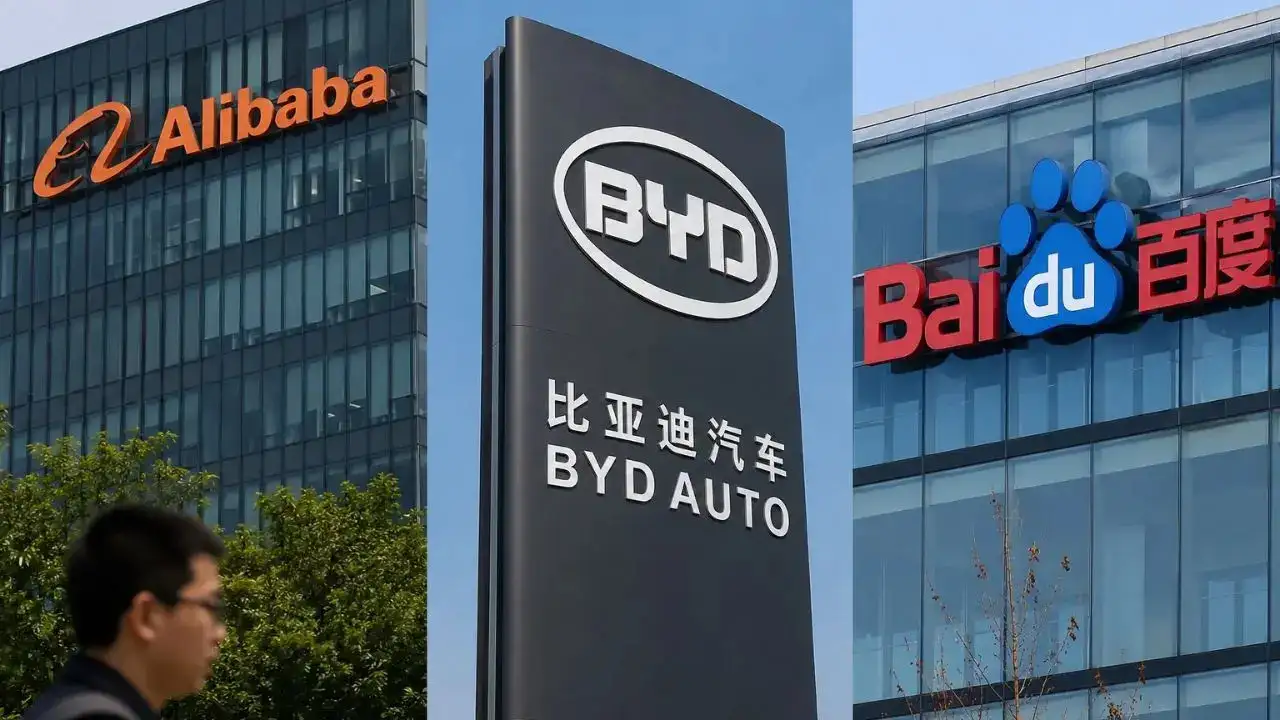
The US Pentagon has added these Chinese tech and EV giants to an expanded military blacklist. Discover what this designation means for their operations, global markets, and the future of US-China tech relations.
The US Pentagon has officially designated Chinese tech giants Alibaba, Baidu, and electric vehicle manufacturer BYD as "Chinese military companies."
This designation places the three prominent firms onto an expanded US government blacklist.
The updated blacklist now encompasses 188 Chinese companies, a significant increase from approximately 130 firms listed last year.
The move underscores escalating tech tensions between the United States and China.
In a significant geopolitical development, the US Pentagon has formally designated Alibaba Group (E-commerce, Cloud Computing, Fintech), Baidu (AI, Internet Services, Autonomous Driving), and BYD (Electric Vehicles, Battery Manufacturing) as "Chinese military companies." This high-stakes classification adds these industry behemoths to a growing US government blacklist, signaling a marked intensification of economic and technological rivalry. The action expands the total number of blacklisted entities to 188 firms, representing a substantial increase from approximately 130 companies listed in the previous year.
The Pentagon’s decision to include such prominent firms, which are deeply integrated into global supply chains and digital ecosystems, highlights a broadening scope of US scrutiny beyond traditional defence contractors. This expansion of the blacklist underscores a deliberate strategy to identify and potentially restrict companies perceived as contributing to China's military modernization, regardless of their primary commercial activities. The designation carries potential implications for foreign investment and market access, particularly for entities with US ties.
The US Pentagon's blacklist of "Chinese military companies" now includes 188 firms, up from approximately 130 last year.
This latest action comes amidst persistent tech-related tensions between the United States and China. The ongoing friction between the two global powers has consistently manifested in measures targeting key players in each other's technology and industrial sectors, creating an environment of uncertainty for international businesses and investors.
The Broader Implications
The inclusion of Alibaba, Baidu, and BYD in this expanded blacklist holds significant implications for the global business landscape, particularly for markets in South and Southeast Asia. For the burgeoning Indian startup ecosystem, such designations can influence investor sentiment and strategic partnerships, potentially compelling regional firms to re-evaluate their engagement with Chinese technology and capital amidst heightened geopolitical risks. The interconnected nature of global tech means that restrictions on major players can ripple through various industries, affecting everything from cloud services to supply chains for electric vehicle components.
The diverse sectors represented by the newly blacklisted firms—from Alibaba's massive E-commerce and Cloud Computing infrastructure to Baidu's cutting-edge AI and autonomous driving ventures, and BYD's leadership in Electric Vehicles and Battery Manufacturing—demonstrates the extensive reach of the US government's concerns. This broad targeting suggests that any company with perceived links to China's strategic objectives could face similar scrutiny, pushing regional businesses and governments to navigate a complex and evolving geopolitical chessboard with greater caution.
Escalating Tech Rivalry
This recent blacklisting event serves as a stark reminder of the persistent and escalating tech rivalry between the United States and China. The ongoing nature of these tensions suggests they are deeply entrenched and unlikely to abate in the near term. For Inc42's audience, this means an environment where technological decoupling and strategic competition will continue to shape market dynamics, regulatory frameworks, and investment flows across the Asian region.
The long-term outlook points towards a more bifurcated global technology landscape, where companies may increasingly need to choose sides or develop parallel systems to operate in different geopolitical spheres. This trend could impact innovation, market access, and the overall competitiveness of startups and established enterprises alike, particularly those with aspirations for international expansion or reliance on cross-border technology stacks. The strategic implications of such blacklists extend far beyond the immediate financial impact on the listed companies, reshaping the very fabric of global commerce and technological advancement.
Frequently asked questions
What does it mean for Alibaba, Baidu, and BYD to be designated as US military companies?
This designation means the US government views them as supporting China's military, potentially leading to investment restrictions or other sanctions for US entities. It increases scrutiny and can impact their global operations and partnerships.
Which US government agency made this designation?
The US Pentagon (Department of Defense) officially made the designation, adding the companies to an expanded list of "Chinese military companies."
How many companies are now on the US military blacklist?
The updated blacklist now includes 188 Chinese companies, a significant increase from approximately 130 firms listed last year.
Will this designation affect US investors or businesses dealing with these companies?
Yes, the designation typically implies potential restrictions on US investment in these companies and increases compliance risks for US businesses.
Why did the US Pentagon designate these specific companies?
The Pentagon designates companies believed to be involved in supporting the modernization of China's military, including those in advanced technology and infrastructure sectors.
What are the potential long-term implications for Alibaba, Baidu, and BYD?
Long-term implications could include reduced access to US capital and technology, increased scrutiny from international partners, and potential challenges in global market expansion due to heightened geopolitical tensions.