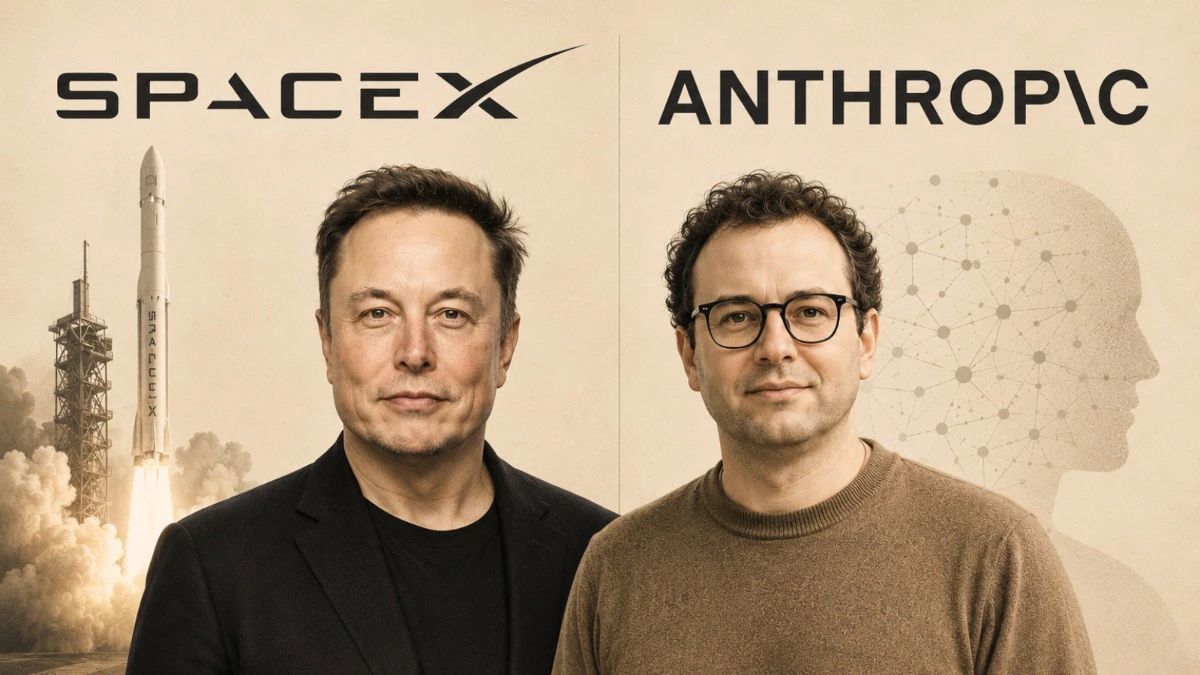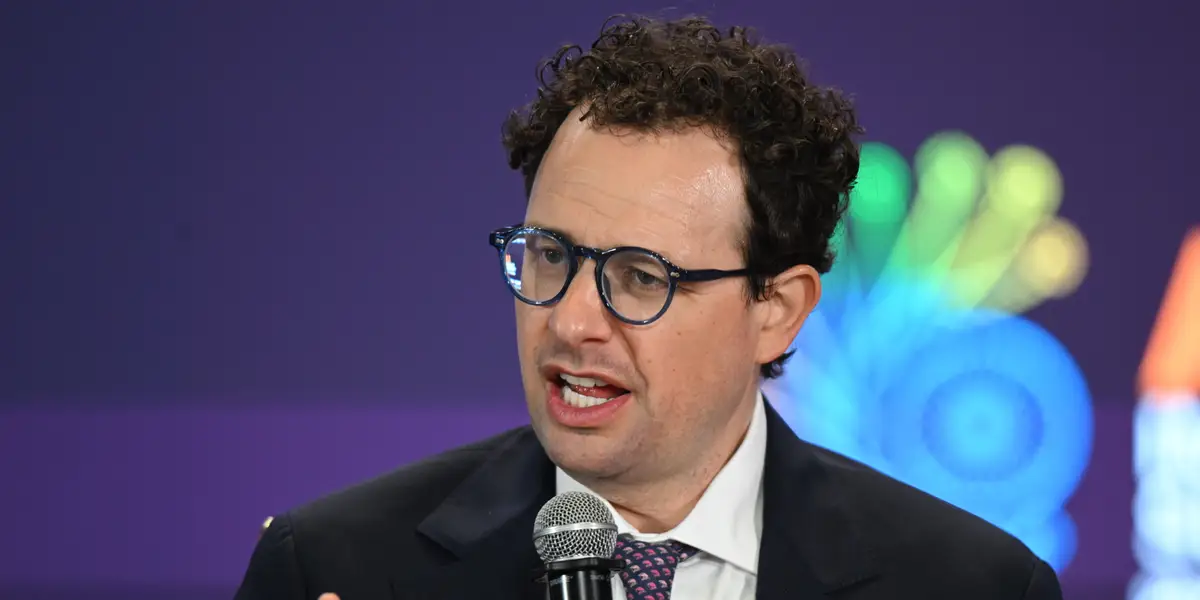
Dario Amodei, Anthropic CEO, consistently warns of inevitable AI-led mass layoffs, calling them a 'necessity' for the future of work.
Dario Amodei, the CEO of leading generative AI firm Anthropic, isn't sugarcoating the future of work. He's been consistently vocal, stating that mass layoffs led by artificial intelligence are not just a possibility, but an inevitable and even necessary part of the technological revolution ahead. It's a stark forecast that directly impacts millions of North American workers and has sparked intense debate across Silicon Valley and beyond.
Here's why Amodei's perspective is particularly significant: he frames the coming job displacement not as an unfortunate side effect, but as a foundational step toward a new economic equilibrium. His company, Anthropic, is at the forefront of developing powerful AI models like Claude, making his insights a direct reflection of the technology's cutting edge and its potential to reshape industries.
Anthropic, a major player in the competitive AI landscape alongside OpenAI and Google, has garnered billions in investment, signaling the immense capital flowing into this transformative sector. Amodei's statements come as generative AI tools are rapidly moving from experimental stages to enterprise deployment, proving their capability to automate complex tasks that were once considered exclusively human domains. This isn't just about factory robots anymore; it's about AI models handling customer service, writing code, drafting legal documents, and even assisting in creative processes, fundamentally challenging the traditional white-collar job market.
For a founder leading one of the most well-funded AI companies, Amodei's view is rooted in a belief in technological progress and efficiency. From this vantage point, the 'necessity' of layoffs stems from AI's ability to perform tasks with unprecedented speed, accuracy, and scale, potentially leading to massive productivity gains that could theoretically benefit society as a whole. The argument is that resisting this shift would be akin to resisting previous industrial revolutions, ultimately hindering progress.
Yet, this perspective clashes with the immediate and very human reality of job insecurity. While investors might see the potential for increased profit margins and streamlined operations through AI adoption, workers across various sectors are grappling with the potential obsolescence of their skills and the erosion of stable employment pathways. The conversation Amodei initiates is therefore not just about technology, but about societal contracts, economic models, and the very definition of human value in a rapidly automating world.
Why this matters for everyone
The human angle on this is undeniably profound. For decades, automation was largely seen as a threat to blue-collar manufacturing or repetitive service jobs. Amodei's frankness, however, underscores that generative AI's impact will be far broader, reaching into professional services, creative fields, and technical roles. Think about paralegals whose research tasks can be completed in seconds by an AI, or software developers augmented—or replaced—by code-generating models. The potential for widespread displacement among knowledge workers in North America is a significant shift, challenging the long-held assumption that higher education and specialized skills offer immunity from automation.
From an investor's perspective, this means a re-evaluation of labor as a cost center. Companies that successfully integrate AI to reduce headcount and increase output could see significant boosts to their valuations. The promise of "doing more with less" is a powerful narrative on Wall Street, driving further investment into AI firms and technologies. However, even within investor circles, there's a recognition that widespread societal disruption could lead to market instability, making a smooth transition crucial for sustained economic growth.
Users, too, will experience the ramifications. On one hand, AI promises more personalized services, more efficient customer support, and innovative new products at potentially lower costs. On the other hand, a society grappling with mass unemployment might find these benefits overshadowed by economic anxiety and social unrest. The debate then becomes about how to distribute the immense wealth and productivity generated by AI, and whether the benefits truly accrue to everyone, or primarily to those who own and control the technology.
The path forward, and the pushback
Amodei's assertion that "we are going to find" a way forward suggests an optimistic, albeit challenging, outlook. What this "finding" entails is the subject of intense speculation and policy discussion. It could mean the emergence of entirely new industries and job categories that AI facilitates, much like the internet created roles unimaginable just a few decades ago. It might also necessitate radical societal changes, such as the implementation of universal basic income (UBI) to provide a safety net for those whose labor is no longer needed in traditional roles. Retraining programs on an unprecedented scale would be essential, focusing on uniquely human skills that AI cannot replicate, such as critical thinking, creativity, emotional intelligence, and complex problem-solving.
However, Amodei's unvarnished view faces significant pushback. Many economists, labor leaders, and even other tech executives argue that while AI will undoubtedly transform jobs, it will also create new ones and augment existing roles rather than simply replacing them en masse. They point to historical precedents where technological advancements led to short-term disruptions but long-term job growth and improved living standards. The ethical considerations are also paramount: is it morally acceptable to prioritize technological efficiency over human livelihoods without robust social provisions in place? Policy discussions in Washington and Ottawa are increasingly focused on how to regulate AI to ensure equitable growth, protect workers, and fund necessary social adjustments.
The idea of layoffs as a "necessity" often implies an almost natural, unavoidable evolution, but critics argue that this framing can absolve corporations and policymakers of their responsibility to manage the transition ethically and humanely. The pace at which AI is developing means that this transition could be far more rapid and disruptive than previous industrial shifts, leaving less time for society to adapt. This urgency demands proactive planning, not just reactive measures.
Companies like Anthropic, despite their safety-focused mission, are central to this transformation. Their role extends beyond just developing powerful models; it includes engaging in the public discourse about the societal implications and potentially contributing to solutions for workforce displacement. The challenge is immense: how to harness AI's incredible power for human benefit without inadvertently creating a deeply unequal and unstable society.
The skills gap, already a concern in many industries, could widen dramatically. Education systems in North America, often slow to adapt, would need to undergo a fundamental overhaul to prepare future generations for a world where continuous learning and adaptability are paramount. The focus would shift from teaching rote skills to fostering critical thinking, creativity, and the ability to collaborate with AI tools effectively.
Ultimately, Dario Amodei's candid assessment forces a crucial conversation that society can no longer defer. The choices made by technologists, policymakers, educators, and citizens in the coming years will determine whether AI leads to an era of unprecedented prosperity and human flourishing or one of significant social fragmentation and economic hardship. It's a future that North America, and indeed the world, is now compelled to confront head-on.
Frequently asked questions
What is Dario Amodei's stance on AI and layoffs?
Dario Amodei, CEO of Anthropic, believes that AI-led mass layoffs are not only inevitable but a necessary part of the technological revolution. He has consistently voiced this opinion, emphasizing its impact on the future of work.
Who is Dario Amodei?
Dario Amodei is the CEO of Anthropic, a leading generative AI firm known for developing AI models like Claude.
Why does Amodei say AI layoffs are necessary?
Amodei views AI-led layoffs as a necessary component of the broader technological revolution, suggesting they are an unavoidable step in societal and economic transformation driven by artificial intelligence.
What company does Dario Amodei lead?
Dario Amodei leads Anthropic, a prominent company in the field of generative artificial intelligence.
How will AI impact the future of work, according to Amodei?
According to Amodei, AI will lead to significant job displacement and mass layoffs, fundamentally reshaping the future of work as we know it.
Has Amodei spoken about AI layoffs before?
Yes, Dario Amodei has been consistently vocal about his predictions regarding AI-led mass layoffs, making it a recurring theme in his public statements.