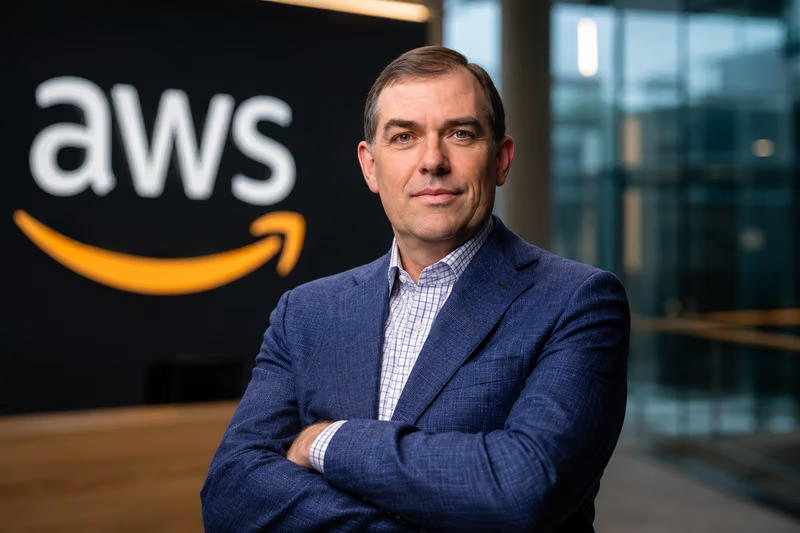
Matt Garman explains AWS's strategic pivot, revealing how AI will reshape the future of work and why investing in 11,000 interns is key to meeting talent demands.
The tech world often grapples with the paradox of innovation: does advancement create jobs or displace them? Amazon Web Services CEO Matt Garman’s recent remarks underscore a strategic pivot, suggesting that while artificial intelligence will fundamentally alter the nature of work, the industry’s leading players are already investing heavily in reshaping their talent pipelines to meet the future demands, potentially signaling a competitive advantage for those who act decisively.
Garman’s perspective, articulated amidst the accelerating AI revolution, is not merely theoretical. AWS is backing this outlook with a significant commitment: hiring 11,000 interns globally this year. This substantial influx of nascent talent is designed to immerse a new generation into cloud computing and AI development, reflecting a proactive approach to a rapidly evolving technological landscape and an implicit understanding that future growth hinges on a deeply skilled, AI-fluent workforce.
For investors, this aggressive talent acquisition strategy by AWS, a critical profit engine for Amazon, presents a dual narrative. While intern programs represent an operational expense, especially at this scale, they also signify a robust investment in long-term human capital. This move could be interpreted as a bullish signal for AWS’s sustained leadership in cloud infrastructure and AI services, as it indicates a willingness to absorb short-term costs for future market share and technological supremacy against rivals like Microsoft Azure and Google Cloud.
What It Means
My read on this is clear: Amazon isn't just reacting to the AI boom; it's actively engineering its future workforce to dominate it. The allocation of resources to integrate 11,000 interns highlights a critical shift in how hyper-scale cloud providers are addressing the impending AI skills gap. This isn't merely a corporate social responsibility play; it's a shrewd long-term talent arbitrage strategy, positioning AWS to cultivate bespoke expertise rather than battling for scarce, expensive senior AI engineers in an overheated market.
For any founder building in the AI space, or indeed, any investor tracking cloud market share, this move by AWS should resonate deeply. It underscores the competitive intensity in the AI infrastructure layer, where access to skilled personnel capable of deploying, optimizing, and securing AI workloads will become a paramount differentiator. Companies that fail to proactively invest in talent development now risk falling behind, potentially facing higher operational costs or slower innovation cycles in the years to come.
AWS is hiring 11,000 interns globally this year, representing a significant investment in future talent amidst the evolving AI landscape.
The Context
Amazon has a well-established history of large-scale hiring, often absorbing thousands of employees across its e-commerce, logistics, and technology divisions annually. AWS, in particular, has been a cornerstone of Amazon's profitability and innovation, driving much of the company's research and development into areas like machine learning and data analytics. Garman’s emphasis on AI’s transformative power is consistent with AWS’s strategic direction, particularly with its continued advancements in services like Amazon Bedrock for generative AI, SageMaker for machine learning development, and a plethora of specialized AI services.
The broader tech industry is currently navigating a complex talent market. While some segments have seen layoffs and hiring freezes, particularly in areas less directly tied to AI, the demand for AI-specific skills has surged. This dichotomy highlights a re-prioritization across the tech sector, with resources shifting towards AI-centric roles. AWS’s intern program not only addresses its own needs but also sets a precedent for how large enterprises can contribute to mitigating the broader AI skills deficit, turning potential disruption into an opportunity for workforce evolution.
What Analysts Say
Industry analysts, while scrutinizing operational expenditures, generally view strategic investments in human capital as a positive indicator for long-term growth, especially within high-growth sectors like AI and cloud computing. The scale of AWS’s intern program suggests a deep commitment to internal capability building, which can lead to proprietary knowledge and a more agile response to market demands compared to relying solely on external recruitment. This proactive approach could translate into more efficient product development cycles and sustained innovation, driving future revenue streams and market leadership.
This initiative also offers a tangible response to the ongoing debate about AI's impact on employment. Rather than fearing job displacement, AWS appears to be championing job transformation, preparing a workforce equipped with the skills necessary to harness AI. This perspective aligns with a growing consensus that AI will augment human capabilities, necessitating a workforce adept at collaborating with intelligent systems. Such a strategy may not immediately impact quarterly earnings, but it lays crucial groundwork for competitive differentiation in the decade ahead.
What to watch next will be the conversion rates of these interns into full-time employees and the specific roles they ultimately fill within AWS. Observing their integration into AI-centric projects and the subsequent impact on AWS's product roadmap, particularly within its generative AI offerings, will provide insights into the effectiveness of this talent strategy. Furthermore, competitors' responses, whether through similar large-scale talent programs or alternative approaches to AI skill acquisition, will define the next phase of the cloud and AI talent wars.
Frequently asked questions
What is Amazon Web Services CEO Matt Garman's view on AI and jobs?
Matt Garman believes AI will fundamentally change the nature of work, leading to a strategic pivot in how companies manage talent. He suggests that while some jobs may alter, the industry is actively investing in new pipelines to meet future demands.
Why is AWS hiring 11,000 interns this year?
AWS is hiring 11,000 interns as a strategic investment to reshape its talent pipeline. This initiative aims to prepare the future workforce for the evolving demands of the tech industry, particularly in light of AI's impact on job roles.
How will AI change jobs according to Matt Garman?
According to Matt Garman, AI will fundamentally alter the nature of work, requiring a re-evaluation of skill sets and job responsibilities. Companies like AWS are focusing on talent development to adapt to these changes.
What is AWS's strategy for the future workforce?
AWS's strategy involves investing heavily in reshaping its talent pipeline, exemplified by hiring 11,000 interns. This proactive approach aims to equip the workforce with the necessary skills to thrive in an AI-driven future.
Is AI creating or displacing jobs at AWS?
While the article notes the "paradox of innovation" regarding job displacement versus creation, Matt Garman's remarks suggest a focus on adapting and investing in new talent pipelines, indicating a strategy of evolving roles rather than just displacement.
What role do internships play in the tech industry today?
Internships, like the 11,000 offered by AWS, play a crucial role in developing future talent and addressing the evolving needs of the tech industry. They serve as a pipeline for new skills and help companies adapt to technological advancements like AI.