Investment bank sees significantly faster commercialization for AI-powered humanoids, signaling a major shift in the global tech landscape and future of work.
The future of work, and indeed, the fabric of our everyday lives, just got a significant jolt forward. A recent report from investment bank Morgan Stanley has dramatically doubled its forecast for humanoid robot shipments from China, signaling a far faster commercialization curve than many in the global tech community had anticipated. This isn't just a niche tech story; it’s a bellwether for how rapidly automation will reshape industries, economies, and job markets, impacting everything from manufacturing floors in Michigan to logistics hubs in California.
Here's the key detail that has the venture world buzzing: Morgan Stanley now projects that China could ship 260,000 humanoid robots by 2030, a staggering leap from their previous estimate of 130,000 units. This isn't just an incremental adjustment; it's a recalibration of the entire timeline for a technology that many viewed as years, if not decades, away from mass adoption. It suggests that the inflection point for humanoid robotics is here, and it’s accelerating at breakneck speed, driven largely by the Asian giant's formidable manufacturing and R&D capabilities.
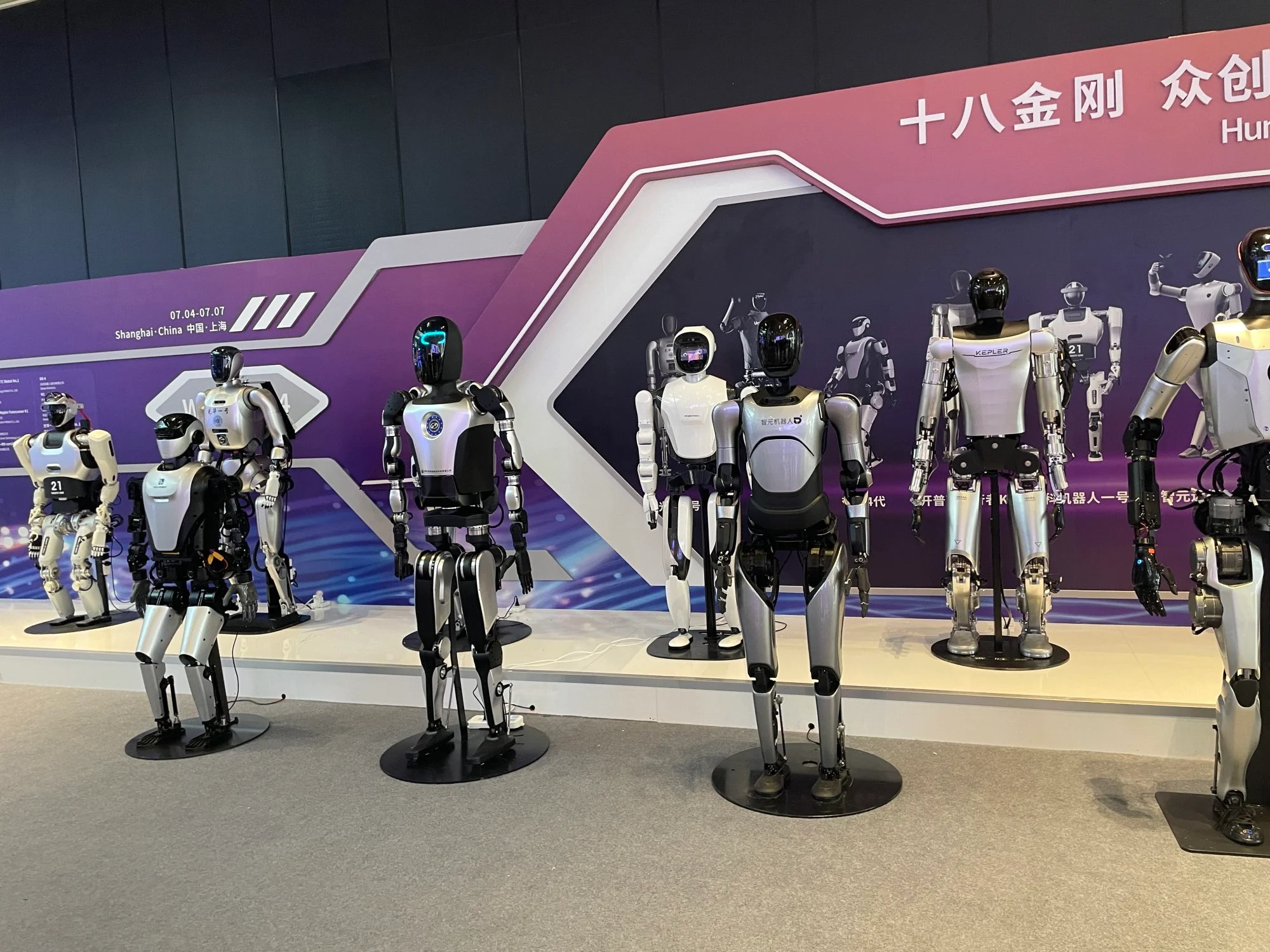
The driving forces behind this revised forecast are multifaceted. China's industrial prowess, coupled with aggressive government support for advanced manufacturing and AI, creates a fertile ground for rapid development and deployment. Companies like Xiaomi with its CyberOne and Unitree with its H1 are already showcasing impressive capabilities, demonstrating that the technology is moving beyond mere prototypes into scalable, functional models. These aren't just parlor tricks; they represent a convergence of advanced AI, sophisticated mechanics, and cost-effective production, making humanoid robots a viable solution for a range of industrial applications much sooner than predicted.
This acceleration is further fueled by the imperative to address labor challenges and enhance productivity. As China’s workforce demographics shift, the strategic importance of automation becomes undeniable. The ability to deploy human-like robots that can perform complex, repetitive, or hazardous tasks not only boosts efficiency but also mitigates the impact of rising labor costs and shortages. This is a pragmatic, economically driven push that aligns perfectly with Beijing's "Made in China 2025" ambitions, solidifying the country's position as a global leader in advanced robotics.
While Tesla's Optimus (or Tesla Bot) has garnered significant media attention in North America, often setting the benchmark for public perception of humanoid robots, the reality on the ground is that China is making significant, practical strides. The sheer scale of Chinese manufacturing and the speed at which it can iterate and deploy new technologies means that what starts as a niche industrial application can quickly scale to mass production, potentially outpacing Western counterparts in market penetration if not necessarily in raw innovation at every turn.
Why This Matters for the Global Economy
For North American founders, investors, and policymakers, Morgan Stanley's revised forecast isn't just a distant data point; it's a direct challenge and a massive opportunity. China's accelerated commercialization of humanoid robots fundamentally alters the global competitive landscape. If China is deploying these units at scale by 2030, it implies a significant shift in manufacturing capabilities, supply chain resilience, and overall economic productivity. North American industries, already grappling with labor shortages and the drive for increased efficiency, must take note. This isn't about catching up; it's about defining our own strategy for a future where intelligent, bipedal robots are a common sight in factories, warehouses, and eventually, service industries.
The implications stretch far beyond industrial automation. Imagine the impact on supply chains if factories in China are largely staffed by humanoids working 24/7 with minimal human intervention. This could lead to a dramatic decrease in production costs and an increase in output, potentially putting pressure on North American manufacturers that rely on traditional labor models. It forces a critical reevaluation of our own automation strategies, not just with traditional industrial robots, but specifically with humanoids that offer greater versatility in unstructured environments. The race is on, not just for technological superiority, but for economic resilience and strategic advantage.
This trend also highlights the critical importance of AI development within North America. The capabilities of these humanoid robots are directly tied to advances in artificial intelligence, particularly in areas like reinforcement learning, computer vision, and natural language processing. The more sophisticated the AI, the more adaptable and effective the robot. Therefore, investment in AI research, talent development, and robust data infrastructure here in North America isn't just a good idea; it's an existential necessity to maintain our competitive edge. We must ensure our AI ecosystem is robust enough to power the next generation of robotics that can match or exceed capabilities being developed elsewhere.
The Investment Angle and What's Next
From an investment perspective, this forecast is a huge flashing signal for venture capitalists and institutional investors. The "robotics winter" some feared for early-stage hardware companies is thawing rapidly, particularly for those focused on practical, deployable humanoid solutions. We're seeing increasing capital flow into robotics startups in North America, driven by the clear market need for automation in areas like logistics, manufacturing, and even elder care. However, the focus needs to be on startups that are not just building impressive demos, but those with a clear path to commercialization, scalability, and, crucially, a robust software layer to make their hardware truly intelligent and adaptable. This isn't just about building a body; it's about building a brain.
The convergence of advanced AI, sensor fusion, and breakthroughs in motor and battery technology is what makes this moment different. Humanoid robots are no longer clunky, power-hungry machines. They are becoming increasingly agile, energy-efficient, and capable of understanding complex commands thanks to large language models (LLMs) and improved perception systems. For investors, identifying the companies that are mastering these synergistic technologies — those that are integrating cutting-edge AI with robust, cost-effective hardware — will be key. The market is maturing, and the opportunities for significant returns are becoming clearer, but the due diligence on the underlying tech and commercial strategy is more critical than ever.
Looking ahead, the next few years will be defined by several critical factors. First, cost reduction. While initial deployments will likely be in high-value industrial settings, the ultimate goal is to bring the cost down to a point where humanoids are economically viable for a much broader range of applications. Second, dexterity and reliability. These robots need to perform tasks with precision and consistency over long periods without failure. And third, safety. Integrating humanoids into human-centric environments, whether factory floors or public spaces, demands rigorous safety protocols and ethical considerations. The companies that can effectively address these challenges will be the ones that truly define the next wave of automation.
My read is that this isn't a speculative bubble; it's a foundational shift. The underlying drivers—labor shortages, efficiency demands, and technological maturity—are too strong to ignore. For founders in North America, this means aggressively pursuing innovation in AI, advanced materials, and robot design, but also keenly observing the rapid developments in China. Collaboration, strategic partnerships, and a deep understanding of global supply chains will be crucial. This isn't just about building a better robot; it's about building a resilient, future-proof economy. The gauntlet has been thrown, and the future of human-robot collaboration is arriving faster than most imagined.
Frequently asked questions
Why did Morgan Stanley double its China humanoid robot forecast?
Morgan Stanley doubled its forecast due to an accelerating commercialization curve, driven by technological advancements, increasing demand, and government support in China. The bank observed faster market adoption and production scaling than previously anticipated.
What does this mean for the future of work?
This signals a significant transformation in the future of work, with humanoid robots potentially taking on more roles in various industries, leading to shifts in job markets and necessitating new skill sets for human workers.
Which industries will be most impacted by humanoid robots?
Industries like manufacturing, logistics, healthcare, retail, and even domestic services are expected to be significantly impacted by the integration of humanoid robots, improving efficiency and productivity.
What is China's role in humanoid robot development?
China is a key player in humanoid robot development and commercialization, with strong government backing, advanced manufacturing capabilities, and a large domestic market driving rapid innovation and adoption.
Are humanoid robots ready for widespread commercial use?
According to Morgan Stanley's revised forecast, humanoid robots are approaching widespread commercial readiness faster than expected, moving beyond research and development into practical applications across various sectors.
How will this impact global tech investment?
The accelerated commercialization of humanoid robots is expected to attract substantial global tech investment into robotics companies, AI development, and related infrastructure, fueling further innovation and market growth.