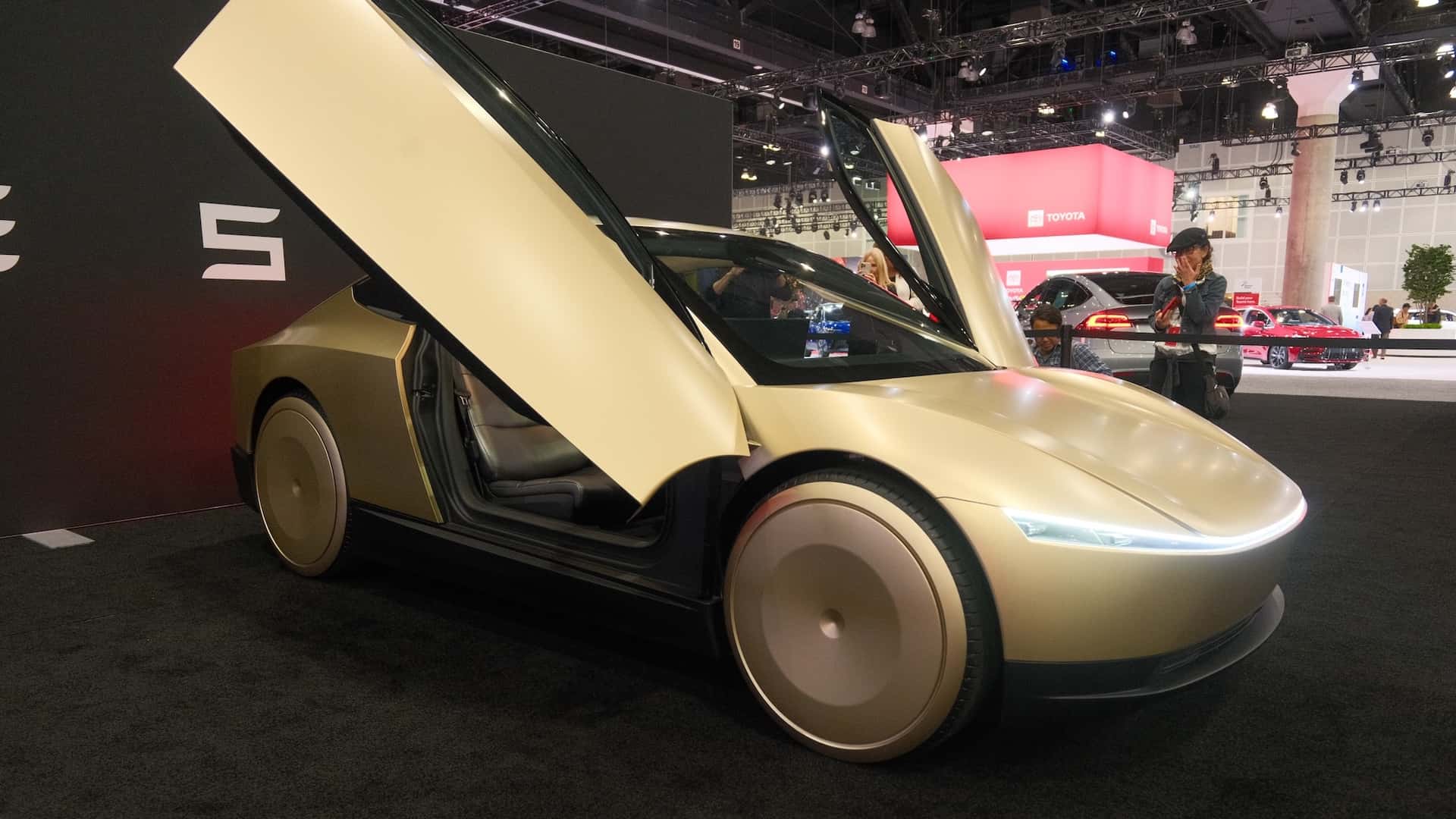
EPA documents confirm the robotaxi's 3,113 lbs curb weight, 219 HP motor, and 48 kWh battery, offering the deepest look yet into its engineering and efficiency.
Tesla Inc.'s highly anticipated Cybercab robotaxi has received its official Environmental Protection Agency certification, revealing a detailed technical blueprint that underscores the automaker's relentless pursuit of efficiency. The filing, which arrived even as regulatory approval for fully unsupervised autonomous operation remains elusive, presents a paradox: exquisitely engineered hardware poised for market disruption, yet tethered by software and legal frameworks, creating a complex investment scenario for stakeholders.
The certification documents, filed on May 21 and certified on May 26, outline a vehicle with a 3,113-pound curb weight, powered by a 219 HP (163 kW) AC permanent magnet motor, and equipped with a 48 kWh lithium-ion battery pack. These figures offer the clearest look yet at the Cybercab’s design philosophy, positioning it as an ultra-efficient, purpose-built electric vehicle, distinct from Tesla's existing consumer lineup and optimized for its intended high-utilization, urban mobility role.
At 3,113 pounds, the Cybercab is notably heavier than some conventional two-seaters like the Mazda MX-5 Miata, which weighs around 2,341 pounds, despite lacking a steering wheel or pedals. This mass likely accounts for robust crash structures necessary for a steerless front cabin and the extensive compute hardware required for advanced autonomous capabilities. The choice of a front-wheel-drive (FWD) layout further highlights a pragmatic design focus on packaging efficiency and cost reduction, diverging from Tesla’s typical rear-wheel or all-wheel drive configurations, which are often favored for performance dynamics over sheer operational economy.
The 219 HP motor, while not extreme for an electric vehicle, is strategically sized. Tesla’s engineering teams often overspec motors relative to typical performance targets to allow them to operate in more efficient regions of their torque curve during the low-load, stop-and-go conditions characteristic of urban driving cycles. This approach contributes significantly to the Cybercab's impressive 165 Wh/mi efficiency rating, translating to an estimated 293 miles of adjusted EPA range from its 48 kWh battery. This figure aligns precisely with Tesla's prior "close to 300 miles" claims for its robotaxi, reinforcing the company's commitment to maximizing energy utilization.
What It Means
My read is that the Cybercab's specifications represent a compelling technical achievement, showcasing Tesla’s continued leadership in EV powertrain and energy management. The low energy consumption per mile is critical for a robotaxi fleet, directly impacting operational expenditure and potential profitability. Lower charging frequency and faster turnaround times could translate to higher fleet utilization, a key metric for autonomous ride-hailing services seeking to generate maximum revenue per vehicle. This engineering excellence, however, exists in a vacuum, awaiting the regulatory and technological breakthroughs for widespread, unsupervised deployment. The market implications are significant; while investors often bake Tesla’s long-term autonomy vision into its valuation, the tangible rollout of revenue-generating robotaxi services remains the largest unfulfilled promise, creating a valuation arbitrage opportunity for those who believe in the vision.
The focus on efficiency, from the motor sizing to the selfless FWD layout, indicates a vehicle designed with an acute awareness of total cost of ownership in a fleet environment. For a robotaxi service, every watt-hour saved directly boosts the bottom line. This design philosophy contrasts sharply with Tesla's consumer vehicles, where performance and brand appeal often take precedence. The Cybercab is a pure utility play, a tool engineered for a specific, demanding job. This strategic pivot towards purpose-built autonomous platforms highlights a broader industry trend where mobility-as-a-service providers are moving beyond retrofitting existing passenger cars to developing bespoke vehicles optimized for driverless operation and specific use cases.
3,113 lbs Curb Weight
The Tesla Cybercab's curb weight, significantly heavier than expected for a two-seat, driverless vehicle, suggests substantial structural reinforcement and integrated autonomous hardware, potentially impacting manufacturing costs and energy efficiency targets, despite the overall highly efficient powertrain.
The Context
Tesla's journey into autonomous ride-hailing has been a decade-long narrative, punctuated by ambitious timelines from CEO Elon Musk, particularly since the 2019 "Autonomy Day" where the robotaxi vision was first extensively detailed. The Cybercab itself was formally unveiled in late 2023, positioned as a purpose-built solution rather than an adapted consumer vehicle. This strategy sets it apart from many early autonomous vehicle prototypes that retrofit existing car models, like early iterations from Waymo or Cruise. The EPA certification, issued May 26, 2026, and the "introduction into commerce" date of May 29, 2026, confirm that the vehicle is technically cleared for U.S. roads from an emissions and efficiency standpoint, and production has commenced at Giga Texas. Yet, these milestones are distinct from, and prerequisite to, securing the far more complex regulatory approvals for unsupervised driverless operation across various jurisdictions globally. This distinction is crucial for understanding investor sentiment and the practical path to commercialization.
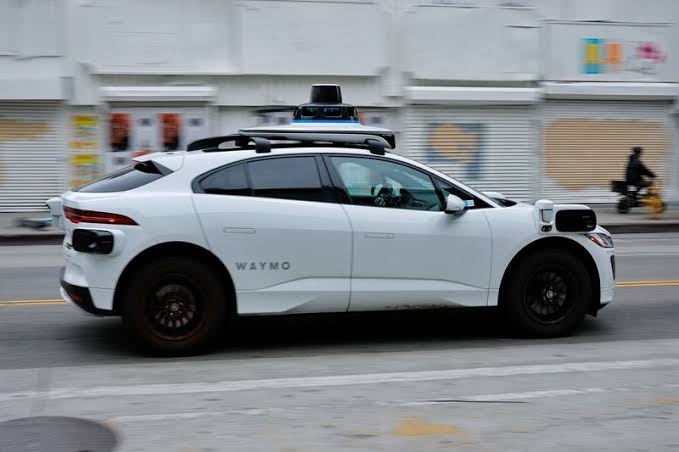
The broader landscape of autonomous mobility is fraught with challenges, as evidenced by the operational setbacks faced by competitors like Cruise, a General Motors subsidiary, and the extended development cycles for other players such as Amazon's Zoox and Alphabet's Waymo. Each company navigates a complex matrix of technological hurdles, regulatory scrutiny, and public perception issues. Tesla's unwavering commitment to a vision-only autonomy stack, eschewing lidar and radar as primary sensors, represents a significant divergence from the industry consensus. The Cybercab's design, optimized around this vision-first approach, reflects Tesla's belief that advanced neural networks and high-definition cameras can achieve superhuman driving capabilities, theoretically offering a more scalable and cost-effective solution than multi-sensor fusion systems.
The Stakes Ahead
What strikes me here is the dual nature of Tesla's robotaxi ambition: a triumph of engineering juxtaposed with a persistent regulatory quagmire. The company has delivered on the hardware, crafting a vehicle that is demonstrably efficient and tailored for its intended purpose. However, the product's ultimate success hinges entirely on the software's ability to achieve Level 5 autonomy reliably and safely, and the regulatory bodies' willingness to approve it for widespread public use without a safety driver. The financial markets are constantly weighing this dichotomy, with every production milestone or regulatory delay shifting the perception of Tesla's long-term growth trajectory and its ability to monetize its vast fleet data and AI investments. The potential for a high-margin robotaxi network remains Tesla's most significant untapped revenue stream, but it also represents its most substantial execution risk, threatening to delay or even derail its ambitious market entry.
Investors will be closely watching for any progress on regulatory fronts, particularly from national and state transportation agencies in key markets. Key dates for observation include any forthcoming software updates related to Full Self-Driving (FSD) capabilities, specific announcements regarding pilot programs in controlled environments, and any shifts in the global regulatory stance on fully autonomous vehicles. The true trigger for Cybercab's market impact will not be another spec sheet, but rather the moment a passenger steps into an unsupervised vehicle for a paid, driverless ride, signaling the transition from a highly efficient concept to a fully operational, revenue-generating service.
Frequently asked questions
What are the key revealed specifications for the Tesla Cybercab?
The EPA certification documents reveal the Tesla Cybercab has a curb weight of 3,113 lbs, a 219 HP AC permanent magnet motor, and a 48 kWh lithium-ion battery. It features front-wheel drive and an unadjusted combined range of 418.2 miles, translating to approximately 293 miles in real-world conditions after EPA correction.
How much does the Tesla Cybercab weigh compared to other vehicles?
At 3,113 lbs, the Cybercab is about 750 lbs lighter than a Tesla Model 3 Standard Range. However, it's heavier than other two-seaters like the Mazda MX-5 Miata (2,341 lbs) and even a four-door Honda Civic (2,877 lbs).
What is the battery capacity and estimated range of the Cybercab?
The Cybercab features a 48 kWh (47.6 kWh usable) lithium-ion battery pack. Its unadjusted EPA combined range is 418.2 miles, which is estimated to be around 293 miles in real-world driving conditions after EPA correction.
Why does the Cybercab have a 219 HP motor and front-wheel drive?
The 219 HP motor is optimized for efficiency rather than raw power, consistent with Tesla's strategy to operate motors in their most efficient range for urban ride-hailing. The front-wheel-drive layout was chosen for packaging and cost efficiency, simplifying the design for a vehicle not requiring high-performance dynamics.
Has the Tesla Cybercab received regulatory approval for autonomous driving?
While the Cybercab has received EPA certification and has been technically introduced into commerce, it has not yet received regulatory approval for unsupervised autonomous driving. This remains the primary hurdle before it can operate driverless.
When was the Cybercab introduced into commerce?
The EPA filing lists the “Introduction into Commerce Date” as May 29, 2026. This date is consistent with the production ramp that began at Giga Texas in April, indicating the vehicle is officially cleared for US roads from an emissions and efficiency standpoint.