Uber teams with Wayve for UK robotaxi launch, challenging Waymo's presence. London becomes the next battleground for autonomous ride-hailing.
The Robotaxi Race for London Is Heating Up: Uber and Wayve Prepare to Battle Waymo
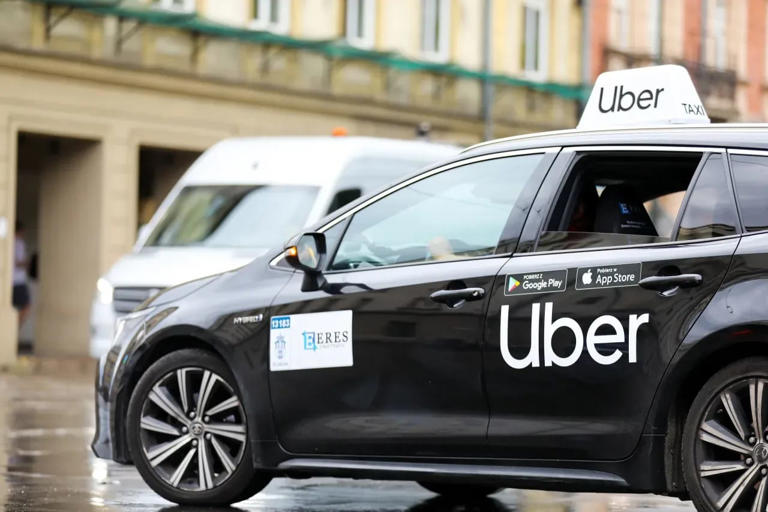
A silent battle for the future of urban transportation is brewing in London, and it pits some of the biggest names in tech and mobility against each other. Uber, a company synonymous with ride-hailing, is making a significant move into autonomous vehicles in the UK capital through a new partnership, setting the stage for a direct confrontation with Alphabet's self-driving giant, Waymo. This isn't just about getting from point A to point B without a driver; it's about claiming a critical stake in the next generation of how we move through cities, and London is shaping up to be a crucial proving ground. The key detail for riders in London is that Uber customers can now sign up to an interest list, boosting their chances of being matched with a Wayve autonomous vehicle. This seemingly small update is a clear signal that Uber and its UK-based autonomous vehicle partner, Wayve, are on the cusp of launching a robotaxi service in London, promising a new era of ride-hailing where the driver's seat might just be empty. Uber announced the interest list on Monday, showcasing a branded, black Ford Mustang Mach-E. This vehicle is equipped with Wayve’s self-driving system, but it's Uber that has taken the reins on the in-cabin experience, designing interactive touchscreens that support 64 languages. The partnership aims to launch the service in the coming months, pending regulatory approval, and when it does, riders who request a ride on the Uber app might find themselves matched with a Wayve autonomous vehicle at no extra cost compared to a traditional human-driven ride. For those eager to try it, opting into the autonomous vehicle preference in their account settings will increase their chances, though they'll still be able to decline an AV and request a human driver if they prefer. Initially, these Wayve robotaxis will have a human safety operator behind the wheel, a common step before fully driverless operations commence. The entrance of Uber and Wayve into London's robotaxi scene immediately sets them on a collision course with Waymo. Alphabet's self-driving company, widely regarded as the leader in the autonomous vehicle space in the United States, has already begun its own testing in London. Since April, Waymo has been operating about 100 of its autonomous Jaguar I-Pace vehicles, complete with human safety operators, across a substantial 100-square-mile area of the city. This means that while Uber and Wayve are gearing up for their launch, Waymo has already established a physical presence on London’s streets, collecting valuable data and refining its technology in a complex urban environment.
The Looming Clash Across the Atlantic
What makes this impending showdown particularly fascinating is the complex and, at times, strained relationship between Uber and Waymo in the United States. The two companies, once embroiled in a high-profile trade secrets lawsuit, agreed to a partnership in 2023. This collaboration saw Waymo integrate its self-driving vehicles onto Uber's app in Phoenix, Arizona. However, that partnership has been relatively limited, as Phoenix customers could also hail a Waymo robotaxi directly through Waymo’s own app, diluting Uber’s unique offering. The partnership did expand in March 2025, with Waymo agreeing to deploy its vehicles on the Uber app in Austin, Texas, and later in Atlanta, Georgia. In these cities, the dynamic shifted: prospective customers cannot hail a robotaxi directly through Waymo’s app, meaning they *must* use the Uber app to potentially be matched with a Waymo vehicle. This gives Uber a stronger, more exclusive role in those markets, highlighting the ride-hailing giant's ambition to be a central platform for autonomous mobility, regardless of who develops the underlying tech. Despite these partnerships, there are clear signs that Uber and Waymo are strategically drifting apart, especially as Uber makes significant moves in other areas. Uber has spent the past two years actively investing in and partnering with a multitude of autonomous vehicle companies globally, a strategy that contrasts with Waymo's largely in-house development approach. Wayve is a prime example of this multi-pronged strategy; in February, the UK startup secured a substantial $1.2 billion in funding from various strategic backers, with Uber acting as a return investor. The total investment could climb to $1.5 billion, with an additional $300 million from Uber contingent on Wayve successfully deploying its robotaxis, starting with the London launch. Further illustrating this competitive tension, Uber executives have even taken direct shots at Waymo, which is an unorthodox way to treat a business partner. For instance, Uber CTO Praveen Neppalli publicly posted a video on X (formerly Twitter) highlighting what he called the "scary" and unsafe behavior of a Waymo robotaxi, accompanied by critical commentary. This kind of public criticism underscores the underlying competitive currents despite their existing collaborations. Beyond direct partnerships, Uber has also launched two new business divisions: AV Labs, focused on data and research, and Uber Autonomous Solutions, an operations-focused unit. These initiatives clearly demonstrate Uber’s broader ambitions to not just partner in the nascent autonomous vehicle industry, but to actively gain significant market share and shape its future.
The Regulatory Speed Bump
While the stage is set for an exciting robotaxi face-off in London, there's a significant regulatory hitch that will likely delay a full-blown, driverless battle, at least for a while. The UK government is currently in the process of developing comprehensive regulations for autonomous vehicles, and it appears this will not be a swift process. In May, the government’s transportation department opened applications for companies interested in participating in its AV pilot program. The stated aim is to learn from these pilot programs and apply those insights directly to the development of robust, future-proof regulations. This means that while companies like Uber, Wayve, and Waymo are eager to deploy their technologies, they must operate within the current, evolving legal framework. The requirement for human safety operators in both Wayve and Waymo vehicles in London is a direct reflection of this cautious regulatory environment. Until the UK finalizes its autonomous vehicle regulations, the path to fully driverless operations will remain constrained, potentially slowing down the rapid deployment and scaling of these services across the city. The government's measured approach ensures public safety remains paramount, but it also adds an element of uncertainty to the timelines for widespread robotaxi adoption. The stakes in London are incredibly high. For Uber, succeeding with Wayve in a major international market like London would validate its strategy of partnering with cutting-edge AV developers rather than building its own self-driving tech from scratch, a path it once pursued and abandoned. For Waymo, establishing a strong presence in London would cement its global leadership claims and demonstrate its ability to adapt its technology to diverse urban environments outside of the US. For consumers, the promise of robotaxis offers a glimpse into a future of potentially cheaper, more efficient, and safer transportation, though the reality of that promise is still being written. London's dense, complex road networks, diverse weather conditions, and large population make it an ideal, albeit challenging, proving ground for autonomous technology. The upcoming competition between Uber-Wayve and Waymo will not only push the boundaries of current self-driving capabilities but also heavily influence public perception and acceptance of robotaxis globally. As the UK government meticulously works through its regulatory framework, the companies are positioning themselves, refining their tech, and engaging consumers, all while navigating the intricate dance of competition and collaboration. The race is on, but the finish line for widespread, fully driverless robotaxi adoption, both in London and beyond, remains a journey with many more miles to cover, technical hurdles to clear, and regulatory landscapes to traverse.
Frequently asked questions
How can Uber users in London request a robotaxi?
Uber customers can join an interest list and increase their chances of being matched with a Wayve autonomous vehicle by going into their account settings, clicking on rider preferences, and selecting autonomous vehicles. If matched, they can still opt for a human driver.
Which companies are competing in the London robotaxi market?
Uber, in partnership with Wayve, is preparing to launch a robotaxi service in London, directly competing with Waymo, Alphabet's self-driving company that is also testing its vehicles in the city.
Will Uber's robotaxi service in London have human safety operators?
Yes, the Wayve robotaxis launching with Uber in London will initially have a human safety operator behind the wheel before fully driverless operations are introduced in the future.
What is Waymo's presence in London?
Waymo began testing its autonomous Jaguar I-Pace vehicles with human safety operators in London in April, covering a 100-square-mile area with about 100 vehicles.
How does the Uber and Waymo partnership in the US relate to the London competition?
Uber and Waymo have an existing partnership in the United States, allowing Waymo vehicles on the Uber app in cities like Phoenix, Austin, and Atlanta, even as they become rivals in other markets like London.
What is the regulatory status of autonomous vehicles in the UK?
The U.K. government is currently in the process of creating autonomous vehicle regulations and has opened applications for an AV pilot program to inform the development of these rules, which may delay widespread robotaxi deployment.