The generative AI boom is driving massive energy use in data centers, leading to a silent crisis: 600 billion gallons of water by 2030.
The generative AI craze reshaping how we work, create, and interact with technology is consuming resources at an astonishing rate. Beyond the massive energy bills and the constant demand for more powerful chips, a quieter, yet profoundly significant, challenge is emerging: water consumption.
Here's the stark reality: by 2030, the global AI industry is set to consume up to 600 billion gallons of water annually. That’s a staggering amount, largely driven by the insatiable energy demands of the hyperscale data centers powering these complex algorithms, especially across North America.
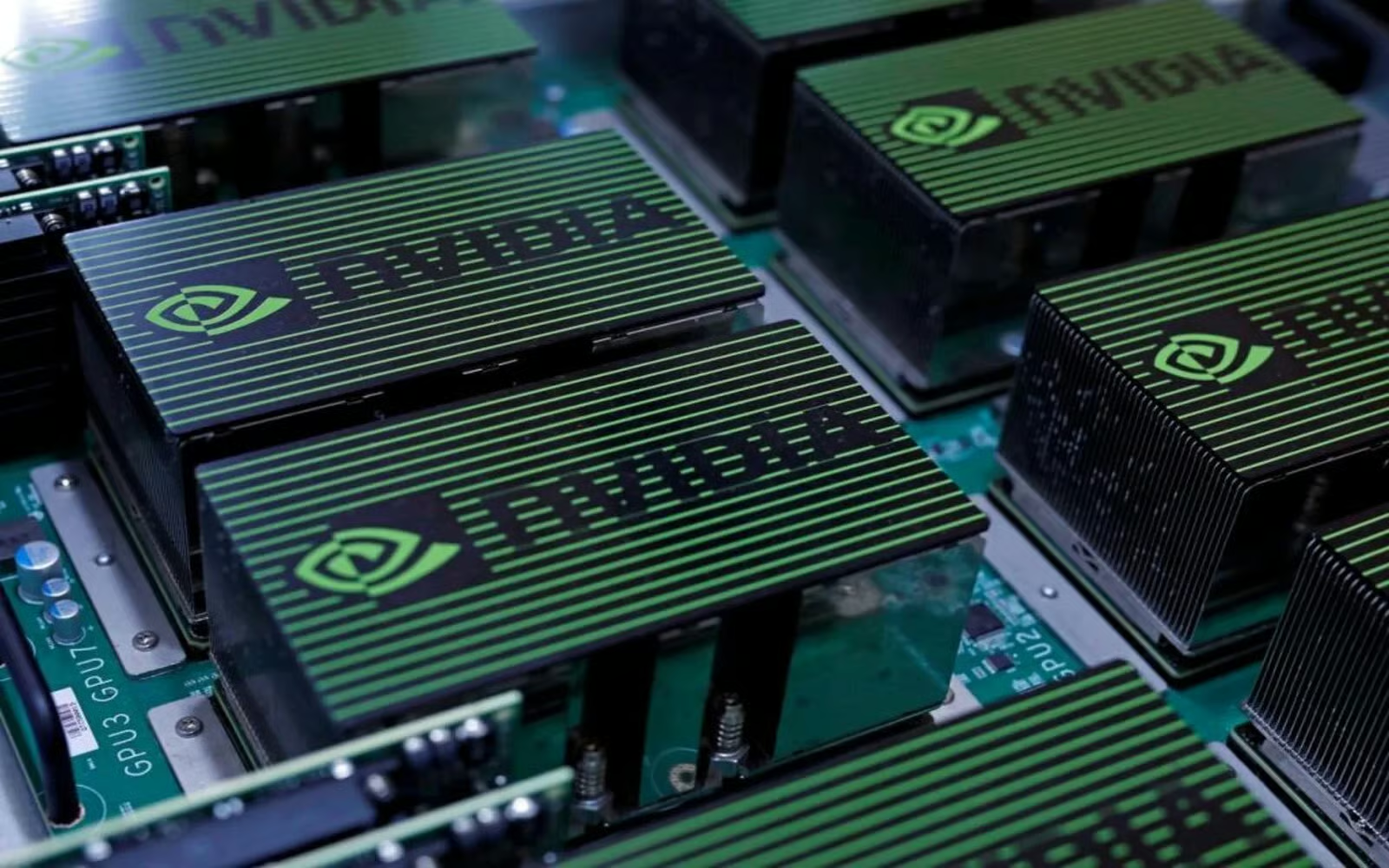
These sprawling facilities, often the size of several football fields, generate immense heat. To prevent overheating and maintain optimal performance for thousands of servers packed with GPUs and CPUs, data centers rely heavily on cooling systems. Many of these systems are evaporative, meaning they use water to dissipate heat into the atmosphere. The more powerful the chips, the more computations they perform, the more heat they generate, and consequently, the more water is needed for cooling.
Consider a large language model like OpenAI's GPT-3, for example. Training such a model can involve consuming significant amounts of water, not just for direct cooling but also indirectly, as power plants generate electricity for the data centers. Every kilowatt-hour used by a data center has a hidden water footprint, as thermal power generation is inherently water-intensive.
As AI applications become more sophisticated and widely adopted—from advanced chatbots and image generators to complex scientific simulations and autonomous driving systems—the number of data centers and their processing power will only increase. This escalating demand creates a direct strain on local water supplies, particularly in regions already grappling with scarcity, a growing concern across the Western United States.
Why this matters more than just the numbers
The implications of this burgeoning water demand extend far beyond the balance sheets of tech giants. Many of the largest data center clusters in North America are located in areas that are already experiencing significant water stress or are prone to droughts. States like Arizona, Nevada, Utah, and California, key hubs for cloud infrastructure, routinely face water challenges.
When a massive data center comes online in such a region, it can compete directly with agriculture, residential users, and environmental ecosystems for precious water resources. This isn't an abstract future problem; it's happening now. Local communities are beginning to feel the squeeze, questioning the sustainability of allowing these digital behemoths to draw ever-increasing volumes of water from their shared reserves.
Moreover, the water footprint isn't just about direct consumption. The energy required to power these data centers often comes from thermal power plants—coal, natural gas, or nuclear—which themselves are significant water users for cooling their turbines. So, even if a data center uses efficient direct cooling, its indirect water impact through electricity generation can still be substantial. My read is that this dual impact often gets overlooked when discussions focus solely on energy consumption or direct water use.
The projected 600-billion-gallon annual water footprint by 2030 highlights a massive blind spot in the generative AI boom: we are treating a physical resource crisis with software metrics. For the startup ecosystem, this environmental bottleneck is a massive commercial signal. Venture capital is waking up to the reality that pure algorithmic innovation means nothing without hardware infrastructure to support it. The next phase of hyper-growth won't just belong to foundation models, but to the "hard tech" innovators solving the foundational crisis—pioneering closed-loop liquid immersion, industrial-grade thermal recycling, and water-positive data center architectures.
The push for artificial intelligence is positioned as a solution for many of humanity's most pressing problems, from climate modeling to medical breakthroughs. Yet, the very infrastructure supporting this innovation is contributing to another critical resource challenge. This paradox highlights a fundamental tension between technological advancement and environmental stewardship that we, as a society, must confront head-on.
The race for sustainable AI and what happens next
Awareness of AI’s growing environmental footprint, particularly its thirst, is pushing tech companies to invest in more sustainable solutions. We’re seeing a significant shift toward advanced cooling technologies. Liquid cooling, for instance, where servers are immersed in non-conductive fluids or have cold plates directly attached, can be far more efficient than traditional air-cooling methods. These systems can drastically reduce water use for the same amount of heat dissipation, by using closed-loop systems that recirculate coolant rather than evaporating water.
Another crucial development is the strategic location of new data centers. Companies are exploring regions with abundant renewable energy sources and cooler climates, which naturally reduce cooling demands. For example, some data centers in cooler northern latitudes can leverage outside air for cooling for much of the year, a practice known as "free cooling." This minimizes both energy and water consumption. Additionally, there’s a growing trend towards using non-potable water sources—like recycled wastewater or greywater—for cooling where feasible, alleviating pressure on drinking water supplies.
Beyond cooling, the broader push for 100% renewable energy in data center operations is critical. When a data center runs on wind or solar power, its indirect water footprint from electricity generation is dramatically reduced, as these sources consume far less water than fossil fuel power plants. This integrated approach, combining efficient cooling with clean energy, represents the industry's best bet for mitigating the environmental impact of AI.
What strikes me here is that the conversation needs to move beyond just efficiency metrics to a more holistic view of resource management. It's not enough to be "less bad"; the goal should be "actively good" or "water positive" where possible. This means not just reducing consumption but also contributing to local water sustainability efforts, such as watershed restoration or investing in water recycling infrastructure.
The path forward for AI's explosive growth is not simply about building more powerful hardware. It's about building smarter, more responsible infrastructure. Companies, policymakers, and consumers all have a role to play. Tech giants need to be transparent about their resource consumption and aggressively pursue innovations that minimize their environmental footprint. Governments may need to consider regulations or incentives that prioritize water-efficient data center operations, especially in drought-prone areas.
As AI is set to consume an increasing share of our natural resources, the choices we make today about its underlying infrastructure will determine whether this transformative technology becomes a sustainable force for good or another contributor to our planet's growing environmental crises. The future of artificial intelligence, it turns out, is inextricably linked to the future of our water.
Frequently asked questions
How much water will AI consume by 2030?
By 2030, the global AI industry is projected to consume up to 600 billion gallons of water. This significant increase is primarily driven by the rising energy demands of data centers supporting generative AI technologies.
Why is AI using so much water?
AI's high water consumption is largely due to the massive energy demands of data centers that power AI operations. These facilities require significant amounts of water for cooling to prevent overheating.
What causes AI's rising energy consumption?
The "generative AI craze" and the constant demand for more powerful chips are the primary drivers of AI's rising energy consumption. This leads to increased power usage in data centers.
What is the environmental impact of AI?
Beyond energy consumption, a major environmental impact of AI is its substantial water footprint. The industry is on track to consume hundreds of billions of gallons of water annually.
Are data centers responsible for AI's water use?
Yes, data centers are primarily responsible for AI's water consumption. They use vast quantities of water for cooling their servers, which are essential for running AI models.
What is being done about AI's water usage?
Addressing AI's water usage requires innovative cooling technologies for data centers, improved energy efficiency, and a focus on sustainable AI development practices across the industry to mitigate its environmental impact.