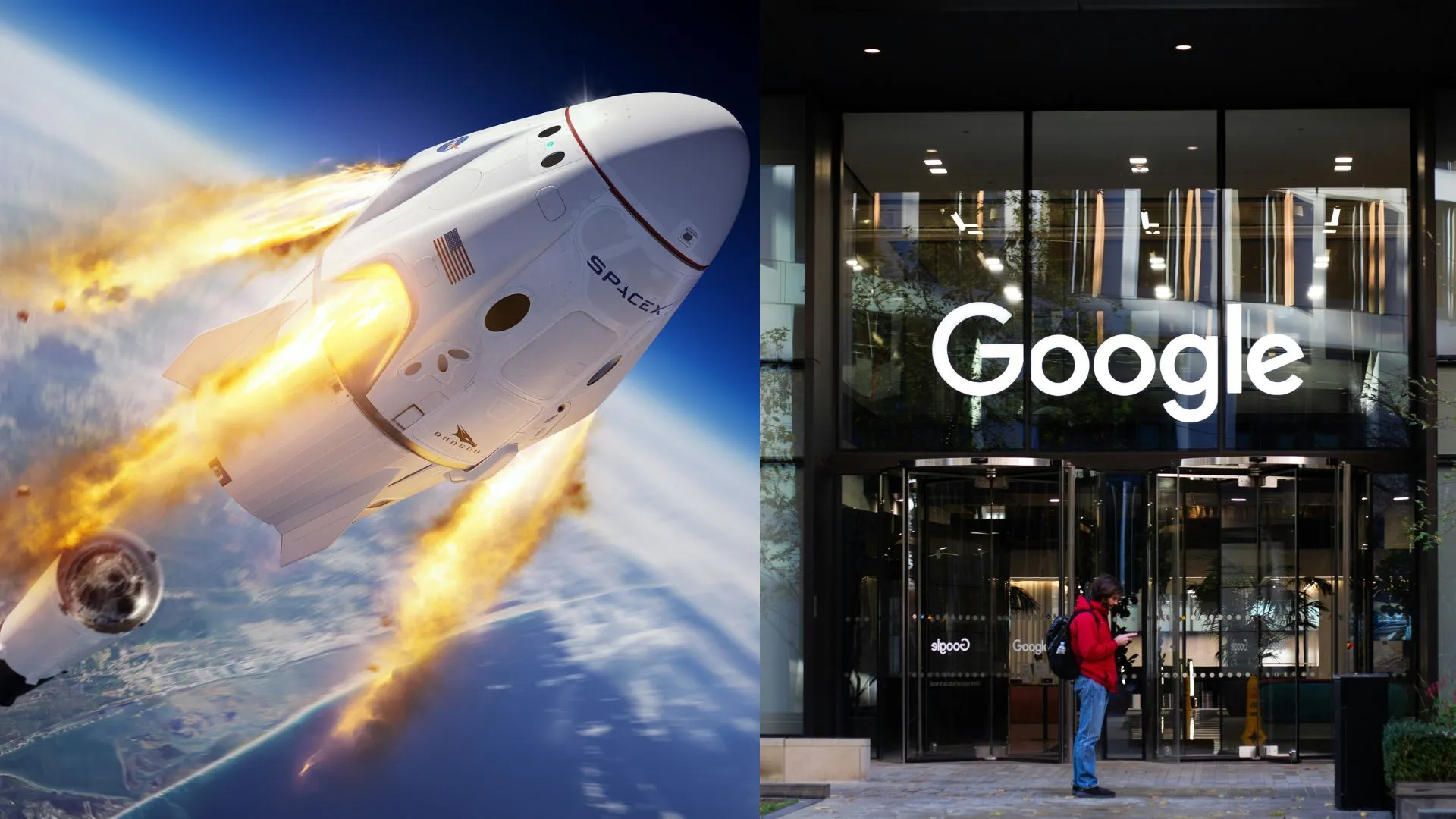
The tech giant's massive deal with Elon Musk's space exploration company marks a new era in digital infrastructure, powering services from Earth to orbit.
A colossal cloud-computing deal has just reshaped the landscape where terrestrial tech giants meet the final frontier. Google is reportedly set to pay SpaceX nearly $1 billion a month for cloud services, a staggering sum that highlights the ever-increasing convergence of space exploration and global digital infrastructure. For regular folks, this means the internet services powering everything from your streaming binges to critical business operations are now being deeply intertwined with the very satellites orbiting above us, promising faster, more reliable connections and a seismic shift in the tech world.
Here's what happened: Google Cloud, the internet giant's enterprise computing arm, has secured a monumental contract with Elon Musk's SpaceX. This isn't just another tech procurement; it's a strategic alliance valued at an eye-watering sum that underscores the immense data processing, storage, and networking demands of SpaceX's ambitious Starlink satellite internet constellation. It's a clear signal that the future of global connectivity, even from space, will rely heavily on the hyperscale cloud infrastructure built here on Earth.
For years, Google Cloud has been locked in a fierce battle with Amazon Web Services (AWS) and Microsoft Azure for dominance in the lucrative cloud market. While it has consistently innovated with AI, data analytics, and a robust global network, securing cornerstone enterprise clients has been critical to closing the market share gap. Landing a deal of this magnitude, worth nearly $1 billion every month, is a significant validation of its capabilities and a massive win in the ongoing cloud wars.
SpaceX, on the other hand, isn't just launching rockets; it's building a global internet service provider from space. Its Starlink constellation, comprising thousands of satellites in low Earth orbit, generates an unfathomable amount of data. This includes telemetry from each satellite, user traffic from millions of terminals worldwide, network management data, and the operational logistics of a sprawling ground station network. Processing, storing, and efficiently routing this data requires an infrastructure backbone that few companies can provide.
The scale of this deal — nearly $1 billion per month — signifies that SpaceX isn't just using Google Cloud for a few ancillary services. It implies a deep integration, making Google Cloud the primary, or at least a foundational, platform for Starlink's operational intelligence, user management, data processing at the edge, and perhaps even some of the artificial intelligence and machine learning crucial for optimizing satellite network performance. This isn't merely about storage; it’s about compute power on an unprecedented scale, capable of handling the demands of a global, real-time network operating in the most extreme environment imaginable.
Why This Matters for the Cloud Wars
This massive contract fundamentally alters the competitive dynamics of the cloud industry. For years, Google Cloud has been seen as the perennial third-place contender, often lauded for its technical prowess but struggling to convert that into market leadership against the established titans of AWS and Azure. This deal provides an undeniable shot in the arm, both in terms of revenue and, perhaps more importantly, perception.
Securing SpaceX, a company synonymous with cutting-edge technology and audacious ambition, as a flagship client sends a powerful message to the market. It demonstrates unequivocally that Google Cloud possesses the scalability, reliability, and advanced capabilities to handle the most demanding, data-intensive workloads on the planet — and beyond. This "halo effect" could attract other large-scale enterprise clients, particularly those in nascent but data-heavy industries like genomics, autonomous vehicles, or other "new space" ventures, who might have previously defaulted to competitors.
Moreover, the deal solidifies a growing trend: cloud providers are no longer just the backbones for websites or internal corporate applications. They are becoming the essential infrastructure for global telecommunications, space operations, and critical national infrastructure. This particular arrangement highlights Google Cloud’s capacity not just for generic cloud computing but for specialized, high-performance computing required by a company pushing the boundaries of what's possible in space and connectivity. It positions Google as a key enabler for the next generation of global infrastructure, both terrestrial and orbital.
The Intertwined Future of Space and Silicon
SpaceX's Starlink constellation is a marvel of modern engineering, but its success hinges on more than just rockets and satellites. The sheer volume of data generated by thousands of satellites constantly beaming signals to millions of users globally requires a robust, low-latency, and highly scalable ground infrastructure. This is where Google Cloud’s global network and data centers come into play, offering a critical piece of the puzzle that traditional on-premise solutions or smaller cloud providers simply cannot match at Starlink's scale.
Consider the operational challenges: Starlink needs to manage real-time traffic routing across a dynamic network of moving satellites, process user requests, handle billing, monitor satellite health, and deploy software updates across a vast fleet. Each of these tasks generates and consumes enormous amounts of data. Google Cloud's extensive fiber optic network, its global footprint of data centers, and its advanced AI and machine learning capabilities are uniquely suited to optimize Starlink's network performance, reduce latency, and ensure reliable service delivery for users across North America and beyond.
The choice of Google Cloud also speaks to the increasing sophistication required for modern space infrastructure. It’s not just about raw compute power; it’s about advanced analytics to predict satellite failures, machine learning to optimize signal handovers between satellites, and robust security protocols to protect critical operational data. For Starlink users, this deep integration with a hyperscale cloud provider means the potential for even better service, more resilient connectivity, and faster processing of their data, as the backbone of their internet connection is strengthened by Google's world-class infrastructure.
Looking at the "before" and "after" of this deal reveals its transformative power. Before, SpaceX, like many rapidly scaling tech companies, likely utilized a hybrid approach, potentially leveraging a mix of on-premise servers for highly sensitive operations, along with various cloud providers for different services. Google Cloud, meanwhile, was aggressively pursuing mega-deals to validate its platform and significantly boost its revenue. The landscape was fragmented, and Google's position, while strong, wasn't insurmountable.
Now, the "after" picture is dramatically different. SpaceX has consolidated a significant portion of its cloud needs with a single, massive commitment to Google Cloud. This streamlines SpaceX's operations, potentially leading to greater efficiencies and innovation by leveraging a unified, cutting-edge platform. For Google, it's a monumental validation, a powerful case study, and a significant revenue stream that will undoubtedly turn heads across the industry. It signals that Google Cloud is not just a viable alternative but a formidable leader capable of handling the most demanding and futuristic workloads.
While the benefits are clear, such a massive deal also comes with its own set of considerations. For SpaceX, placing such a critical part of its operational backbone with a single vendor could present vendor lock-in challenges in the long run, though the benefits of integration and scale likely outweigh these risks for now. For Google, the sheer scale of the demand—nearly $1 billion a month in services—requires immense operational readiness and the ability to scale its infrastructure rapidly to meet SpaceX's evolving needs, a testament to its engineering capabilities. Furthermore, the geopolitical implications of such a critical infrastructure deal between two major American tech and space entities cannot be overlooked, as it solidifies a powerful alliance that could shape future global tech and space policies.
Ultimately, this deal signifies a new era where the lines between space and terrestrial technology are not just blurring but actively converging. The era of space-enabled services running seamlessly on the most advanced terrestrial cloud infrastructure is truly here. Expect this massive investment to drive further innovation in both cloud computing and satellite technology, pushing the boundaries of what's possible in global connectivity and beyond. For businesses, consumers, and investors alike, the ripple effects of Google paying SpaceX nearly $1 billion a month will be felt for years to come, profoundly shaping our connected future.
Frequently asked questions
What is the Google and SpaceX cloud computing deal about?
Google is reportedly paying SpaceX nearly $1 billion a month for cloud computing services. This massive agreement aims to integrate SpaceX's space-based infrastructure with Google's extensive cloud network, enhancing global digital services.
How much will Google pay SpaceX per month?
Google is reportedly set to pay SpaceX nearly $1 billion per month for cloud computing services.
What kind of services will SpaceX provide to Google?
SpaceX will primarily provide cloud computing services, likely leveraging its Starlink satellite network to support Google's digital infrastructure, especially for remote or underserved areas.
How will this deal impact internet services for regular users?
For regular users, this deal could mean more robust, reliable, and potentially faster internet services globally, especially as digital infrastructure extends further into space and remote regions.
Why is this deal significant for the tech industry?
This deal signifies a major convergence of traditional tech giants and space exploration, highlighting the increasing reliance on space-based assets for global digital infrastructure and marking a new era of tech partnerships.
Does this involve Starlink?
While the article preview doesn't explicitly state 'Starlink,' it's highly probable that SpaceX's cloud services would heavily involve its Starlink satellite internet constellation to provide the necessary infrastructure.