Agnikul Cosmos and ICEYE's strategic alliance will build and deploy sovereign SAR satellites, boosting India's geospatial intelligence & reshaping Earth observation.
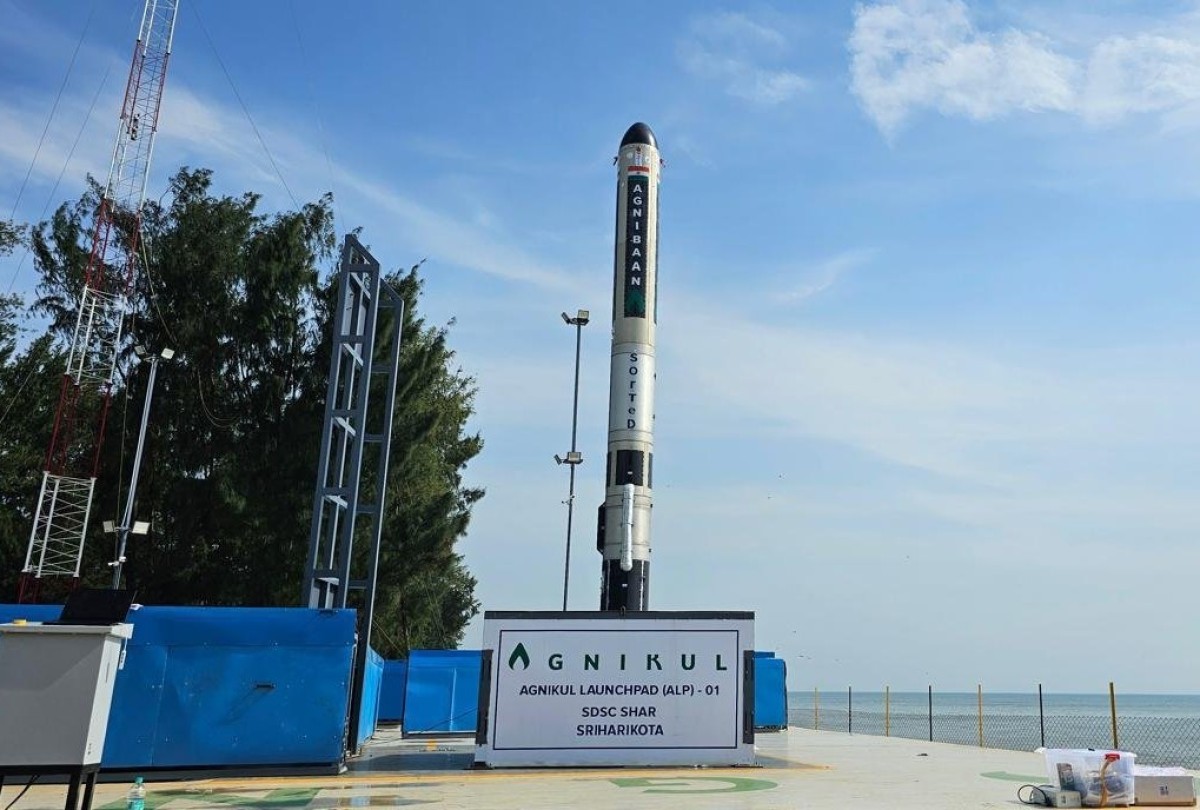
Agnikul Cosmos, the Chennai-based space technology startup, and Finnish synthetic aperture radar (SAR) satellite developer ICEYE have forged a strategic alliance to build and deploy sovereign SAR satellites. This collaboration signifies a pivotal move towards bolstering India's geospatial intelligence capabilities and could reshape the competitive landscape for persistent Earth observation data, attracting significant investor attention in the burgeoning private space sector. The pact centers on leveraging ICEYE’s advanced SAR technology alongside Agnikul’s expertise in launch vehicle development and integration. The immediate objective is to construct and operate SAR satellites tailored for the Indian market, providing high-resolution imagery regardless of weather conditions or time of day. This capability is critical for a range of applications, from defense and disaster management to agricultural monitoring and infrastructure development. For Agnikul, this partnership represents a strategic vertical integration, moving beyond its core launch services to offer complete space solutions. The company’s Agnibaan Sorter launch vehicle, which recently achieved a successful suborbital flight, positions it as a key enabler for rapid deployment of these new SAR assets. From ICEYE’s perspective, the alliance secures a significant foothold in one of the world’s fastest-growing space markets, aligning with India's increasing emphasis on indigenous space technology. The "sovereign" aspect of this initiative carries substantial weight, reflecting India's broader ambition to achieve self-reliance in critical technologies and reduce dependence on foreign entities for sensitive data. My read on this development suggests that governments and defense agencies globally are prioritizing data sovereignty, making such partnerships strategically vital for national security and economic resilience. The dual-use nature of SAR data—serving both commercial and defense clients—further amplifies its market value.
What It Means for the Ecosystem
This collaboration is more than a mere business deal; it is a clear signal of market maturation within the commercial space sector. It highlights the growing trend of specialized technology providers forming alliances to deliver comprehensive solutions, rather than operating in silos. The ability to control the entire value chain, from satellite manufacturing to launch and data delivery, creates a distinct competitive advantage for the Agnikul-ICEYE consortium. The implications for existing players in the Earth observation market are considerable. Incumbent providers, relying on traditional optical imagery, may find their offerings challenged by the all-weather, day-and-night capabilities of SAR. Furthermore, the partnership underscores a strategic pivot towards democratizing access to high-fidelity geospatial intelligence, potentially driving down costs and expanding the addressable market for analytics-driven insights.
The Strategic Context
Agnikul Cosmos has emerged as a frontrunner in India’s private space industry, having secured significant venture capital backing and achieving a notable launch milestone. Its Agnibaan Sorter is designed for flexible, on-demand small satellite launches, making it an ideal platform for deploying constellations like the one envisioned under this new pact. This aligns perfectly with India's recent space reforms, championed by entities like IN-SPACe, which actively encourage private sector participation and innovation. ICEYE has established itself as a global leader in small SAR satellite technology, known for its rapid revisit times and high-resolution imagery. Their decision to partner with an Indian entity for sovereign capabilities reflects a calculated move to navigate complex geopolitical landscapes and capitalize on the specific demands of the Indian government and private sector. It is a testament to the technical prowess that Indian startups are now bringing to the global space stage.
The Execution Horizon
While the strategic rationale is compelling, execution will be paramount. Integrating two distinct technological stacks and navigating regulatory frameworks across two nations will present engineering and operational complexities. The speed of deployment, coupled with the ability to secure initial contracts, will dictate the immediate financial impact and market perception of this partnership. Scalability will also be a critical factor, as demand for persistent SAR data will necessitate a robust and expanding constellation. The competitive landscape for SAR is intensifying, with players like Capella Space and Umbra offering advanced services in the U.S. and Europe. This Agnikul-ICEYE alliance must demonstrate not only technical parity but also a cost-effective and reliable service model to capture market share. From an operator's perspective, the ability to rapidly iterate and respond to evolving customer requirements, particularly from defense and intelligence agencies, will be a key differentiator. Investors will be closely watching for initial deployment timelines and early customer acquisitions. Key triggers include the first successful launch of a jointly developed SAR satellite and the announcement of major data service contracts. The long-term success of this venture will hinge on its ability to deliver consistent, high-quality data at a competitive price point, solidifying India's position as a significant player in the global geospatial intelligence market.
Frequently asked questions
What is the significance of the Agnikul-ICEYE partnership?
The Agnikul-ICEYE partnership is significant as it aims to build and deploy sovereign Synthetic Aperture Radar (SAR) satellites for India. This initiative is crucial for enhancing India's self-reliance in space technology and bolstering its geospatial intelligence capabilities. It also marks a pivotal step in developing advanced Earth observation data infrastructure.
What are SAR satellites?
SAR (Synthetic Aperture Radar) satellites are a type of radar that uses the motion of a radar antenna over a target area to create a high-resolution image. Unlike optical sensors, SAR can penetrate clouds and operate day or night, providing persistent Earth observation capabilities.
Which companies are involved in this collaboration?
The collaboration involves Agnikul Cosmos, a space technology startup based in Chennai, India, and ICEYE, a Finnish developer of synthetic aperture radar (SAR) satellites.
How will this collaboration impact India's space capabilities?
This collaboration will significantly enhance India's space capabilities by providing access to sovereign SAR satellites, improving its geospatial intelligence, and fostering self-reliance in critical Earth observation data collection.
What kind of data will these satellites provide?
These SAR satellites will provide persistent Earth observation data, which can be used for various applications including environmental monitoring, disaster management, urban planning, defense, and maritime surveillance, regardless of weather conditions.
Where is Agnikul Cosmos based?
Agnikul Cosmos is a Chennai-based space technology startup in India.