Nasdaq sees biggest drop since April 2025 after strong jobs report sparks selloff amid Federal Reserve rate hike concerns.
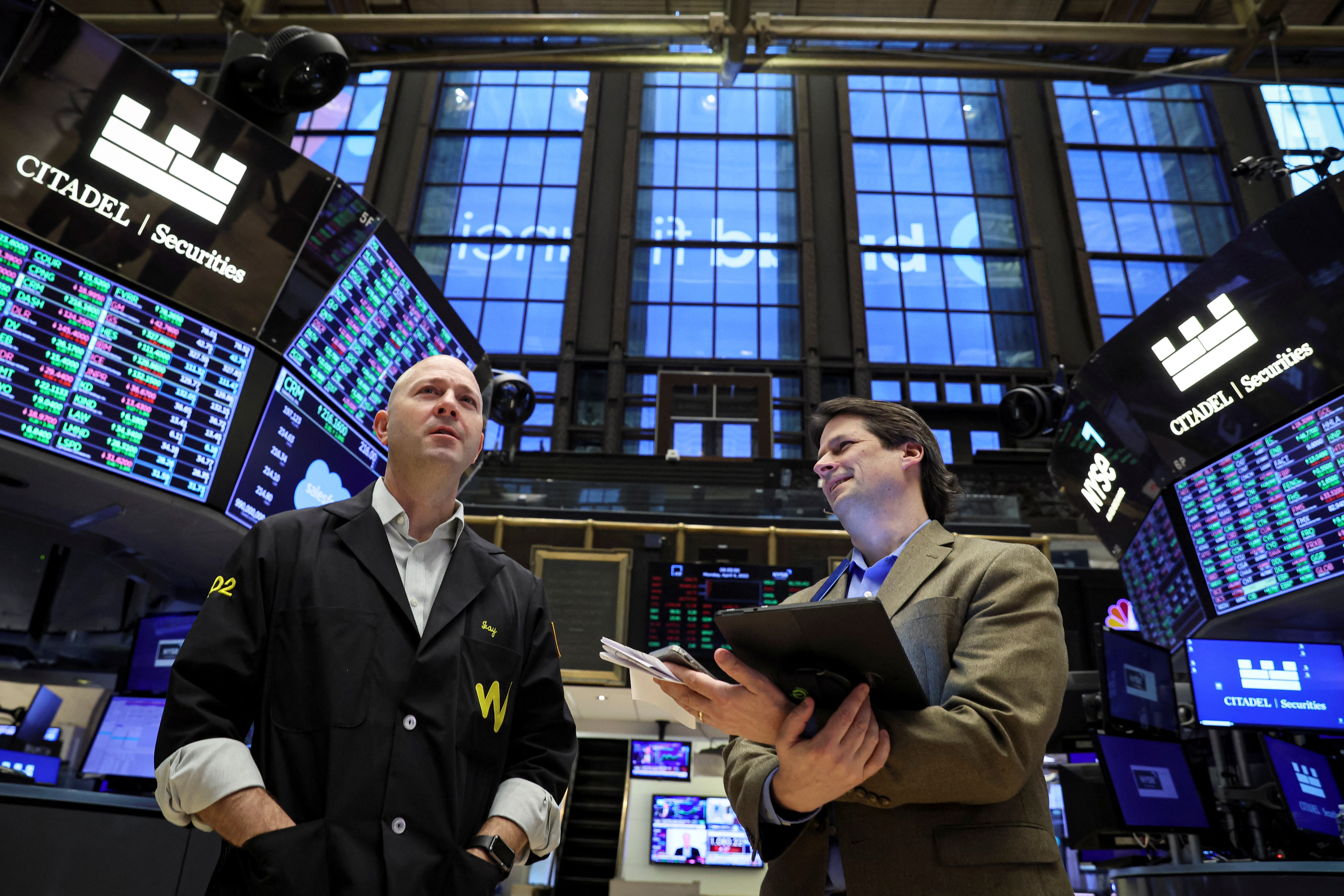
US equity markets experienced a sharp downturn on Friday, with the tech-heavy Nasdaq Composite recording its most significant one-day decline since April 2025, signaling a renewed investor apprehension regarding the sustainability of recent market gains and the Federal Reserve's monetary policy trajectory. The unexpectedly strong April jobs report, which defied expectations of a cooling labor market, fueled a broad selloff across major indices, prompting a swift re-evaluation of interest rate expectations and pushing global risk assets into retreat amid concerns over persistent inflation.
The Nasdaq index, a bellwether for technology and growth stocks, plunged by more than 4%, marking a profound recalibration of investor enthusiasm for high-valuation assets. Concurrently, the broader S&P 500 closed 2.6% lower, reflecting widespread market weakness, and the Dow Jones Industrial Average, a composite of 30 large-cap US companies, shed 1.35% of its value. This sudden contraction in equity valuations rippled through other asset classes, notably impacting digital assets, where Bitcoin, the world's largest cryptocurrency by market capitalization, also experienced a sharp decline as investors globally offloaded riskier exposures in a pronounced flight to safety. The robust labor market data intensified concerns that persistent inflation will compel the Federal Reserve to maintain elevated borrowing costs for an extended period, dampening growth prospects for interest-rate sensitive sectors and reducing the present value of future earnings for growth companies.
David Doyle, head of economics at Macquarie Group, characterized Friday's jobs report as potentially "too good," highlighting how the robust employment figures, set against a backdrop of stubborn inflationary pressures, significantly increased the probability of the Federal Reserve implementing additional interest rate hikes this year. This assessment directly contributed to the market's negative reaction, as it challenged the prevailing narrative among many investors that the central bank was nearing the end of its tightening cycle or even preparing for imminent rate cuts. Consequently, market participants who had positioned themselves for a more accommodative monetary policy were forced to recalibrate their strategies rapidly, leading to a scramble out of high-growth, speculative assets that thrive in low-interest-rate environments.
However, the Friday selloff was not indicative of a global market panic characterized by indiscriminate selling across all asset classes, but rather a more targeted and strategic rotation of capital, primarily away from technology stocks. Critics have increasingly warned that these companies, particularly those in artificial intelligence and advanced microchip manufacturing, have become significantly overvalued, with their current share prices reflecting optimistic future growth scenarios that may not fully materialize or are vulnerable to higher discount rates. This growing skepticism draws parallels to the speculative excesses observed during the dotcom bubble of the early 2000s, where investor fervor for internet-related companies led to unsustainable valuations. Major investment funds strategically divested from these high-flying sectors, which have witnessed substantial share price appreciation in recent years, redirecting capital into more defensive positions deemed less susceptible to economic downturns or higher interest rates.
What It Means
The immediate and most profound implication of Friday's market correction is a decisive shift in investor sentiment, moving from an aggressive pursuit of growth and momentum to a more cautious, risk-averse stance. This recalibration underscores a fundamental tension in financial markets: a resilient jobs market, while typically signaling underlying economic strength and robust consumer demand, paradoxically becomes a source of anxiety for equity investors when coupled with entrenched inflation. In such an environment, strong employment figures empower the Federal Reserve to maintain a restrictive monetary policy stance for longer than anticipated, thereby increasing the cost of capital and exerting downward pressure on equity valuations.
The "higher for longer" interest rate paradigm directly impacts the valuation models used by investors, particularly for growth-oriented companies. Elevated interest rates increase the discount rate applied to future corporate earnings, diminishing the present value of profitability that is heavily weighted towards distant growth projections. This effect is particularly pronounced in the technology sector, where many companies are valued more on their long-term growth potential than on immediate profitability. The resulting contraction in valuation multiples reflects a more conservative outlook on future cash flows and an increased premium for current earnings and financial stability. Portfolio managers, grappling with this new reality, are compelled to de-risk by reducing exposure to volatile, high-beta stocks and reallocating capital into more stable alternatives.
The concentration of market capitalization within a handful of mega-cap technology firms further amplifies the vulnerability of the broader market to such shifts in sentiment. When these highly weighted components experience significant declines, their impact is disproportionately felt across major indices, creating a ripple effect that can drag down otherwise stable sectors. This phenomenon underscores the structural risks associated with a narrow market leadership, where the performance of a few dominant companies dictates the overall market direction, making even broadly diversified portfolios susceptible to sector-specific corrections. The swift redeployment of capital into traditionally safer havens—such as healthcare, utilities, and consumer staples, exemplified by firms like Kraft Heinz and Keurig Dr Pepper—illustrates a pronounced flight to quality, as traders seek stable cash flows, inelastic demand, and lower volatility amidst mounting macroeconomic uncertainty and tighter liquidity conditions.
The Nasdaq Composite plunged over 4% on Friday, marking its steepest one-day decline since April 2025, as investors recalibrated expectations for Federal Reserve policy following an unexpectedly strong jobs report that defied cooling labor market forecasts.
The Context
The recent surge in technology stocks, particularly those aligned with artificial intelligence and advanced microchip production, has been a defining feature of equity markets over the past several years, driven by compelling narratives of transformative innovation and aggressive growth projections. This period of rapid appreciation, often characterized by robust multiple expansion, has led to significantly elevated valuation multiples for many of these firms, sparking intense debates among market participants about their fundamental sustainability in an evolving macroeconomic landscape. Historical precedents, such as the dotcom era, serve as potent cautionary tales, where speculative fervor for internet-related companies led to unsustainable valuations.
Frequently asked questions
Why did US stocks slump on Friday?
US stocks slumped due to a surprisingly strong jobs report, fueling fears the Federal Reserve will keep interest rates higher for longer. This prompted investors to sell off riskier assets, especially in the tech sector.
What caused the Nasdaq to drop?
The Nasdaq dropped over 4% mainly due to investor fears of rising interest rates and concerns that Big Tech stocks were overvalued, leading to a shift away from high-growth tech companies.
How did the US jobs report affect the stock market?
A stronger-than-expected US jobs report for April sparked a selloff by indicating a robust economy, which investors believe could lead the Federal Reserve to maintain higher interest rates to combat inflation.
Which sectors did investors shift to?
Investors shifted from tech stocks to traditionally safer investments, including sectors like healthcare, utilities, and consumer staples, seeking stability amidst market volatility.
What was Donald Trump's reaction to the market slump?
Donald Trump criticized the market's negative reaction to the jobs report, stating too much emphasis is placed on inflation and and that good numbers should make the market go up.
What is the Federal Reserve's stance on interest rates?
The Federal Reserve is expected to keep interest rates higher for longer, potentially even raising them, due to stubborn inflation and a strong jobs market, which reduces the likelihood of immediate borrowing cost cuts.