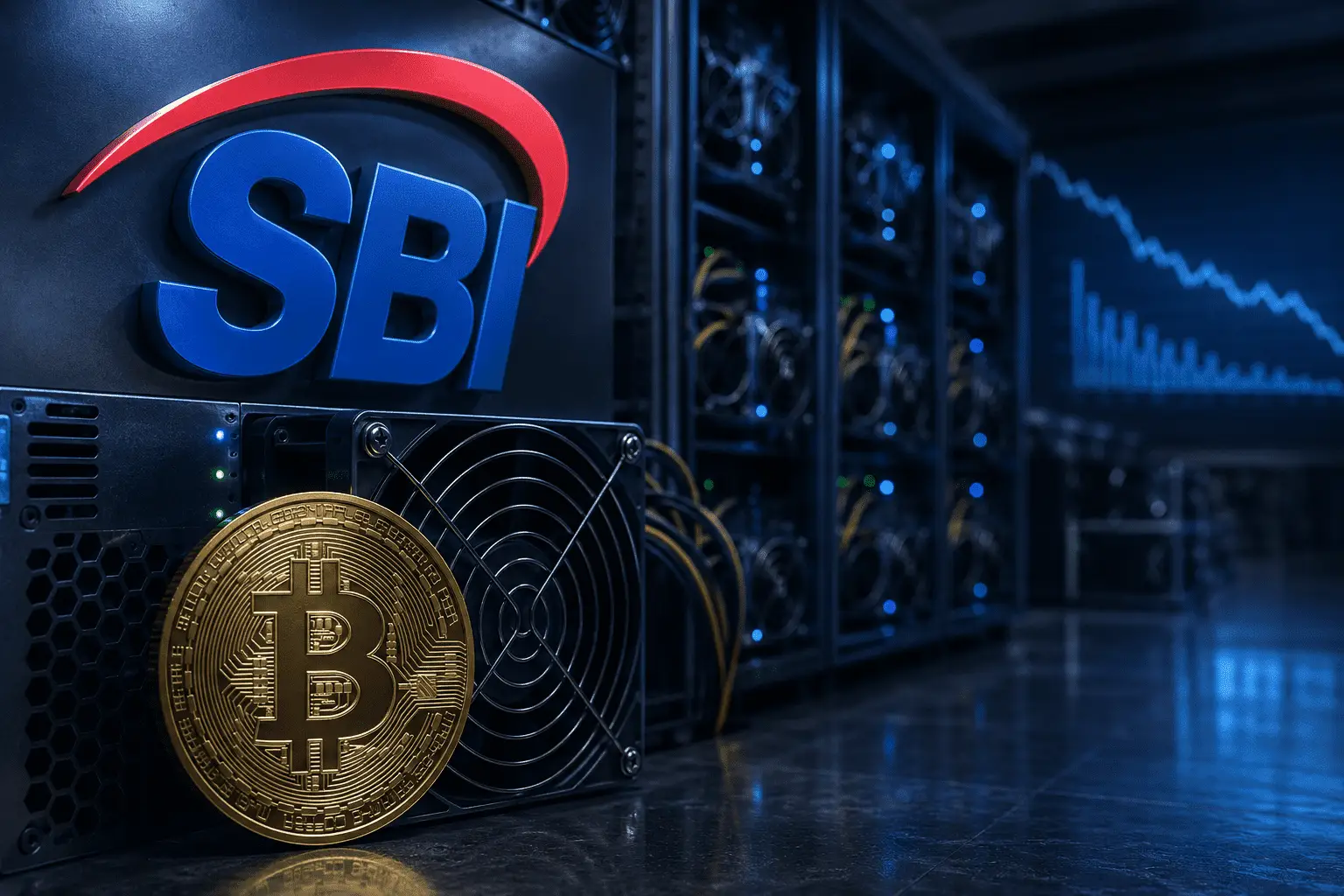
SBI Crypto, the 11th largest Bitcoin mining pool, is winding down operations amid a broader industry shift towards AI and challenging market conditions.
The digital asset world is seeing a significant operational shift as SBI Crypto, the specialized subsidiary of Japanese financial services giant SBI Holdings, announced it is winding down its Bitcoin mining pool services. This isn't just another company closing shop; it's a strategic move that reflects profound economic pressures and evolving priorities within the global crypto landscape, impacting everyone from large institutional players to individual contributors.
The firm has stated that its Bitcoin mining pool operations will officially cease on July 31st. This marks the end of a venture that SBI Crypto has actively maintained since at least 2017, establishing itself as a notable force in the sector and, until recently, holding the position of the 11th largest Bitcoin mining pool globally based on data from Hashrate Index.
For context, a Bitcoin mining pool allows individual miners, regardless of their scale, to combine their computational power, known as "hash rate," to increase their chances of solving a block and earning Bitcoin rewards. When the pool successfully mines a block, the rewards are then distributed proportionally among its members based on their contribution. SBI Crypto's pool also facilitated the mining of Bitcoin Cash and Litecoin, offering a diversified option for its users.
While the company did not disclose the specific reasons for its departure, the immediate implication is that many miners who relied on SBI's infrastructure will now need to transition their operations. SBI Crypto has indicated it is actively assisting its clientele by engaging in "business and technical discussions" with other prominent mining pool operators, including Braiins and Luxor, with some reportedly offering "special programs or preferential conditions" to facilitate a smooth migration for these users.
This decision, from a player of SBI's stature, signals a clear re-evaluation of where sustainable value and strategic advantage lie within the highly competitive and capital-intensive realm of digital asset infrastructure.
Why This Matters Now
From my vantage point, SBI's exit from the Bitcoin mining pool business is far from an isolated incident; it's a potent indicator of the profound economic recalibration underway across the entire Bitcoin mining sector. The economics of mining have become increasingly challenging, particularly for operations that aren't hyper-optimized for cost efficiency and scale. Consider the dramatic price volatility of Bitcoin itself: the leading cryptocurrency has seen its value plummet by more than 50% from its all-time high of $126,080, which was established just last October. This directly impacts profitability, as mining rewards are paid out in BTC, meaning the fiat value of those rewards has significantly diminished.
Beyond price, the industry faces a perfect storm of escalating energy costs—a critical input for any mining operation—and relentless competition. The "hash rate," which measures the total computational power dedicated to securing the Bitcoin network, has continued its upward trajectory globally. This exponential growth in hash rate means that the difficulty of mining a block has increased, requiring ever-more powerful and efficient hardware, coupled with access to the cheapest possible electricity, just to maintain a competitive edge. Older equipment quickly becomes obsolete, and the capital expenditure required to upgrade and expand can be staggering, squeezing margins for even well-capitalized players.
This challenging environment has spurred a compelling strategic pivot for many large-scale miners: a move towards leveraging their existing high-performance computing infrastructure for Artificial Intelligence (AI) compute services. We've witnessed publicly traded entities like Bitfarms completely wind down their Bitcoin mining operations to rebrand as Keel Infrastructure, dedicating their resources entirely to AI workloads. Other major miners have announced multi-billion-dollar deals to repurpose their data centers for AI, often while maintaining a reduced Bitcoin mining footprint. This isn't just a trend; it's a clear, calculated play to shift towards potentially more stable, contract-based revenue streams that can leverage the same specialized power and cooling infrastructure designed for intensive computation, rather than relying solely on the speculative rewards of block subsidies.
The decision by a major financial entity like SBI to divest from a core infrastructure component like mining underscores a growing institutional pragmatism. It highlights a strategic choice to shed operations that are becoming increasingly commoditized, capital-intensive, and susceptible to volatile market swings, in favor of areas that offer greater stability, higher margins, or closer alignment with traditional financial services.
What Comes Next for Institutional Crypto Strategy
While SBI's departure from Bitcoin mining might suggest a broader retreat from the digital asset space, it's crucial to examine the full picture. Just days before the mining pool shutdown announcement, SBI Holdings, the parent company, confirmed its agreement to acquire the Japanese crypto exchange Bitbank for an impressive $289 million. This contrasting move reveals a highly nuanced and selective strategy: divesting from one capital-intensive, margin-pressured segment of the crypto ecosystem while simultaneously doubling down on another, more regulated and fee-generating area.
My read is that this bifurcated approach offers a compelling template for how large financial institutions are maturing their engagement with the digital asset economy. Early forays into crypto often involved exploring a wide array of opportunities, including direct infrastructure plays like mining. However, as the industry professionalizes and regulatory frameworks begin to solidify, financial giants are refining their focus. They are increasingly gravitating towards areas where their core competencies—such as market making, asset custody, and exchange operations—can create sustainable competitive advantages, generate predictable fee-based revenues, and operate within clearer regulatory parameters. An acquisition like Bitbank allows SBI to expand its reach into a regulated, customer-facing segment of the market, aligning more closely with its traditional financial services business model.
For the broader market, SBI's strategic repositioning underscores an ongoing rationalization within the crypto industry. It signals that institutional capital will increasingly flow towards ventures that demonstrate clear strategic alignment, robust business models, and a pathway to predictable returns. This selective investment strategy will likely continue to push out less efficient, more speculative, or overly capital-intensive operations, favoring those that can either integrate seamlessly with existing financial infrastructures or carve out defensible niches. This shift, while undoubtedly challenging for some players, ultimately sets the stage for a more resilient, strategically focused, and integrated digital financial future.
Frequently asked questions
Why is SBI Crypto shutting down its Bitcoin mining pool?
While a specific reason wasn't given, the article suggests it's part of a broader trend of Bitcoin miners leaving the space due to challenging market conditions, like Bitcoin's falling price, and a strategic shift towards opportunities in artificial intelligence.
When will SBI Crypto's mining pool cease operations?
SBI Crypto announced it will cease its Bitcoin mining pool operations on July 31. Until then, the pool is expected to operate normally, and customers can continue mining and receiving payouts.
What was SBI Crypto's standing in the Bitcoin mining industry?
According to Hashrate Index data, SBI Crypto maintained the 11th largest Bitcoin mining pool by hash rate prior to its announcement to wind down operations.
What options do SBI Crypto users have after the shutdown?
SBI Crypto is assisting customers by engaging in discussions with other mining pool operators, such as Braiins and Luxor. Some operators may offer special programs or preferential conditions for transitioning clients.
Is SBI Holdings completely exiting the crypto space?
No, while its subsidiary SBI Crypto is exiting Bitcoin mining, SBI Holdings is still active in crypto. Earlier this week, its parent company announced an agreement to acquire Japanese crypto exchange Bitbank.
Are other major Bitcoin miners also leaving the industry?
Yes, SBI Crypto's departure is part of a trend. Publicly traded miner Bitfarms, for example, wound down its operations entirely to transition to AI and rebranded, and other major miners have announced multi-billion-dollar AI compute deals.