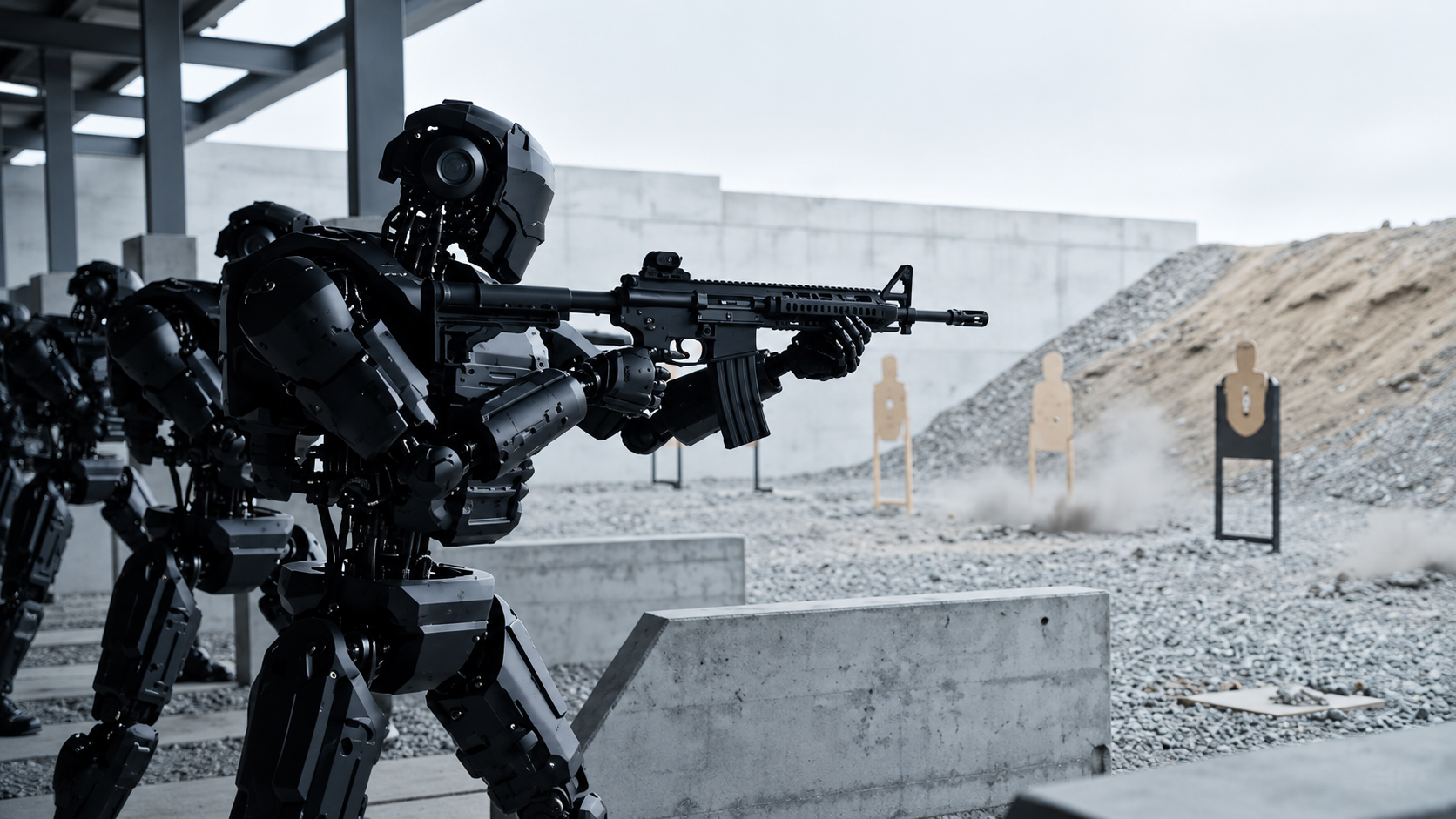
Kyiv initiates a grant competition for advanced humanoid robots, aiming to automate frontlines, reduce soldier risk, and lead defense innovation in a critical global testing ground.
Ukraine is launching a novel grant competition to catalyze the development of humanoid robots specifically for its Armed Forces, signaling a profound strategic shift towards automated frontline operations and potentially recalibrating the global defense technology investment landscape. This initiative, unveiled by Brave1 CEO Andriy Hrytsenyuk, underscores a critical imperative to minimize personnel risk while maximizing operational effectiveness, presenting a significant market opportunity for agile robotics startups and a stark challenge to traditional defense contractors.
The program aims to funnel innovation directly into military applications, distinguishing itself from broader civilian robotics trends observed in tech powerhouses like the United States and China. Developers are tasked with an initial focus on creating robust, simpler platforms, designed for gradual functional sophistication. Brave1, Ukraine's defense tech cluster, positions this as a vital step in leveraging cutting-edge engineering to enhance defensive postures and mission execution capabilities under active combat conditions.
This move is more than just a grant; it is a strategic investment in a future where autonomous systems bear the brunt of front-line exposure, driving efficiency and, critically, preserving human life. From an investment perspective, this creates a compelling, if high-stakes, proving ground for venture capital eyeing the burgeoning miltech sector. My read is that this isn't merely about building robots; it's about pioneering a new model for defense innovation, one that values speed, adaptability, and immediate battlefield relevance over protracted development cycles.
What It Means
The grant competition for humanoid robots marks a pivotal moment for the global defense tech ecosystem, signaling a rapid acceleration in the militarization of advanced robotics. For investors, this initiative represents a unique opportunity to back technologies with immediate, high-impact application, albeit within a conflict zone. The Ukrainian context, grim as it is, acts as an unparalleled accelerator for R&D, forcing rapid iteration and deployment cycles that could redefine industry benchmarks for dual-use technologies.
This isn't just about fielding robots; it's about fundamentally altering the cost-benefit analysis of deploying personnel in high-risk zones. The strategic implication for the defense industry extends beyond Ukraine, as other nations will closely observe the efficacy and operational integration of these autonomous units. The precedent being set could trigger a wave of similar national defense innovation programs, fueling a competitive surge in robotics and AI development tailored for military applications across NATO and beyond.
For startups, the promise of direct, rapid feedback from frontline users is invaluable, offering a fast track from prototype to deployment that is virtually impossible in conventional defense procurement environments. This direct feedback loop de-risks R&D in a paradoxical way, by exposing nascent technologies to the ultimate test bed, thereby accelerating maturity and market readiness. My opinion here is that this approach could well become the template for future defense innovation, moving away from slow, bureaucratic procurement to agile, battlefield-driven development.
Current humanoid robots, such as the previously delivered Phantom MK-1 units, are widely recognized as "heavy and expensive," alongside requiring frequent recharging and being prone to breakdowns. This financial and logistical burden highlights the critical innovation challenge the new grant competition aims to address.
The Context
Ukraine has, by necessity, transformed into the world’s foremost crucible for military technological innovation, attracting significant interest from Western defense startups eager to test and refine their solutions under real-world conditions. This environment has already seen the deployment and assessment of various advanced systems, including the Phantom MK-1 humanoid soldier robots from Foundation, which provided crucial early insights into the practical limitations of current-generation hardware.
These initial assessments revealed significant challenges: the robots were often prohibitively heavy, expensive, demanded constant recharging, and suffered from reliability issues and poor balance. These findings are not deterrents; rather, they form the foundational learning set for the new grant competition, guiding developers to focus on addressing these specific vulnerabilities. The objective is clear: overcome these technical and logistical hurdles to create more robust, cost-effective, and operationally viable solutions.
Andriy Hrytsenyuk, CEO of Brave1, stated during the Brave1 Advantage event that this focus on humanoid robots aligns with global trends in advanced robotics, particularly the significant investments and advancements seen in the US and China. However, he emphasized the critical distinction that Ukraine's program is exclusively oriented towards defense needs, contrasting sharply with the predominantly civilian applications driving development elsewhere. This focused approach ensures that every innovation is purpose-built for military utility, a unique selling proposition for developers and investors alike.
The long-term implications for the global startup ecosystem are profound. Startups that can deliver viable, deployable solutions in this environment will gain unparalleled credibility and market access. The demand for resilient, intelligent autonomous systems will only grow, and the companies that prove their mettle in Ukraine will be exceptionally well-positioned to capture significant market share in the global defense sector. This is a founder’s opportunity to build something truly impactful, addressing a critical need with direct, measurable results.
The competition's emphasis on starting with simpler platforms is a pragmatic strategy, recognizing the iterative nature of technological advancement, especially under pressure. This allows for rapid prototyping and deployment of basic functionalities, which can then be incrementally enhanced with more complex features based on battlefield feedback. This agile development methodology, common in tech startups, is now being applied to defense procurement, promising faster cycles and more adaptive technologies than ever before.
What Analysts Say
Industry analysts watching the defense tech space are increasingly bullish on robotics, particularly as the efficacy of remotely operated and autonomous systems becomes undeniable. While the initial costs and technical limitations of humanoid robots remain a concern for some, the strategic imperative to reduce human casualties is overriding these reservations. The Ukrainian initiative, in this view, is a leading indicator of where defense spending is headed globally.
The bear case, however, remains centered on the current immaturity of humanoid robotics. Critics point to the significant power requirements, the susceptibility to electronic warfare, and the complex logistical tail needed to maintain advanced autonomous systems in a high-intensity conflict. They argue that while the vision is compelling, the practical realities of current technology might still be several years away from widespread, reliable deployment.
Despite these challenges, the overwhelming consensus is that the technological breakthroughs emerging from this kind of rapid, combat-driven innovation will ultimately yield more robust and reliable systems. The competition is not just about the final product; it's about accelerating the entire field of defense robotics through extreme conditions, pushing the boundaries of what these machines can do and how quickly they can be developed and deployed.
Looking ahead, the critical milestones will include the initial grant allocations, the first public demonstrations of prototypes, and ultimately, the integration of these humanoid robots into actual frontline operations. Investors and military strategists will be keenly watching for updates on their effectiveness, durability, and most importantly, their ability to deliver on the promise of reducing risk to military personnel. The success or failure of these initial deployments will undoubtedly shape the future trajectory of defense robotics and impact venture capital flows into the sector for years to come.
Frequently asked questions
What is Ukraine doing to develop humanoid robots for its military?
Ukraine is launching a new grant competition through Brave1 to incentivize the development of humanoid robots specifically for its Armed Forces. The goal is to automate front lines, reduce risks to military personnel, and leverage cutting-edge defense technology.
Who announced the humanoid robot grant competition?
Brave1 CEO Andriy Hrytsenyuk announced the new grant competition during the Brave1 Advantage event.
What is the main objective of this humanoid robot initiative?
The key objective is to maximize the automation of the front lines and significantly reduce risks to military personnel in combat situations.
Are these robots for civilian or military use?
Unlike global civilian sector developments, Ukraine's program is exclusively geared toward defense needs and military application scenarios.
Have humanoid robots been used in Ukraine before?
Yes, Phantom MK-1 humanoid soldier robots from Foundation were previously delivered to Ukraine for effectiveness assessment.
What are the current challenges with humanoid robots in military use?
Humanoid robots are currently heavy, expensive, require regular recharging, are prone to breakdowns, and often lose their balance in challenging terrains.