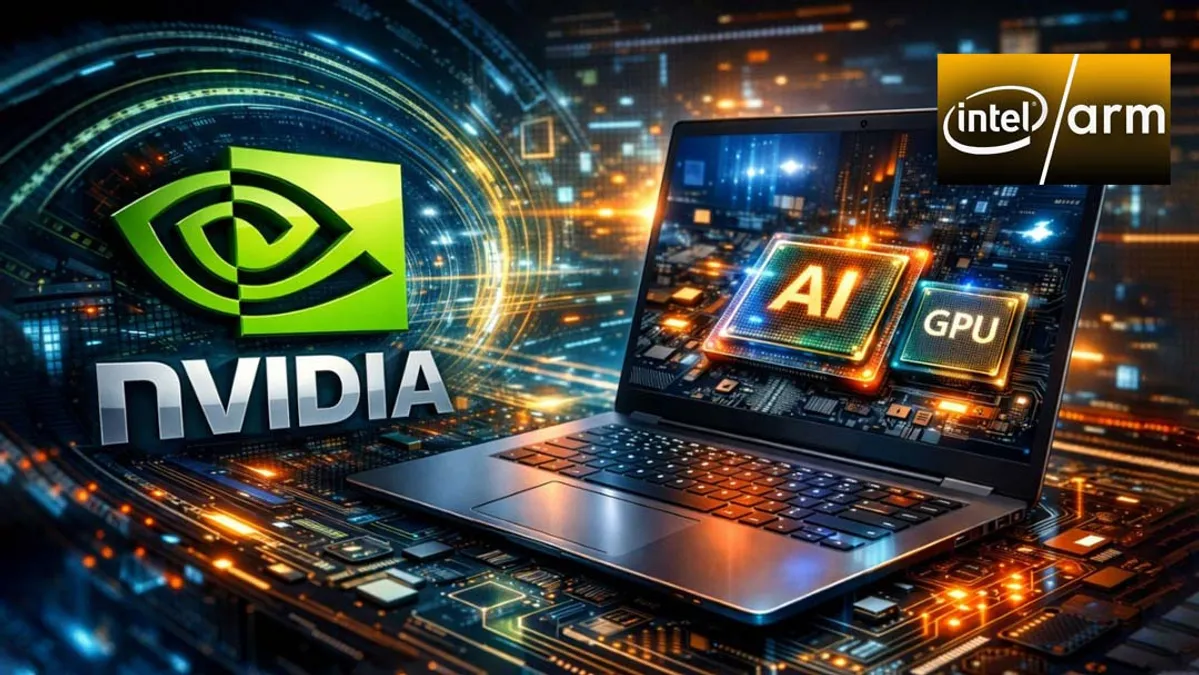
Forget the cloud: Nvidia's new chip puts powerful AI capabilities right on your Windows laptop, promising to reinvent the PC experience.
Forget waiting for the cloud to process your AI requests. Nvidia, the chipmaking titan, is making a bold move to put powerful artificial intelligence capabilities directly into your next Windows laptop. This isn't just a minor upgrade; it's a fundamental shift that CEO Jensen Huang believes will "reinvent the PC" and change how everyday users interact with their computers.
Here's what happened: Ahead of the major Computex technology show in Taiwan, Huang unveiled the RTX Spark chip, a new piece of silicon designed to run AI agents locally on your device. This means your computer could soon handle complex AI tasks without constantly sending data back and forth to remote servers, potentially making AI faster, more private, and deeply integrated into your daily workflow.
The RTX Spark chip is the culmination of three years of collaboration between Nvidia and Microsoft, signaling a concerted effort to usher in the "AI era" for personal computing. Set to be delivered this fall, the chip was developed with Taiwan's MediaTek and aims to transform the traditional app-centric PC into a truly "agentic AI personal computer," according to Neil Shah, a co-founder of Counterpoint Research.
Huang also spotlighted Nvidia's Vera central processing unit, another key offering designed specifically for AI agents. This CPU, distinct from the RTX Spark, targets a new $200 billion market for the company, with early adopters already including major AI players like OpenAI, Anthropic, and SpaceX, according to the $5 trillion chip company's boss. It underscores Nvidia's ambition to be at the heart of every aspect of the AI infrastructure, from data centers to your personal device.
This strategic expansion comes as Nvidia continues to ride the wave of AI demand, with Huang stating the company's new Vera processors will be a "major growth driver." The announcements were made during a keynote address in Taiwan, a country Huang described as the "epicenter of the AI revolution," where Nvidia plans to invest around $150 billion annually.
Why Your Next PC Will Feel Different
So, what does "agentic AI" on your laptop actually mean for you? Instead of just running applications, your computer will host "AI agents" that can proactively assist you, learn your habits, and perform complex tasks more intelligently without relying solely on cloud computing. Think of it as having a highly capable, personalized AI assistant living directly inside your machine, ready to respond instantly and privately. This local processing can offer benefits like enhanced data security, faster responses, and the ability to work offline, fundamentally changing how you create, communicate, and manage your digital life.
Neil Shah, co-founder of Counterpoint Research, highlighted the transformative potential, noting that the RTX Spark "looks to transform the traditional app-centric PC to a real useful Agentic AI personal computer which will eventually be in every home in coming years as private edge AI agents become pivotal." Shah believes this could be an "RTX Spark' moment for personal computing, akin to the impact of the iPhone or ChatGPT, signaling a profound shift in how we perceive and use our computers.
This move is a direct response to the increasing demand for AI capabilities that are both powerful and convenient. While cloud-based AI has driven much of the recent innovation, the ability to run sophisticated AI models directly on a device reduces latency and can improve user privacy, as sensitive data doesn't necessarily need to leave the device for processing. It's a significant step toward making AI an omnipresent and personal tool rather than a remote service.
Nvidia's Broader AI Vision and Global Impact
Nvidia's ambition extends beyond just bringing AI to consumer PCs. The Vera CPU, with its focus on AI agents for demanding enterprise and research applications, signals a comprehensive strategy to dominate the entire AI computing stack. Securing major players like OpenAI and SpaceX as early adopters for Vera solidifies Nvidia's position as a critical partner in the development and deployment of cutting-edge AI technologies.
Amidst these advancements, Huang also addressed concerns about AI's impact on employment, particularly for software engineers. He dismissed such worries as "complete nonsense," arguing that AI will actually drive more hiring by making workers more productive. "The number of engineers, software engineers, is actually increasing," Huang stated, emphasizing that AI is "causing more software engineers to be hired," rather than reducing jobs.
The company's commitment to Taiwan, where Huang was born, also plays a crucial role in its global strategy. With plans to invest around $150 billion annually in the island, Nvidia is cementing Taiwan's status as a vital hub for the AI revolution. This not only supports the local economy but also strengthens Nvidia's supply chain and R&D capabilities in a region critical to semiconductor manufacturing.
The announcements at Computex are not just about new chips; they represent a strategic realignment for Nvidia. While known for its powerful GPUs that fuel AI data centers, this pivot towards PC CPUs and on-device AI agents positions the company to capture a much broader segment of the computing market. It's a clear signal that Nvidia sees the future of computing as fundamentally intertwined with AI, from the largest cloud servers to the most personal devices.
This shift also puts increased pressure on competitors in the PC chip market, as Nvidia leverages its AI expertise to differentiate its offerings. The collaboration with Microsoft is particularly telling, suggesting a unified front to define the next generation of Windows PCs, moving beyond traditional performance metrics to prioritize AI capabilities as a core feature.
Looking ahead, consumers can anticipate a new breed of personal computers hitting shelves this fall, promising a more intelligent and responsive experience. The "agentic AI" PC concept, driven by chips like the RTX Spark, could indeed mark a pivotal moment, transforming our devices from mere tools into proactive, personalized assistants that live and learn right alongside us.
Frequently asked questions
What is Nvidia's new PC chip for?
Nvidia's new PC chip is designed to bring powerful artificial intelligence capabilities directly to Windows laptops. It allows for on-device AI processing, reducing reliance on cloud-based AI services.
How will Nvidia's new chip change PCs?
CEO Jensen Huang states that the new chip will 'reinvent the PC' by integrating AI directly into everyday computing. Users can expect faster, more private AI interactions without cloud dependency.
When will laptops with Nvidia's AI chip be available?
While the exact availability dates for laptops featuring Nvidia's new AI chip were not specified in the initial announcement, they are expected to hit the market in the near future, following its official launch.
What kind of AI tasks can the new Nvidia chip handle?
The new chip is capable of handling a wide range of AI tasks directly on the device, from complex data processing to enhancing user interactions and applications, all without requiring a constant internet connection for AI processing.
Will I need to upgrade my current PC for Nvidia's AI?
Yes, to experience the full benefits of Nvidia's new on-device AI capabilities, users will likely need to purchase new Windows laptops equipped with this specific chip, as it represents a fundamental hardware shift.
Who is Jensen Huang?
Jensen Huang is the co-founder, president, and CEO of Nvidia. He is a prominent figure in the technology industry, known for his leadership in graphics processing unit (GPU) development and artificial intelligence.