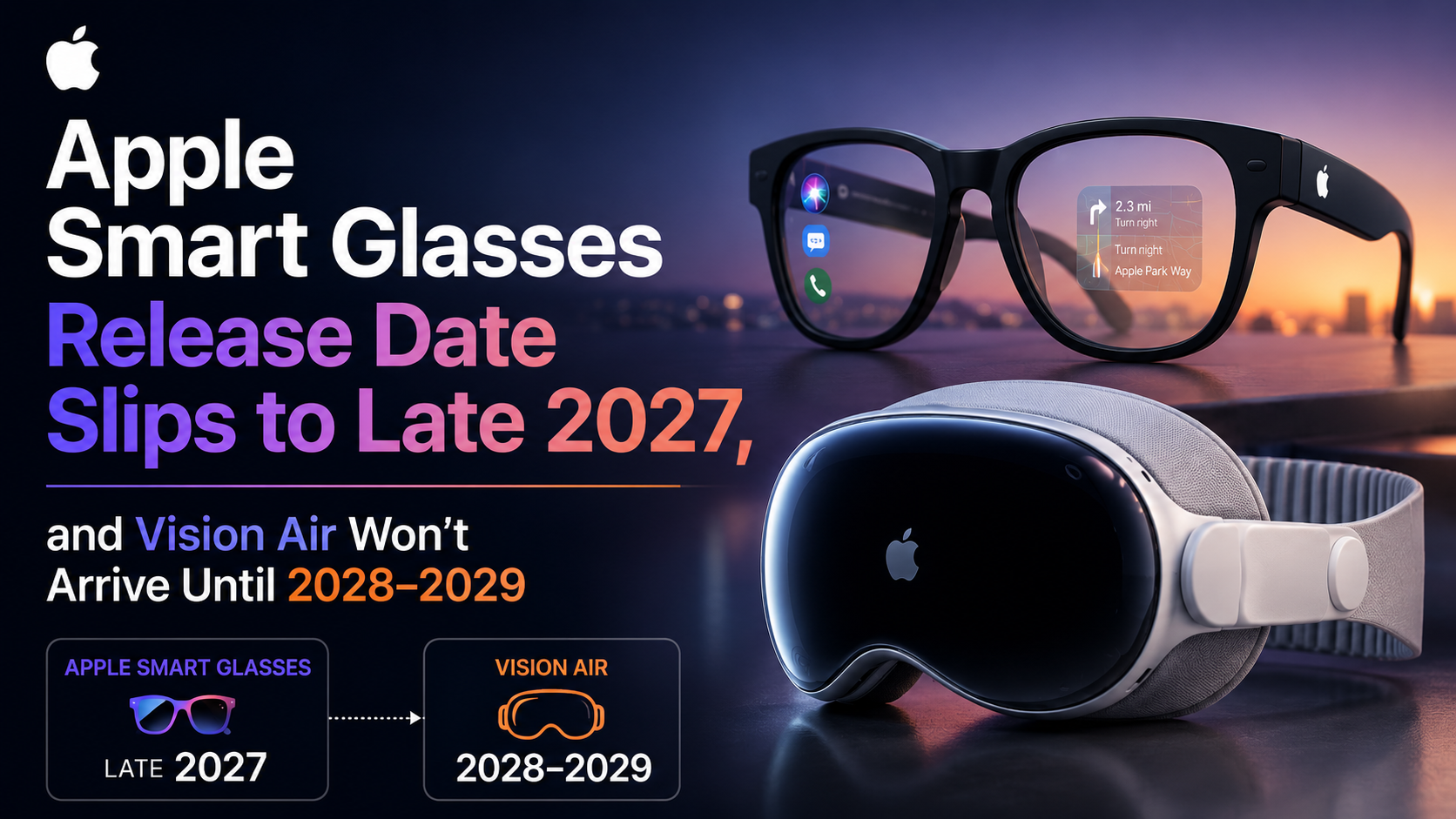
New reports indicate Apple's highly anticipated AI-powered smart glasses are delayed until late 2027, with Vision Air expected in 2029.
Apple's ambitious leap into the world of smart eyewear is hitting some expected bumps in the road. Consumers eager for AI-powered glasses or a lighter, more affordable version of the Vision Pro headset will need to temper their expectations, as the tech giant has reportedly pushed back key launch timelines.
Specifically, the highly anticipated Apple AI smart glasses, which were originally expected to be announced by the end of this year and debut early next year, are now targeting a late 2027 launch. This significant delay, as reported by Bloomberg, marks a substantial shift from earlier development roadmaps for what Apple hopes will be its next major hardware platform.
The postponement stems from Apple's desire to ensure its visual AI technology is fully up to par, aiming to avoid launching a product that doesn't meet its high standards or user expectations. These smart glasses are envisioned as a primary hardware platform for Apple Intelligence, the company's suite of artificial intelligence features, with plans for their capabilities to expand considerably over time.
Early design concepts for the glasses include distinctive elements such as oval-shaped cameras, a range of unique colors, and multiple frame styles to appeal to a broad consumer base. Beyond initial features, Apple also sees a future where these glasses could evolve into a health device, potentially incorporating augmented reality technologies to improve how people see their world.
This cautious approach underscores Apple's strategic long-term view of the eyewear market. The company believes there's a massive opportunity to serve billions of people who rely on prescription glasses, casually wear sunglasses, or use eyewear as a fashion accessory. Taking additional time to perfect the product offering before a widespread release aligns with Apple's historical pattern of entering new categories with a polished, impactful device.
Why this matters for your tech future
For North American consumers, this delay means a longer wait to experience Apple's integrated AI directly on their faces. While advancements in Siri are still expected before the end of this year, the full promise of visual intelligence delivered through dedicated eyewear will remain out of reach for an additional year. This affects not just early adopters but also the broader technology market, as Apple's entry into a new category often sets industry trends and accelerates innovation across competitors like Meta with its Ray-Ban smart glasses.
Apple's decision to delay suggests a focus on delivering a comprehensive feature set and a high-quality user experience over rushing to market. This strategy could ultimately benefit users by providing a more refined and capable product, but it also provides a window of opportunity for rivals to gain traction in the smart glasses segment in the interim. The long-term vision for these glasses as a health device or a tool to enhance vision through augmented reality highlights Apple's ambition, making it crucial for them to get the foundational product right.
The company's commitment to "nail down the product offering" before a broad release underscores the high stakes involved in entering what could become an enormous new market segment. This patient, meticulous approach is a hallmark of Apple's historical successes with products like the iPhone and Apple Watch, even if it requires consumers and investors to wait a bit longer for the next big thing.
Vision Air: A second chance for Apple's headset strategy
In a related but distinct development, there's renewed optimism for a lighter and more affordable version of the Apple Vision Pro, which has been dubbed "Vision Air." Contrary to earlier reports that suggested its development had been shelved, Bloomberg's Mark Gurman now indicates that Apple is indeed dedicating resources to this project, with a targeted debut in late 2028 or 2029.
The original Apple Vision Pro, launched at a premium price point of $3,499, faced significant criticism regarding its bulky design and high cost. Gurman noted that the category was essentially "on ice" until these issues could be addressed. The Vision Air aims to rectify these problems, offering a potentially more accessible entry point into Apple's spatial computing ecosystem. This suggests Apple is actively learning from the initial market reaction to the Vision Pro and adjusting its strategy to target a broader consumer base.
While a 2029 launch might seem quite far off, it represents roughly the same time span between the Vision Pro's unveiling at WWDC 2023 and the potential Vision Air release. This timeline implies a deliberate and methodical approach to iterating on complex new hardware. For North American consumers, this means a potentially more refined, comfortable, and affordable spatial computing experience is on the distant horizon, indicating Apple's commitment to making this technology more mainstream in due course.
Apple's revised roadmap for its eyewear products paints a clear picture of deliberate, long-term planning rather than hasty market entry. While these delays might test the patience of consumers and investors alike, they ultimately underscore Apple's commitment to delivering polished, impactful products in new and challenging categories. The successful integration of AI into smart glasses and the evolution of spatial computing with Vision Air have the potential to redefine how people interact with technology and their environment, but the journey to that future continues to be a careful and extended one.
Frequently asked questions
When are Apple AI glasses expected to launch?
Apple's highly anticipated AI-powered smart glasses are now reportedly expected to launch in late 2027. This represents a significant pushback from earlier estimations, impacting the company's timeline for advanced wearable technology.
What is Vision Air?
Vision Air is rumored to be a lighter, more affordable version of Apple's Vision Pro headset, designed to appeal to a broader consumer base. It is reportedly slated for release by 2029.
Why are Apple's smart glasses delayed?
The report from 9to5Mac suggests that Apple's ambitious leap into smart eyewear is encountering expected development challenges, leading to a revised launch timeline for both the AI glasses and Vision Air.
Will Apple release a cheaper Vision Pro?
Yes, according to reports, Apple plans to release a more affordable and lighter version of the Vision Pro, potentially named "Vision Air," which is now expected by 2029.
What was the original launch expectation for Apple AI glasses?
While the exact original launch expectation isn't detailed in the preview, the current report indicates a pushback to late 2027, implying an earlier launch was initially anticipated for Apple's AI glasses.
How do these delays impact Apple's wearable tech strategy?
These reported delays suggest Apple is taking more time to refine its smart eyewear offerings, potentially ensuring a more polished product launch, but also delaying their entry into the mainstream AI glasses market.