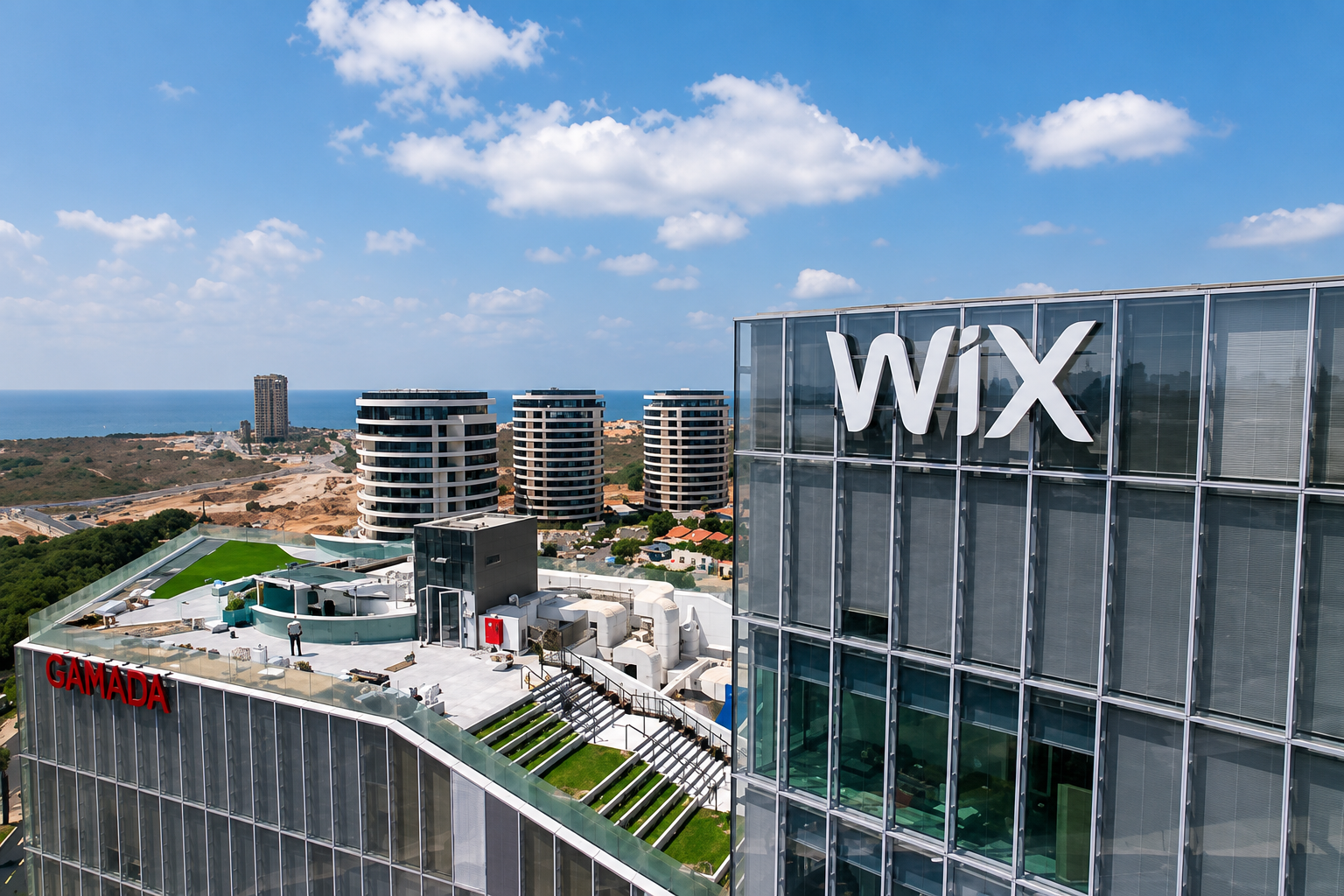
The web development giant announces its largest-ever workforce reduction, shedding 20% of staff as tech firms face market pressure and rising AI costs.
Wix.com Ltd. is initiating its most extensive workforce reduction in company history, signaling intensified pressure on technology firms to streamline operations amid a significant stock market decline and escalating investments in artificial intelligence. The Israel-based web development platform will cut approximately 1,000 jobs, representing about 20% of its global workforce, as it grapples with eroding profitability and investor concerns over the long-term viability of its core business in an increasingly AI-driven landscape.
The decision follows a nearly 50% collapse in Wix's stock price since the beginning of the year, pushing its market capitalization to roughly $2 billion despite a substantial $1.6 billion share buyback program launched earlier this year. This strategic maneuver, intended to bolster investor confidence and provide a floor for the stock, has so far failed to achieve its desired effect, underscoring deep-seated skepticism regarding the company's financial trajectory and adaptation to emerging technologies.
Wix's first-quarter earnings report painted a challenging picture, revealing a net loss of $57.5 million after several consecutive profitable quarters, even as revenue climbed 14% to $541 million. The reversal to losses was primarily attributed to a sharp 50% surge in operating expenses, reaching $423 million, which represented 35% of revenue compared to 21% in the corresponding period of the previous year. This cost inflation, alongside a 21% decline in cash flow to $112 million, highlights the operational leverage challenges facing the company as it navigates a competitive and capital-intensive market shift.
What It Means
Wix's significant layoff round reflects a critical inflection point for many established software companies facing dual pressures: a market demanding profitability over unbridled growth, and the transformative, yet expensive, integration of artificial intelligence. This move mirrors a wider trend across the technology sector, where firms that expanded rapidly during the pandemic-driven digital acceleration are now rightsizing their operations and re-evaluating workforce structures in light of new AI capabilities that promise greater efficiency but require substantial upfront investment.
The market's punitive response to Wix's financial performance and strategic direction underscores a fundamental shift in investor sentiment, prioritizing clear paths to sustainable earnings and cash flow generation. Companies that cannot articulate a compelling vision for how AI will enhance their competitive advantage and unit economics, rather than merely escalating their cost base, are experiencing significant valuation compression. This dynamic is particularly acute for platforms like Wix, whose traditional offerings might be perceived as vulnerable to disruption by more advanced, AI-powered content generation and development tools, thereby necessitating aggressive and costly pivots.
$57.5 Million
Wix reported a net loss of $57.5 million in the first quarter of 2026, marking a significant reversal after several profitable periods and highlighting the company's escalating operational expenses despite robust revenue growth.
The Context
Wix, a dominant player in the website building space, significantly expanded its workforce post-pandemic to capitalize on accelerated digital adoption, reaching 5,277 employees by the end of the first quarter. This growth, however, led to operational bloat that the company began addressing with smaller, targeted layoffs in service and customer support roles, early adopters of AI-based solutions. The current round, affecting all departments, signals a more comprehensive efficiency drive.
A key element of Wix's AI strategy has been the acquisition of Base44, founded by Maor Shlomo, which enables "vibe coding" through natural-language prompts. While this acquisition has propelled significant growth, with Base44's annual recurring revenue (ARR) surpassing $150 million in May, it has also introduced considerable financial burdens. The lean operational structure of Base44 is offset by substantial marketing expenditures and escalating computing costs associated with scaling AI model inference. Furthermore, the acquisition agreement includes performance-based payouts to Shlomo, with $38 million paid in the last quarter and more expected, further straining cash reserves which dwindled to $900 million following the share buyback.
Wix's internal dynamics have also reflected these pressures, with a contentious mandate for employees to return to full-time office work sparking widespread opposition. This move, combined with an internal re-evaluation of development roles to adapt them to the AI era, appears in retrospect to have been a precursor to the current deep efficiency plan. The company is also heavily investing in developing its own AI model to enhance its Harmony website-building system, a strategic bet designed to reduce future inference costs, but an immediate drain on resources.
The Bear Case
The bear case for Wix centers on several critical concerns that continue to weigh on investor sentiment, despite the company's strategic pivot into AI. Foremost is the perception that Wix's foundational website and online store building solutions face increasing irrelevance in an era where AI-powered coding tools can generate sophisticated digital presences with minimal human intervention. This existential threat demands not just evolution, but a complete redefinition of value proposition, a transition the market views with considerable skepticism.
Furthermore, the company's return to losses in the first quarter, driven by a sharp escalation in operating expenses, raises questions about its ability to achieve sustainable profitability even as it pursues growth. The high capital requirements for AI development, coupled with ongoing marketing investments and performance-based acquisition payouts, are rapidly depleting cash reserves. Analysts question whether Wix can effectively balance these significant expenditures with a clear path to generating free cash flow, especially given the competitive intensity of the AI landscape and the potential for margin erosion.
The $1.6 billion share buyback, a declarative move to restore investor confidence, failed to stem the stock's decline, underscoring the market's focus on fundamental operational efficiency and a compelling long-term narrative rather than financial engineering. Until Wix can demonstrate a clear, profitable pathway where its AI investments translate into a robust, defensible competitive advantage and improving unit economics, investor apprehension regarding its structural profitability and market positioning is likely to persist.
Investors will closely monitor Wix's upcoming earnings calls for further details on the scope and financial impact of these layoffs, particularly how they translate into operating expense reductions and margin expansion. Key triggers to watch include the market's reception to future AI product integrations, the profitability trajectory of the Base44 division, and any subsequent announcements regarding cash flow management or further strategic realignments designed to convince a skeptical market of its long-term viability in a rapidly evolving technological landscape.
Frequently asked questions
Why is Wix cutting 1,000 jobs?
Wix is cutting 1,000 jobs in its largest layoff round due to intensified pressure on technology firms. This includes factors like a significant stock market decline and escalating investments in artificial intelligence, which are prompting companies to streamline operations.
How many employees are affected by Wix's layoffs?
Approximately 1,000 jobs are being cut, representing about 20% of Wix's global workforce.
What factors contributed to Wix's decision to lay off staff?
Key factors include a significant stock market decline, increasing investments in AI, and broader pressure on tech firms to optimize operations.
Is Wix the only tech company experiencing layoffs?
No, the article indicates "intensified pressure on technology firms," suggesting a wider trend of workforce reductions in the tech sector.
Where is Wix.com Ltd. based?
Wix.com Ltd. is an Israel-based web development platform.
What is Wix's previous layoff history?
This round of layoffs is described as the "most extensive workforce reduction in company history," implying previous, smaller cuts or none of this scale.