China's vast EV data collection forms an unparalleled AI asset, poised to drive global leadership in autonomous driving and smart cities.
China's burgeoning electric vehicle fleet is rapidly emerging as the world's most significant and underestimated artificial intelligence asset, positioning domestic tech giants and automakers to potentially dominate future global autonomous driving and smart city applications. This vast, real-world data collection apparatus provides an unparalleled competitive edge, with substantial implications for market valuations and the geopolitical balance of power in advanced technology. The strategic accumulation of granular driving data could allow Chinese firms to leapfrog Western rivals in critical AI development, reshaping the global automotive and software landscape. The sheer scale of China's EV market translates directly into an immense, continuously expanding dataset crucial for training sophisticated AI models. Millions of electric vehicles traversing diverse urban and rural environments generate petabytes of data daily, encompassing driving behaviors, road conditions, environmental factors, and intricate user interactions. This constant stream of information, collected from advanced sensor suites including lidar, radar, and high-resolution cameras, fuels the iterative improvement of perception systems, prediction algorithms, and decision-making capabilities vital for autonomous driving. Unlike fragmented data collection efforts in many Western markets, China’s integrated digital ecosystem often facilitates a more unified and rapid processing pipeline, accelerating AI model development cycles. Leading Chinese EV manufacturers such as BYD, Nio, Xpeng, and Li Auto, alongside technology giants like Huawei, are leveraging this inherent advantage. These companies are not merely selling vehicles; they are deploying mobile data collection platforms that contribute to a national AI infrastructure. The synergy between hardware manufacturing at scale and advanced software development creates a virtuous cycle, where more vehicles on the road lead to more data, which in turn leads to superior AI, driving further adoption. This closed-loop system reduces the cost and time required for AI research and development, allowing for faster deployment of increasingly sophisticated features.
What It Means
This unprecedented data advantage is poised to accelerate China's path to Level 3 and Level 4 autonomous driving capabilities, giving its domestic industry a formidable lead in a technology projected to transform transportation and logistics globally. Western automotive giants and tech firms, often hampered by stricter data privacy regulations, fragmented regulatory landscapes, and slower EV adoption rates, face an uphill battle to gather comparable volumes of real-world driving data. The disparity could create a significant "data moat" for Chinese companies, making it difficult for international competitors to catch up on crucial AI training. The economic implications extend beyond the automotive sector, influencing smart city infrastructure, logistics optimization, and potentially even urban planning. A nation that effectively harnesses this vehicular data can build more efficient, safer, and intelligent urban environments. For investors, this data-driven trajectory translates into potentially higher growth premiums and valuations for Chinese EV manufacturers and their AI partners, as their defensible competitive advantage in AI software becomes increasingly clear. This strategic asset could justify higher multiples compared to international peers who lack similar access to such a critical resource.
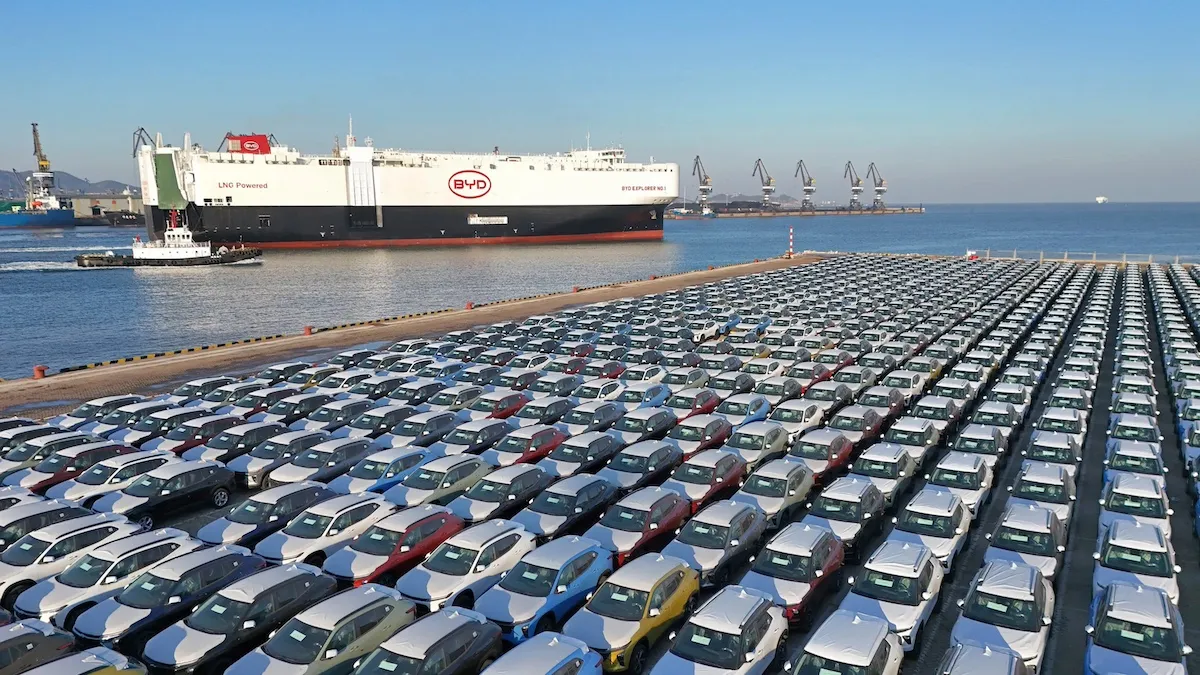
China's electric vehicle fleet is projected to exceed 30 million units by 2025, generating petabytes of driving data daily, a volume unmatched globally and critical for advanced AI training.
The Context
China's strategic emphasis on new energy vehicles aligns directly with its broader national AI development plan, which aims for global leadership in artificial intelligence by 2030. The government has provided extensive subsidies and policy support for both the manufacturing and adoption of EVs, creating the world's largest market. This top-down strategic approach has fostered an environment where data collection, while subject to specific national regulations, operates within a framework that often prioritizes national technological advancement over individual data sovereignty in ways distinct from Western nations. This has enabled Chinese companies to aggregate and process vast datasets with a speed and scale that is uniquely challenging for competitors in other regions. Historically, China has demonstrated a pattern of leveraging its massive domestic market and supportive policy environment to foster national champions in emerging technologies, from e-commerce to mobile payments. The EV sector and its associated data streams represent the next frontier in this strategy, positioning China not merely as a manufacturer but as a critical innovator in AI. This strategic imperative is also intertwined with broader geopolitical competition, where data is increasingly viewed as a crucial national resource, akin to oil or semiconductors, underpinning future economic and military capabilities.
What Analysts Say
Market observers widely contend that the valuation models for Chinese EV companies and their AI-centric suppliers may not yet fully reflect the immense, long-term value of the proprietary data they are accumulating. Analysts from institutions like Goldman Sachs and UBS have highlighted the potential for this data to unlock significant monetization avenues beyond vehicle sales, including subscription services for advanced driver-assistance systems, data licensing for urban planning, and the creation of entirely new AI-powered service ecosystems. The consensus suggests that companies successfully translating this data into superior AI performance will command a premium. However, some analysts also point to potential headwinds, including escalating regulatory scrutiny over data localization and security, particularly concerning data sharing with foreign entities. The evolving geopolitical landscape could also trigger international pushback against the perceived data dominance, potentially leading to new trade barriers or calls for reciprocal data access. The "data moat" that Chinese firms are building could become a point of contention in trade negotiations and international technology standards setting. The trajectory of China's EV fleet as an AI asset will largely depend on evolving data governance frameworks, both domestically and internationally. Investors should closely monitor regulatory pronouncements regarding vehicular data privacy and export, as well as the pace of autonomous driving feature deployment by key players. The rate at which Chinese firms translate their data advantage into demonstrably superior AI performance and commercialized autonomous driving solutions will be a key indicator of their long-term competitive positioning. Furthermore, the willingness of Western markets to adopt Chinese-developed autonomous driving technology, or the ability of Western firms to forge new data acquisition strategies, will define the global race for AI supremacy.
Frequently asked questions
What makes China's EV fleet an AI asset?
China's vast electric vehicle fleet collects real-world driving data at an unprecedented scale, providing critical input for developing advanced artificial intelligence algorithms. This continuous data stream is essential for training and refining AI systems for autonomous driving and smart city applications.
How does China's EV fleet provide a competitive edge?
The immense data generated by China's EV fleet gives domestic tech giants and automakers an unparalleled advantage in AI development, allowing them to rapidly innovate and potentially dominate future global autonomous driving and smart city markets.
What are the implications for autonomous driving?
The extensive real-world driving data from China's EV fleet is crucial for training and validating autonomous driving systems, accelerating their development and potentially enabling Chinese companies to lead in self-driving technology globally.
How will this impact smart city applications?
The data collected by China's EV fleet, combined with AI, will be instrumental in developing advanced smart city applications, optimizing traffic flow, energy management, and urban planning for more efficient and intelligent cities.
Which Chinese entities benefit from this AI asset?
Domestic Chinese tech giants and automakers are the primary beneficiaries, leveraging this unique data collection apparatus to enhance their AI capabilities and pursue leadership in the global tech landscape.
Is China's EV fleet truly underestimated as an AI asset?
Yes, the article argues that the scale and strategic importance of China's EV fleet as a real-world AI data collection platform are often overlooked, representing a significant competitive advantage for the nation.