India's private space sector arrives on the global stage, validating deep tech investment and reshaping emerging markets.
India’s nascent private space sector officially signaled its arrival on the global stage when Skyroot Aerospace successfully launched its Vikram-S suborbital rocket, a pivotal event that immediately re-rates the investment landscape for deep technology ventures across emerging markets. This milestone not only validates years of private capital deployment in a traditionally state-dominated domain but also dramatically de-risks future funding rounds for capital-intensive Indian startups, particularly those operating in strategic sectors previously considered off-limits to venture scrutiny.
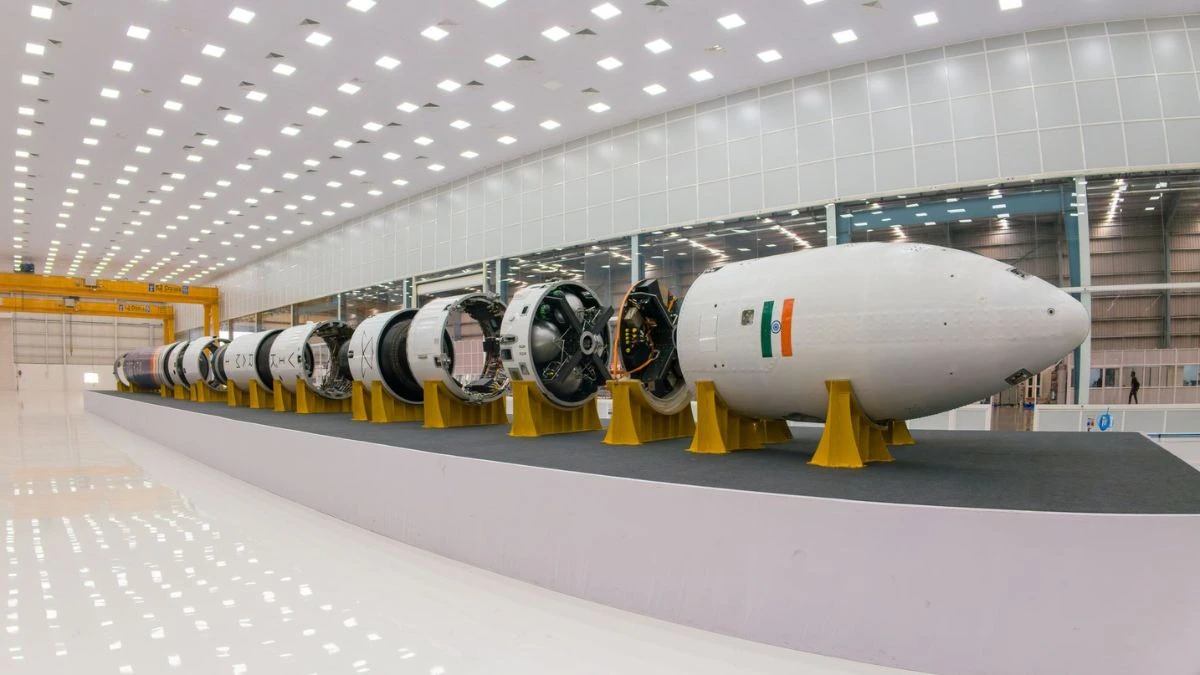
The Hyderabad-based startup’s Vikram-S demonstrator mission, dubbed "Prarambh" or "The Beginning," lifted off from the Satish Dhawan Space Centre in Sriharikota, propelling a 6-meter tall, 545-kilogram rocket to an altitude of 89.5 kilometers. This successful maiden flight, achieved on November 18, 2022, represents a critical stepping stone for Skyroot’s larger ambition: the development of its Vikram-1 orbital class launch vehicle, capable of deploying small satellites into low-Earth orbit. The precise execution of the mission underscores the technical prowess cultivated by India’s private sector and offers a tangible proof point for the scalability of venture-backed space endeavors.
Skyroot Aerospace, founded by former Indian Space Research Organisation (ISRO) engineers Pawan Kumar Chandana and Naga Bharath Daka, has rapidly ascended through the venture ecosystem, demonstrating the potential for disruptive innovation when regulatory barriers soften. The company has attracted significant capital from a diverse pool of investors, including Singapore's sovereign wealth fund GIC, Temasek, and domestic industrial conglomerates like Solar Industries. This blend of institutional and strategic capital highlights the shifting perception of deep tech investments in India, moving from high-risk speculation to calculated, long-term plays with substantial national and global market implications.
What It Means
My read is that Skyroot's achievement transcends a mere technological feat; it is a foundational moment for India’s innovation economy, fundamentally altering how institutional investors perceive and value deep technology startups. For years, the conventional wisdom held that capital-intensive sectors like space, defense, or advanced manufacturing were too risky, too long-gestation, or too politically sensitive for mainstream venture capital in India. This launch shatters that perception, proving that a well-executed vision, combined with strategic regulatory support, can unlock significant private sector value in areas traditionally reserved for government monopolies.
This success provides a powerful template for other deep tech entrepreneurs, not just within India but across the global south, who are grappling with similar challenges in securing funding for ambitious, long-lead projects. It validates the "patient capital" thesis, demonstrating that investors willing to back foundational science and engineering can yield substantial returns, both financially and strategically. Moreover, it positions India not merely as a consumer of global technology but as a genuine contributor and innovator in critical future-forward industries, intensifying competition in the burgeoning small satellite launch market.
The global space economy is projected to exceed $1 trillion by 2040, up from approximately $469 billion in 2021, with significant growth expected in the satellite manufacturing and launch services segments crucial for startups like Skyroot.
The Context
Skyroot Aerospace’s journey is intricately linked to a broader, deliberate policy shift by the Indian government to liberalize its space sector, culminating in the establishment of the Indian National Space Promotion and Authorisation Centre (IN-SPACe). This regulatory body acts as a single-window agency, facilitating private sector participation by providing access to ISRO facilities and expertise, alongside streamlining bureaucratic hurdles. This strategic pivot recognizes that national space ambitions can be exponentially accelerated through public-private partnerships, a model successfully demonstrated by nations like the United States with companies like SpaceX and Rocket Lab.
Globally, the space industry is undergoing a profound transformation, driven by the declining cost of launch, miniaturization of satellites, and the proliferation of 'Space as a Service' business models. Companies like SpaceX have demonstrated the commercial viability of reusable rockets, while Rocket Lab has carved out a niche in the small satellite launch market. India, with its vast talent pool of engineers and cost-effective operational capabilities, is now poised to capture a significant share of this expanding market. Other Indian private players, such as Agnikul Cosmos, are also developing their own launch vehicles, signaling a vibrant and competitive domestic ecosystem emerging rapidly.
The Investor View
From an investor’s standpoint, the successful Vikram-S launch transforms Skyroot from a promising concept into a validated platform. This transition is crucial for attracting the next tranche of growth capital required for scaling orbital capabilities. Deep tech investment is inherently different from typical software-as-a-service plays; it demands a deeper understanding of engineering risks, regulatory environments, and geopolitical implications. The successful execution of a complex mission like Prarambh provides tangible evidence of a team's ability to deliver, significantly derisking subsequent investments and potentially compressing valuation cycles that are typically extended in such domains.
What strikes me here is the signal this sends to other venture funds hesitant to venture into hardware-intensive, long-horizon projects. This success will likely catalyze increased interest and capital allocation towards similar ventures in India, fostering a new generation of deep tech unicorns. While the capital intensity and fierce global competition in the space sector remain significant challenges, the demonstrated ability to achieve key technical milestones creates a clearer path to commercialization and, critically, to exits for early investors, painting a more compelling picture for future limited partners.
Looking ahead, the market will closely watch Skyroot's progress toward its orbital Vikram-1 launch, which is expected to carry commercial payloads. Key triggers will include further funding announcements, partnerships with satellite operators, and the continued evolution of IN-SPACe's regulatory framework to support rapid commercialization. The ripple effect across India’s broader deep tech ecosystem, from drone technology to advanced materials and robotics, will be profound, as this landmark achievement fundamentally shifts the perception of what’s possible for venture-backed innovation in India.
Frequently asked questions
Who is Skyroot Aerospace?
Skyroot Aerospace is an Indian private aerospace company that develops and launches rockets. It made history with India's first private orbital rocket launch, Vikram-S, signaling a new era for space technology in the country.
What was the significance of Skyroot's Vikram-S launch?
The Vikram-S launch marked India's first private orbital rocket launch, validating years of private capital deployment in space and signaling the arrival of India's private space sector on the global stage.
How does this launch impact investment in deep technology?
This successful launch immediately re-rates the investment landscape for deep technology ventures, especially across emerging markets, by proving the viability and potential returns of private space initiatives.
What is a suborbital rocket?
A suborbital rocket is a rocket that travels into space but does not have enough velocity to remain in orbit. It typically follows a parabolic trajectory before returning to Earth.
Which rocket did Skyroot Aerospace launch?
Skyroot Aerospace successfully launched its Vikram-S suborbital rocket, which was a demonstrator mission for their larger Vikram series of orbital launch vehicles.
Is Skyroot Aerospace India's only private space company?
While Skyroot Aerospace made the first private orbital rocket launch, India has a growing number of private space companies and startups in its nascent private space sector.