Microsoft and Singapore's Lightstorm are laying critical undersea data cables, shaping the future of global internet connectivity in India and Southeast Asia.
The quiet, unseen battle for the internet's future isn isn't happening in Silicon Valley boardrooms or in flashy AI demos. Instead, it's playing out thousands of feet under the ocean, where massive data pipes are being laid to connect continents and fuel the global digital economy. And a recent move by Microsoft just underscored who's really winning this high-stakes game: the tech giants themselves.
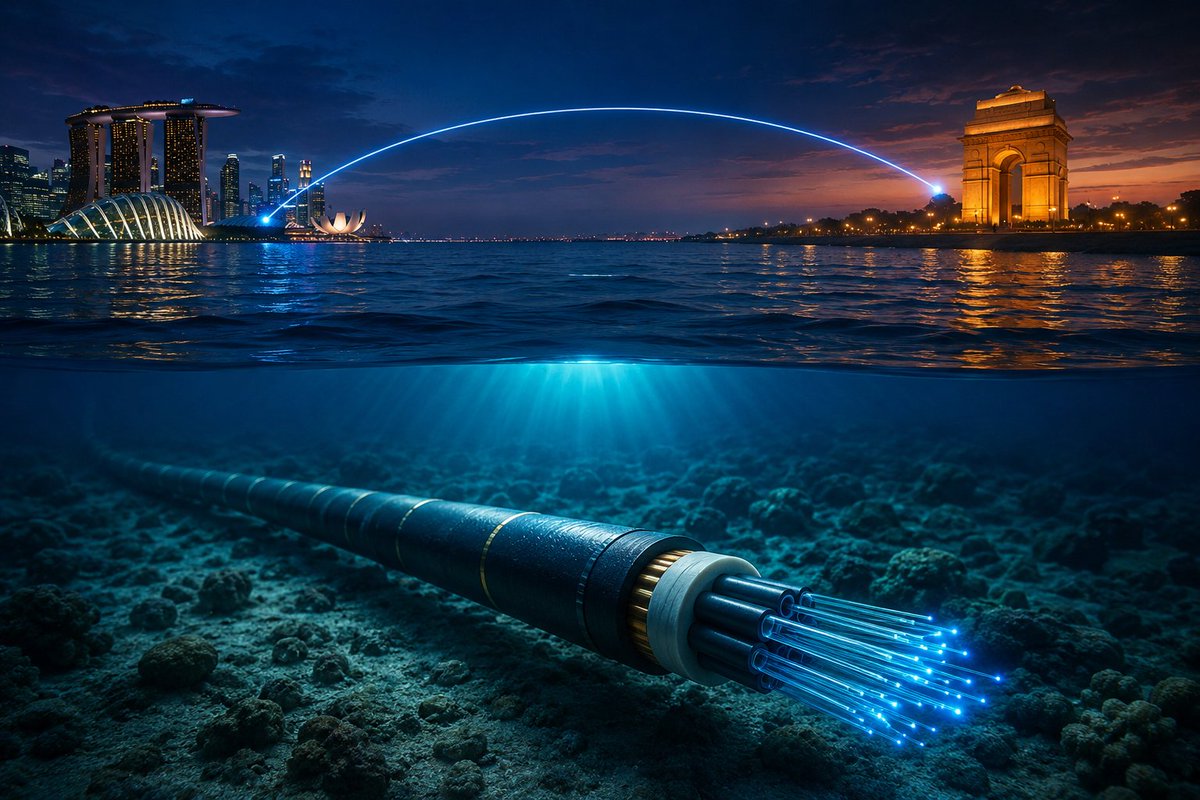
Here's what happened: Microsoft partners with Singapore's Lightstorm to build a significant new undersea cable network connecting India and Southeast Asia. This isn't just another infrastructure project; it's a strategic move by one of the world's largest cloud providers to control the very backbone of the internet, ensuring its Azure cloud services can reach billions of users in two of the fastest-growing digital markets on the planet.
For decades, the construction and ownership of the world's critical undersea fiber optic cables — the actual physical conduits carrying nearly all international internet traffic — was largely the domain of traditional telecommunications companies. These incumbent players would pool resources, form consortia, and invest billions to lay these vital digital arteries. Companies like AT&T, Verizon, and various international carriers were the gatekeepers, offering capacity to others, including the burgeoning internet companies.
That conventional model is rapidly being upended. In recent years, a seismic shift has seen hyperscale cloud providers like Microsoft, Google, Meta, and Amazon increasingly take matters into their own hands. They are directly funding, building, and operating their own subsea cables, or partnering with specialized digital infrastructure firms like Lightstorm, rather than simply leasing capacity from others. This isn't merely about cost savings; it's a profound strategic imperative driven by the insatiable demand for cloud services, AI, streaming, and a host of other data-intensive applications.
Microsoft's partnership with Lightstorm represents a clear continuation of this trend. Lightstorm, an infrastructure player with a focus on building digital highways in India, brings local expertise and crucial terrestrial network connectivity. By combining forces, they aim to create a seamless, high-capacity, low-latency connection that will serve as a critical nervous system for Microsoft's cloud regions in the region, ensuring data flows efficiently and reliably for their enterprise clients and consumer services across the vast and digitally hungry populations of India and Southeast Asia.
The New Rules of the Digital Undercurrent
What this partnership really signals is a dramatic reordering of priorities and power within the global telecom landscape. The old guard of traditional telcos, while still important, is finding its role redefined. The new architects of global connectivity are the hyperscalers. They need unprecedented amounts of bandwidth, absolute control over network performance, and the ability to rapidly scale their infrastructure to meet exploding demand for their cloud platforms like Azure, Google Cloud, and AWS.
Latency, the time it takes for data to travel from one point to another, is a critical factor for cloud services. Even a few milliseconds can impact the performance of real-time applications, financial transactions, and user experience. By owning and operating their own cables, hyperscalers can optimize routes, reduce hops, and gain a competitive edge. This direct investment allows them to engineer networks precisely for their specific workloads, which often involve massive data transfers between their own global data centers rather than just consumer internet traffic.
Consider the sheer scale. A single modern subsea cable can carry hundreds of terabits of data per second — enough to stream millions of high-definition videos simultaneously. Microsoft already has significant investments in other key cables, such as Marea connecting Virginia Beach to Bilbao, Spain, and Amitié linking the US to France and the UK. This latest venture in Asia is a natural extension of a global strategy to secure the underlying physical infrastructure that makes their multi-billion-dollar cloud businesses possible. It's an investment in control, resilience, and future growth, ensuring they are not beholden to third-party providers for their most critical infrastructure.
Why India and Southeast Asia are the Next Digital Frontier
This particular cable project isn't just about raw capacity; it's about strategic geography. India, with its over 1.4 billion people, is undergoing a profound digital transformation. Government initiatives like "Digital India," combined with widespread smartphone adoption and affordable data plans, have created an enormous appetite for digital services, from e-commerce and fintech to education and entertainment. Southeast Asia, a diverse region encompassing countries like Indonesia, Vietnam, Thailand, and the Philippines, represents another dynamic growth engine, with rapidly expanding middle classes and burgeoning tech ecosystems. These markets are not just places where cloud services are consumed; they are increasingly becoming hubs for innovation and data generation.
For North American tech giants, these regions represent massive untapped potential. Securing direct, high-speed, and resilient connectivity to India and Southeast Asia is paramount for expanding their market share, serving existing multinational clients operating there, and fostering new digital businesses. It's a land grab for data sovereignty and economic influence, ensuring that data generated and processed in these regions can be handled efficiently, often within the local regulatory frameworks, while still leveraging the global reach of their cloud platforms.
Moreover, the geopolitical landscape plays a role. Diversifying cable routes and ensuring robust connectivity not only safeguards against outages but also mitigates risks associated with single points of failure or potential geopolitical tensions impacting existing cable systems. Building new, dedicated infrastructure strengthens the digital ties between these crucial emerging markets and the broader global internet ecosystem, largely shaped by American tech companies.
The implications for consumers and businesses in North America, while indirect, are significant. The global flow of data is increasingly interdependent. As Indian and Southeast Asian economies become more digitally integrated, the ability of US-based companies to operate, collaborate, and innovate globally relies heavily on robust infrastructure like this new cable. For investors, this represents a long-term play on global digitization, a bet that the demand for cloud services will continue its exponential trajectory, making infrastructure investments like this fundamental to future returns.
The construction of such an undersea cable is a monumental undertaking, involving specialized ships, precision engineering, and years of planning and permitting. It highlights the continued physical demands of a seemingly ethereal digital world. While the cloud feels weightless, its foundation rests on miles of fiber optic cables powered by massive data centers, all requiring immense capital investment and strategic foresight.
Looking ahead, we can expect to see more of these direct infrastructure investments by hyperscalers. The battle for cloud market share isn't just about software features or pricing; it's about owning the pipes that carry the data. As AI and other advanced computing paradigms demand even lower latency and higher bandwidth, the strategic importance of these undersea cables will only grow. Microsoft's partnership with Lightstorm is not an anomaly; it's a blueprint for how the global internet will be built and controlled in the decades to come, with tech giants securing their digital empires one fiber strand at a time beneath the waves.
Frequently asked questions
What is Microsoft doing with Lightstorm?
Microsoft is partnering with Singapore's Lightstorm to build an undersea data cable connecting India and Southeast Asia, enhancing global digital infrastructure and securing critical data pathways. This collaboration underscores the increasing importance of physical infrastructure in the global digital economy.
Where will the new undersea cable connect?
The new undersea cable will connect India with various countries in Southeast Asia. This strategic link aims to significantly strengthen data flow, improve internet speeds, and boost digital services across these key regions.
Why are undersea cables important for the internet?
Undersea cables are crucial because they carry over 99% of the world's international internet traffic. They form the fundamental backbone of global digital communication, enabling everything from streaming and social media to cloud computing and e-commerce across continents.
What is Lightstorm's role in this partnership?
Lightstorm, a Singapore-based company, is partnering with Microsoft to construct and manage the physical infrastructure of the undersea cable. Their expertise in network deployment and fiber optic technology is vital for the successful implementation of such a massive project.
Which tech giants are investing in undersea cables?
Major tech giants, including Microsoft, Google, Meta (Facebook), and Amazon, are heavily investing in undersea cables. They do this to secure their own data pathways, reduce reliance on third-party networks, and expand their global cloud and content delivery capabilities.
How does this cable impact the digital economy?
This new undersea cable will significantly boost the digital economy in India and Southeast Asia by providing faster, more reliable internet access. It supports the growth of cloud services, AI applications, e-commerce, and overall data exchange, fostering innovation and economic development across the region.