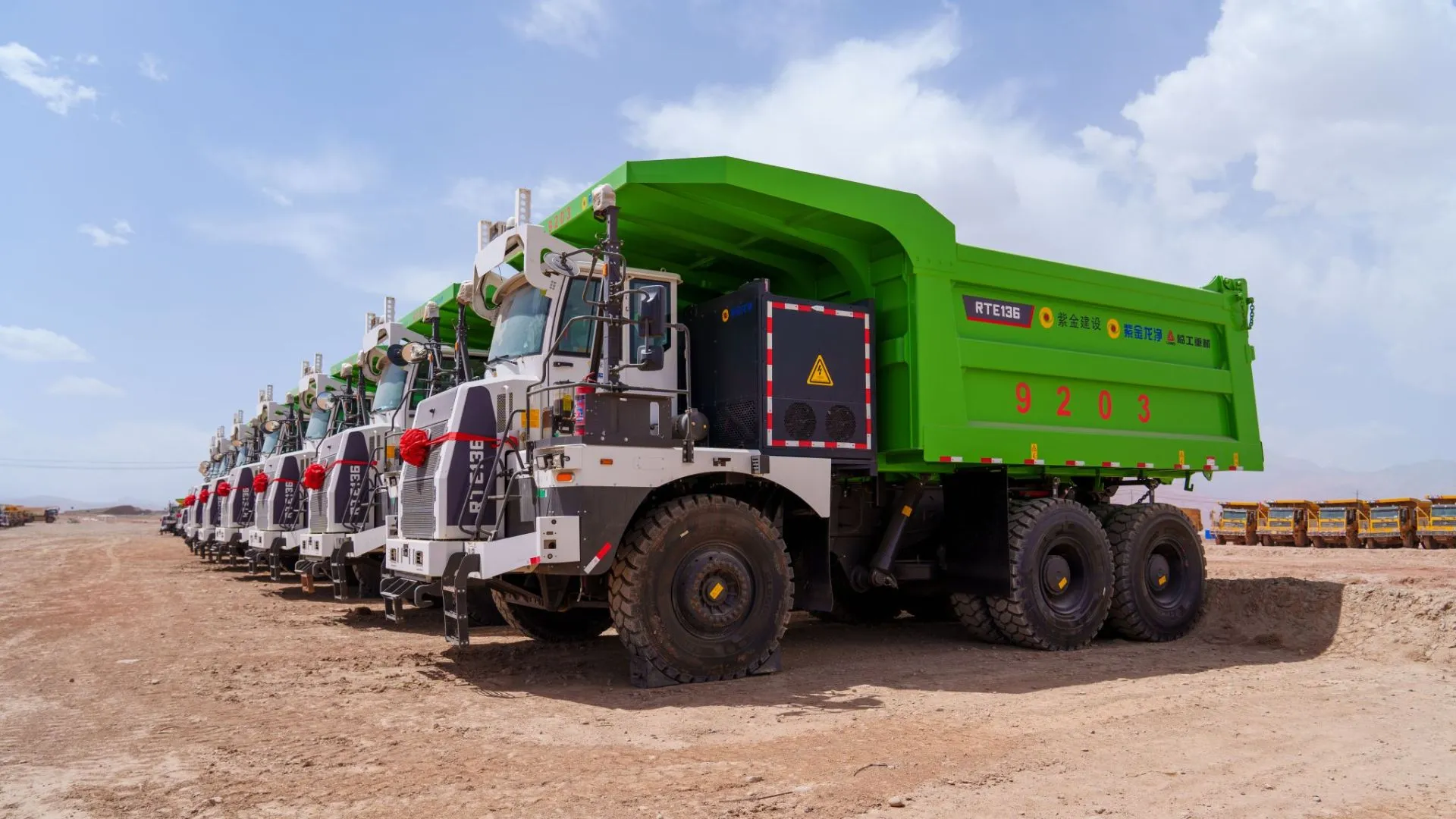
China's mining sector embraces massive 140-ton electric haul trucks featuring swappable 770 kWh batteries, setting a new standard for industrial decarbonization.
How can the world's most energy-intensive industries decarbonize without compromising the relentless operational demands that underpin global supply chains? This critical question is being answered with compelling clarity in China, where mining operations are now deploying 140-ton electric haul trucks equipped with massive 770 kilowatt-hour (kWh) swappable battery packs, a technological leap with profound implications for the global mining sector and the broader industrial electrification landscape. This innovative approach addresses the core challenge of heavy-duty electric vehicle (EV) charging in high-utilization environments, suggesting a viable pathway to significant emissions reductions and operational efficiency gains for investors closely watching the energy transition in hard-to-abate sectors. The deployment, observed in several large-scale open-pit mines across China, involves purpose-built electric trucks designed to match the payload capacity of their diesel counterparts, eliminating the compromise often associated with early-generation industrial EVs. These vehicles are engineered for continuous operation, facilitated by a battery swapping system that allows a depleted 770 kWh power pack to be exchanged for a fully charged one in mere minutes, a process significantly faster than even the most advanced fast-charging solutions for batteries of this magnitude. This capability directly tackles the downtime issue, which represents a prohibitive cost in mining operations where every minute a truck is idle translates to lost productivity and revenue. The strategic integration of high-capacity battery packs, often supplied by industry leaders like CATL, with robust vehicle platforms from manufacturers such as XCMG or Sany, positions China at the forefront of this industrial electrification wave, showcasing a mature ecosystem capable of delivering integrated solutions. Beyond the immediate operational benefits, the financial implications are substantial. Diesel fuel constitutes a significant portion of a mine's operating expenditure, often a substantial part of the total cost of ownership for heavy machinery. By transitioning to electricity, particularly if sourced from renewable grids or dedicated solar arrays, mining companies can realize dramatic reductions in energy costs, insulate themselves from volatile fossil fuel prices, and potentially capitalize on carbon credit markets. Furthermore, the reduced maintenance requirements of electric powertrains, which have fewer moving parts compared to complex internal combustion engines, promise additional savings over the lifespan of these multi-million dollar assets. This shift is not merely an environmental imperative but a compelling economic one, restructuring the financial models that underpin mineral extraction.
What It Means
The strategic deployment of battery-swapping technology for ultra-heavy industrial vehicles represents a paradigm shift from traditional electrification models centered on static charging. For mining companies and their investors, the primary appeal lies in maintaining or even improving operational uptime, a metric paramount in high-capital, continuous operations. A 770 kWh battery pack, while substantial, would typically require several hours to fully charge even with megawatt-level charging infrastructure, creating a bottleneck that many mines cannot afford. The ability to swap a battery in under ten minutes ensures that trucks remain productive, directly translating into sustained output volumes and stronger revenue streams. This method also offers enhanced flexibility in energy management. Battery packs can be charged during off-peak electricity hours, taking advantage of lower tariffs, or integrated into a broader microgrid system that balances power demand from the mine with renewable energy generation. Such systems can even provide grid services, turning the battery fleet into a distributed energy resource rather than just a consumer. Furthermore, the centralized management of battery health through swapping stations allows for more precise monitoring, maintenance, and eventual recycling of these valuable assets, potentially extending their useful life and mitigating environmental liabilities associated with end-of-life battery disposal. My read is that this model will prove particularly resilient in remote mining locations where grid connections might be tenuous or expensive to upgrade for high-power static charging, making the self-contained swapping infrastructure an attractive proposition.
A single 140-ton diesel mining haul truck can consume a significant amount of fuel annually in continuous operation, contributing substantial CO2 to the atmosphere. Electrification with swappable battery systems offers the potential to eliminate these direct emissions entirely, representing a critical step towards meeting stringent Scope 1 decarbonization targets.
The move towards swappable batteries also carries significant implications for original equipment manufacturers (OEMs) and battery technology developers. OEMs must design trucks not only for heavy-duty performance but also for rapid, automated battery exchange, demanding new modular architectures and robust connection systems. Battery developers, meanwhile, are pushed to create packs that are not only energy-dense and durable but also standardized enough for universal application within a fleet or even across different vehicle types, fostering an emerging ecosystem of battery-as-a-service providers. This standardization, while challenging, unlocks economies of scale and accelerates adoption. The competitive landscape for heavy industrial equipment is poised for disruption, as players who can effectively integrate these complex technologies will gain a formidable advantage.
The Context
The mining industry, long viewed as a laggard in environmental sustainability due to its intensive energy consumption and significant carbon footprint, is under increasing pressure from investors, regulators, and consumers to decarbonize. Scope 1 and 2 emissions, primarily from diesel-powered haul trucks, excavators, and processing plants, represent a substantial challenge. Traditional approaches to electrifying heavy machinery have included trolley-assist systems for haul trucks, which use overhead lines for power on uphill segments, and static plug-in charging for smaller vehicles. While effective in specific scenarios, these solutions often lack the flexibility or rapid turnaround required for an entire fleet of ultra-class haul trucks operating 24/7 in dynamic mine environments. China’s aggressive push into electric vehicle technology, fueled by national policy and significant investment in battery research and manufacturing, has created a fertile ground for these industrial innovations. The country leads the world in EV production and adoption, fostering an advanced supply chain for batteries, motors, and power electronics that can be adapted for heavy industrial use. This has allowed Chinese manufacturers to iterate rapidly on designs and deploy solutions at scale, often outpacing their Western counterparts in the industrial electrification space. The strategic imperative for energy independence and air quality improvements in China has further accelerated these developments, turning industrial decarbonization into a national priority. This is not just a technological advancement but a geopolitical statement about leadership in the future of heavy industry.
What To Watch
The success of these initial deployments will be closely scrutinized for long-term operational performance, battery degradation rates, and the true total cost of ownership compared to diesel alternatives. Key metrics to monitor include the durability of the swapping mechanism under harsh mining conditions, the efficiency of battery charging and thermal management at the swapping stations, and the overall reliability of the electric trucks. Investors should also observe the rate of adoption by other major mining companies, particularly those with ambitious ESG targets, and the potential for these technologies to be exported to mining regions globally, from the iron ore pits of Australia to the copper mines of Chile. The development of international standards for swappable battery packs for heavy industry will be a critical enabler for widespread diffusion, potentially unlocking substantial market opportunities for equipment suppliers and energy service providers. Regulatory frameworks and incentive programs, both within China and in other major mining jurisdictions, will further shape the pace of this transformative shift.
Frequently asked questions
How are Chinese mines decarbonizing their operations?
Chinese mines are decarbonizing by deploying 140-ton electric haul trucks equipped with massive 770 kWh swappable battery packs, significantly reducing reliance on fossil fuels in their energy-intensive operations. This technological leap allows for continuous operation without long charging downtimes.
What is the battery capacity of these new EV trucks?
The EV trucks deployed in Chinese mines are equipped with giant swappable 770 kilowatt-hour (kWh) battery packs.
What type of trucks are being deployed in Chinese mines?
Chinese mining operations are now deploying 140-ton electric haul trucks.
What is the main benefit of swappable batteries for mining EVs?
The main benefit of swappable batteries for mining EVs is the ability to quickly exchange depleted battery packs for charged ones, minimizing vehicle downtime and maximizing operational efficiency in demanding environments.
Which country is leading the deployment of these large EV mining trucks?
China is leading the deployment of these 140-ton EV trucks with giant swappable batteries in its mining operations.
How do these EV trucks contribute to global supply chain sustainability?
These EV trucks contribute to global supply chain sustainability by enabling energy-intensive industries like mining to decarbonize their operations, reducing carbon emissions and setting a precedent for greener industrial practices worldwide.