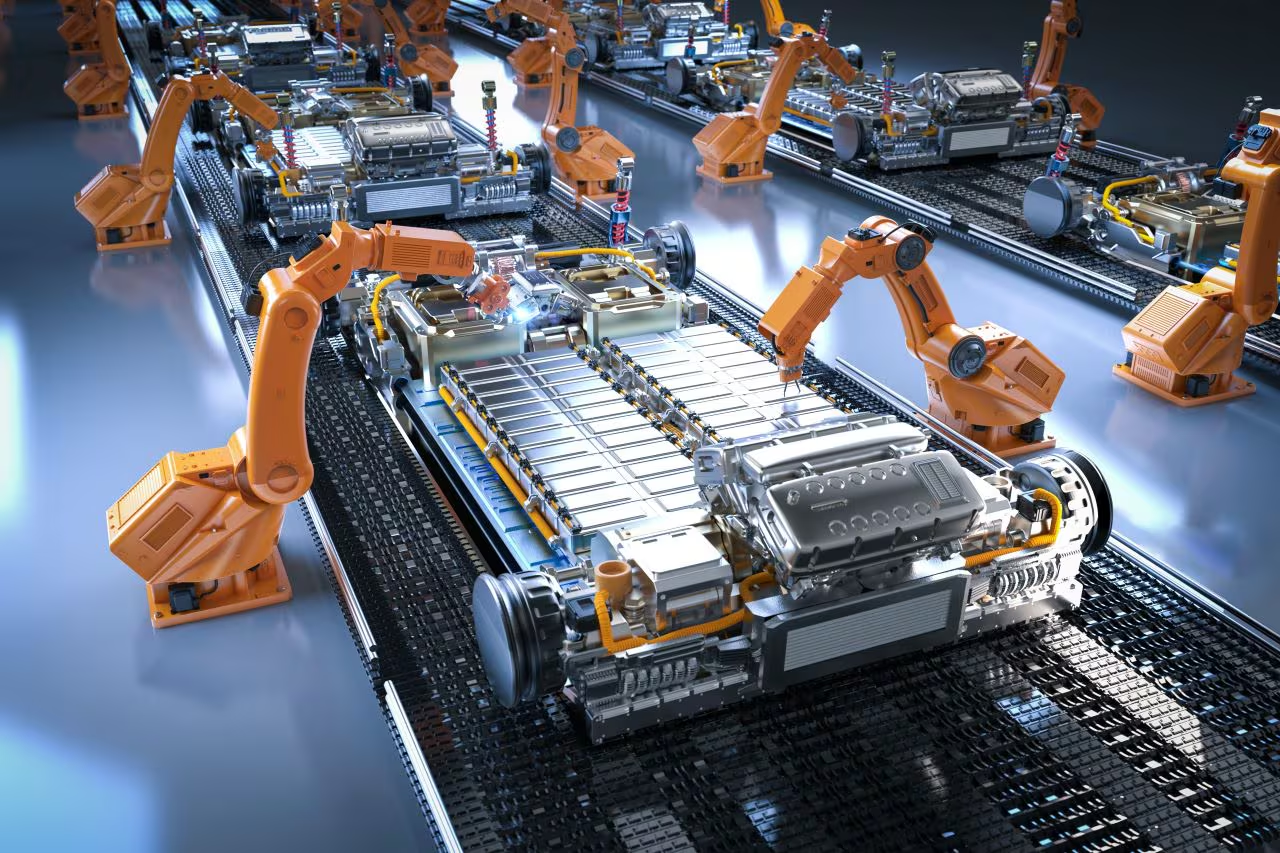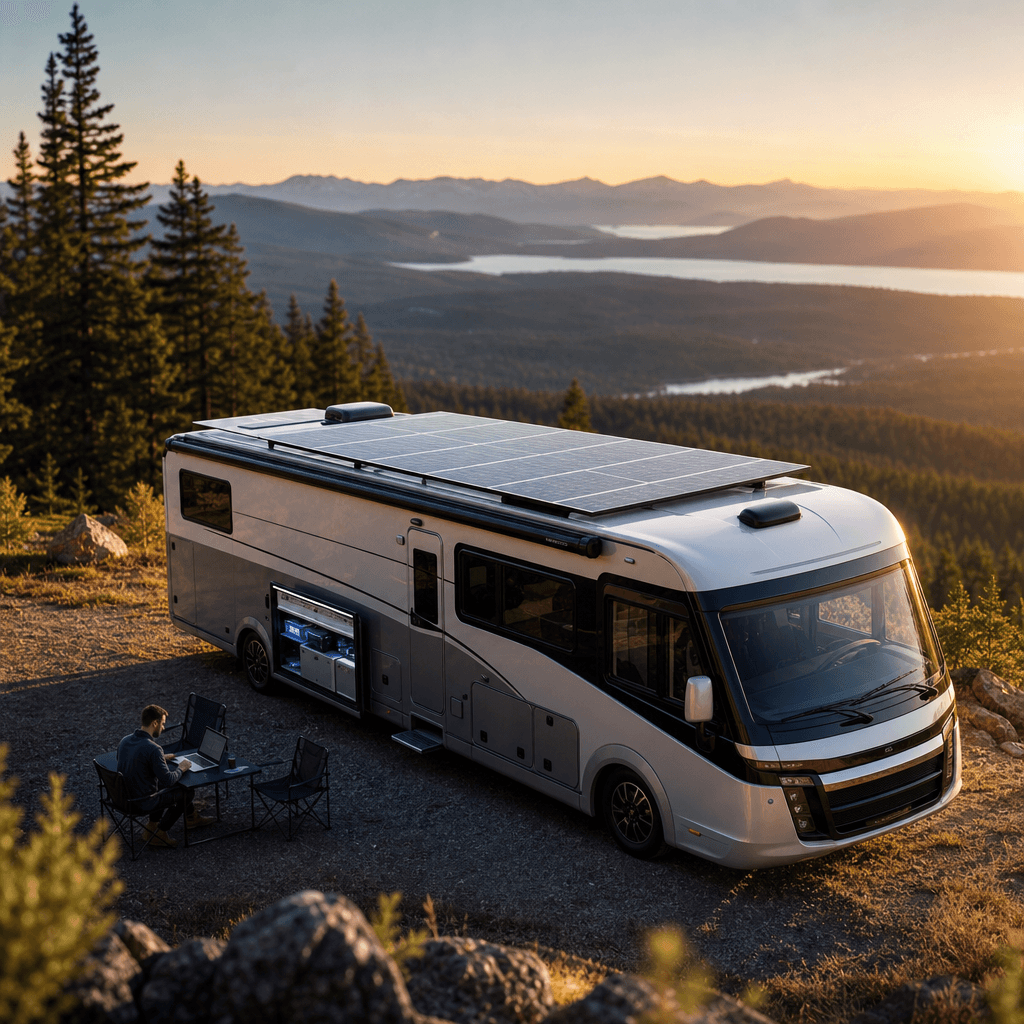
Startup Evotrex secures $30M to develop an innovative RV that generates its own power, eliminating the need for traditional charging stations.
The electrification of transportation continues its relentless march, extending beyond passenger vehicles to commercial fleets, urban transit, and now, even the recreational vehicle (RV) market. While mainstream automakers grapple with scaling fully electric platforms, a new generation of startups is emerging to address specific niches. One such player, Evotrex, recently announced a significant $30 million Series A funding round, bringing its total capital raised to $46 million. This influx of capital positions the Los Angeles-based startup to accelerate its plans to build and sell its first hybrid RV travel trailers, targeting an annual production of around 1,000 units by next year.
Evotrex’s latest funding round drew support from a consortium of investors, predominantly from China and Hong Kong, including GSR United Capital, Forebright Concerto Capital, TTGG Ventures, and Pegasus Capital. Notably, consumer electronics giant Anker, known for its portable power solutions and charging accessories, was an early seed investor. This strategic backing, especially from a company like Anker that understands direct-to-consumer product development and supply chain optimization, offers more than just capital. It suggests a deeper alignment with Evotrex’s ambition to tackle the complexities of the RV market with a product-first approach.
The Pragmatic Path to Off-Grid Living: Evotrex's Hybrid Strategy
What immediately distinguishes Evotrex in a burgeoning field of RV electrification startups is its choice of powertrain: a hybrid system. While some competitors like Lightship and Pebble are pushing for all-electric travel trailers, Evotrex is building what is commonly referred to as an "extended range electric vehicle" or EREV. This means the RV is primarily powered by a battery pack, which can then be recharged by an onboard gas engine. For a tech journalist observing the broader EV landscape, this isn't just a design choice; it's a strategic concession to the realities of the RV user experience.
The appeal of an RV, particularly for a segment of its users, lies in the promise of freedom and the ability to live off the grid for extended periods. This is where the limitations of an all-electric power source for a large vehicle become starkly apparent. The sheer size and weight of battery packs required to provide significant range and power for onboard amenities (think air conditioning, cooking, entertainment) for days or weeks away from charging infrastructure present immense engineering and cost challenges. Furthermore, fast-charging infrastructure is still sparse in many remote or wilderness areas where RVs are often taken. A conventional gas engine, while offering range, still typically requires an electrical hookup for many modern RV functions.
Evotrex’s EREV approach effectively bridges this gap. It allows users to leverage the benefits of electric propulsion for shorter distances and quieter operation, while the onboard gas generator provides the ultimate range extender and a reliable source of power for sustained off-grid living, circumventing the need for external hookups or the anxiety of finding a charging station in the backcountry. This pragmatic solution directly addresses a core customer demand that pure electric RVs currently struggle to meet. Alex Xiao, co-founder of Evotrex, articulated this vision, emphasizing the goal of enabling people to truly live off the grid for extended periods.
The market seems to be responding positively to this blend of capabilities. Evotrex has indicated that 90% of its current order book is for the "fully loaded Premium trim" of its PG5 RV, priced at approximately $160,000. This suggests a discerning customer base willing to invest in a solution that offers both advanced technology and practical independence.
The Anker Playbook: Product, Persistence, and Prioritizing Customers
Alex Xiao's background as a product manager at Anker is not just a footnote; it's a foundational element of Evotrex's operational philosophy. Anker rose to prominence by meticulously focusing on customer needs, delivering high-quality products, and building a strong brand reputation through user experience. This "Anker playbook" appears to be deeply embedded in Evotrex’s strategy.
Xiao outlined a clear set of principles: "The first thing is you need to find the real customer demand. The second is you need to deliver a really good product, and third is: the customer will say the story for you." This mantra, focused on product definition, R&D, supply chain mastery, distribution, and robust service, is critical for any hardware startup, especially one venturing into complex vehicle manufacturing. The RV industry, historically, has faced scrutiny regarding build quality and post-sale support. Anker's success was built on reliability and customer trust, qualities that could be transformative if replicated in the RV space.
A telling detail from Evotrex’s early operations underscores this commitment: the company hired its first service employee six months ago, while its first sales employee only joined recently. This inversion of typical startup hiring priorities—service before aggressive sales—speaks volumes. It suggests a deliberate strategy to ensure the product is not only well-engineered but also well-supported from day one, addressing the "known vulnerability" of mechanical integrity and numerous moving parts in RVs. This is a savvy move that could differentiate Evotrex from competitors by fostering trust and long-term customer loyalty, much like Anker cultivated a loyal user base for its charging accessories.
Evotrex’s EREV strategy is a masterclass in reading customer reality over green tech idealism. While pure electric competitors chase zero-emission purity, they ignore the core RV promise: absolute freedom in infrastructure deserts. By leaning into an extended-range hybrid model, Evotrex delivers immediate utility to hard-core off-grid enthusiasts today, not a decade from now. Furthermore, importing the "Anker playbook"—prioritizing service infrastructure before scaling aggressive sales—addresses the legacy RV industry's biggest vulnerability: abysmal post-sale mechanical reliability. The challenge now lies in execution. Manufacturing in China and assembling in California introduces complex, cross-border supply chain friction. If Evotrex can manage that operational tightrope, their pragmatic bridge will easily outpace pristine, uncharged electric dreams.
Navigating a Crowded Field with a Clear Vision
The RV market is, as Xiao acknowledges, a "very complicated business" and a "crowded field" of startups. Traditional RV manufacturers, such as Thor and Winnebago, have been slow to fully embrace electrification for direct consumer sales, often confining their initial electric models to rental fleets or extended field testing. This reticence has created a vacuum, attracting a wave of nimble startups eager to innovate.
The competitive landscape includes companies pushing all-electric solutions, betting on rapid advancements in battery technology and charging infrastructure. Evotrex's hybrid approach, therefore, is not just a technological choice but a distinct market positioning strategy. It caters to a segment of RV users who prioritize immediate, uncompromised off-grid capability over pure electrification, viewing the hybrid as the most practical path to achieving their lifestyle goals now, rather than waiting for an idealized all-electric future.
Bringing any new vehicle to market is fraught with challenges, from design and engineering to manufacturing and regulatory compliance. Evotrex has completed the validation of a functional version of its first RV, the PG5, and plans to dedicate the next 10 to 12 months to thorough durability testing. This focus on rigorous testing is essential in an industry where mechanical integrity is often a concern, given the demanding conditions RVs are subjected to. The company’s plan to manufacture in China and complete final assembly in California leverages global supply chain efficiencies while maintaining quality control closer to its target market.
Locating its final assembly and testing operations in Los Angeles is also a strategic decision. Beyond proximity to a significant target market, Southern California offers a diverse range of climates and terrains, invaluable for comprehensive vehicle testing. This mirrors the meticulous product development cycles seen in other consumer electronics and automotive sectors, where real-world performance validation is paramount before mass market release.
The Broader Trend and What Comes Next
Evotrex’s journey is emblematic of a broader trend: the disaggregation of traditional automotive manufacturing and the rise of specialized mobility solutions. As battery technology improves and the cost of electric components decreases, we are seeing electrification permeate every conceivable vehicle category. However, the unique demands of each segment necessitate tailored approaches.
My analytical take is that Evotrex's hybrid strategy in the RV sector is a shrewd move for the current technological and infrastructural landscape. While pure electric vehicles are ideal for predictable routes and urban environments, the RV user's desire for remote access and sustained independence makes the EREV a compelling, arguably superior, interim solution. It offers a bridge, allowing users to reduce their carbon footprint and enjoy quieter operation without sacrificing the core utility of an RV: freedom from infrastructure.
Looking ahead, Evotrex faces the formidable task of scaling production, establishing a reliable service network across North America, and continually innovating to stay ahead in a rapidly evolving market. The challenge is not just to build 1,000 units annually but to build 1,000 *reliable* units, consistently. Their Anker-inspired focus on product quality and customer support will be their ultimate differentiator, potentially turning early adopters into vocal evangelists who "tell the story" for Evotrex. If they can execute on this promise of durability and service, combined with a product that truly meets the demanding needs of off-grid enthusiasts, Evotrex could carve out a significant niche in the future of recreational travel, proving that sometimes, the most innovative path isn't the purest, but the most pragmatic.
Frequently asked questions
What is Evotrex building?
Evotrex is developing an innovative recreational vehicle (RV) that features self-charging technology, allowing it to operate without needing external charging stations. This aims to provide true off-grid mobility.
How much funding did Evotrex raise?
Evotrex recently announced it raised $30 million in a significant funding round to advance its self-charging RV technology and bring its vision to market.
What makes Evotrex's RV unique?
Its primary unique selling point is the integrated self-charging capability, which eliminates the reliance on traditional electric vehicle charging infrastructure, offering unprecedented freedom and range for RV users.
When is the Evotrex RV expected to be available?
While the article mentions a significant funding round, it does not specify an exact launch date. The funds are aimed at further development and scaling production, suggesting it's still in the development phase.
Who are the target customers for Evotrex's RV?
Evotrex's RV is likely targeting adventurers, sustainable travelers, and individuals seeking off-grid living or extended trips without the constraints of traditional electric vehicle charging.
How does the self-charging technology work?
The article preview doesn't detail the specific mechanism of the self-charging technology (e.g., solar, kinetic, hydrogen fuel cell). However, it implies an onboard system designed to generate and store power independently.