Global sales decline for fourth month, driven by struggles in China, as electric vehicle demand accelerates significantly for the automaker.
Toyota, for decades an undisputed titan of the global automotive industry, is navigating increasingly choppy waters. The world’s top-selling automaker recently reported its fourth consecutive month of declining global sales in May, a trend it largely attributes to the persistent sting of high gasoline prices. This dip comes even as its electric vehicle sales are surging, painting a complex picture of a company at a critical juncture in the automotive transition.
Here's what happened: Toyota announced its global sales, including the luxury Lexus brand, fell 7.2% in May compared to the same period last year, totaling 834,279 units. This sustained downturn, particularly notable for a company accustomed to consistent growth, highlights a brewing tension between traditional internal combustion engine (ICE) models and the rapidly accelerating shift towards electrification across key markets.
While demand remained relatively stable in crucial markets like North America, Europe, and Japan — North American sales were nearly flat at 280,539 vehicles, a mere 0.1% decrease — it was a significant slump in China that ultimately weighed down Toyota's overall global performance. In China, sales plummeted a staggering 31.7% in May, dropping to 102,299 units. The company explicitly cited "a challenging market environment, including rising gasoline prices" as a primary factor in this sharp decline, a statement that underscores the immediate economic pressure on consumers.
Yet, the narrative isn't one of universal decline. Buried within these figures is a powerful counter-trend: Toyota's electric vehicle (EV) sales are experiencing explosive growth. Globally, EV sales jumped an impressive 170% in May, reaching 37,313 units. Year-to-date, battery electric vehicle (BEV) sales through May stood at 155,074, up 138% from the previous year. This suggests that while consumers might be shying away from gas-guzzlers, they are increasingly open to Toyota's growing electric offerings.
For me, as someone who tracks the tech and product landscape, these numbers illuminate a fascinating strategic challenge. Toyota, a company synonymous with reliability and the pioneering of hybrid technology, is now caught between its traditional strengths and the undeniable pull of a fully electric future. The question isn't just about gas prices; it's about whether the world's largest automaker can adapt its diverse product portfolio quickly enough to meet rapidly evolving global demand, particularly in markets that are aggressively pushing for electrification.
The Accelerating Shift and Toyota's Balancing Act
While Toyota points to high gasoline prices, particularly in China, as a key culprit for its recent sales slump, this explanation feels increasingly like a symptom rather than the root cause of a much deeper, structural transformation in the automotive world. For a market like China, which has become an undeniable bellwether for EV adoption and technological innovation, rising fuel costs are merely an accelerant to an already rapid shift in consumer preference. Chinese consumers are not just looking for cheaper fuel; they are actively seeking more advanced, more efficient battery-electric vehicles that offer a superior driving experience and often come with substantial government incentives.
From an analyst's perspective, this isn't just about short-term economic headwinds. It reflects a fundamental redefinition of value. The dramatic 31.7% sales drop in China signals that Toyota's traditional internal combustion engine (ICE) offerings are losing ground not just to economic factors, but to the sheer competitiveness of local EV manufacturers. Companies like BYD, which focuses exclusively on plug-in and pure-electric technology, have capitalized on this shift, propelling themselves to become the sixth-largest automaker globally last year. This isn't merely a segment change; it's a battle for the very soul of the automotive industry, where agile tech-first companies are challenging the established order.
It's worth considering the founder's perspective here: if you're building an automotive company today, especially in China, you're almost certainly going all-in on electric. The infrastructure, supply chains, and consumer expectations are already geared towards EVs. Toyota's "multi-pathway" strategy, which encompasses battery electric (BEV), traditional hybrid (HEV), plug-in hybrid (PHEV), and internal combustion engine (ICE) options, attempts to cater to every segment. While strategically sound for diversification, my read is that this approach risks diluting focus and slowing down the necessary aggressive pivots required to dominate the fastest-growing segments. The sheer momentum of the EV transition, particularly in regions like China, suggests that hedging bets might be less about de-risking and more about falling behind.
Implications for North America and the Road Ahead
The trends unfolding in China are not isolated; they offer a glimpse into the future challenges and opportunities for the North American market. While US sales for Toyota have remained relatively stable, the underlying currents are shifting. The success of Toyota's updated bZ (sold as the bZ4X overseas) as America's third-most-popular EV in the first quarter, and its best-selling domestic EV in Japan during the same period, clearly demonstrates that when Toyota *does* commit to a competitive BEV, it can capture significant market share. This is a critical insight for investors looking at Toyota's long-term growth prospects: the demand for compelling EVs is there, even if the overall EV share remains a modest 7% of Toyota's total sales through May.
For the average North American consumer, the equation is becoming clearer. Persistent high gas prices, while fluctuating, add a tangible cost burden to traditional vehicles, making the long-term savings of an EV or even a hybrid more attractive. Toyota's longstanding reputation for hybrids has given it an advantage, but the rapidly expanding choices in pure EVs from competitors, and increasingly from Toyota itself, are reshaping purchasing decisions. The company's plan to add more electric SUVs, such as the Highlander BEV and Lexus TZ three-row electric SUVs, later this year, signals an acknowledgment of this growing demand and the necessity of a broader electric portfolio to remain competitive in a market increasingly leaning electric.
The strategic challenge for Toyota is immense. Its multi-pathway strategy, designed to offer flexibility across diverse global markets and consumer preferences, is now under increasing pressure. While it allows Toyota to leverage its formidable hybrid expertise and cater to regions where EV infrastructure is still nascent, it also means splitting engineering, manufacturing, and marketing resources across multiple powertrain technologies. This contrasts sharply with the laser focus of pure-play EV manufacturers like BYD, whose CEO, Wang Chuanfu, boldly declared earlier this month that the company aims to "truly become the No. 1 automaker globally in terms of scale" within the next five years. Such ambition from a competitor focused solely on electrification presents a direct and formidable threat to Toyota's long-held global leadership.
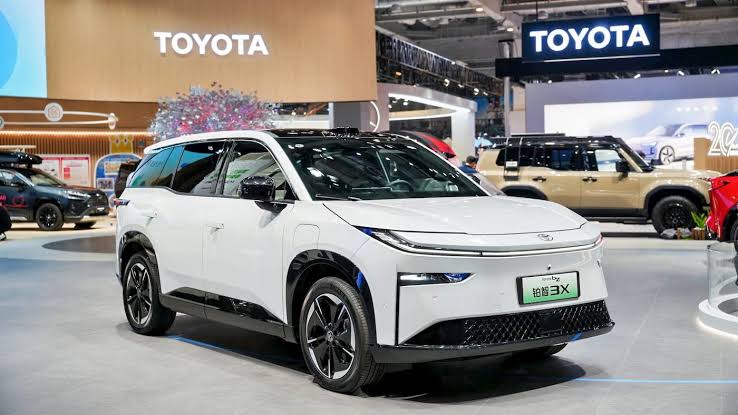
What strikes me here is the speed of change. Toyota’s historical prudence and methodical approach have served it well for decades. However, the current automotive landscape, driven by technological disruption and geopolitical shifts, demands a different kind of agility. The fact that Toyota’s joint venture electric vehicles, like the bZ3X, are seeing strong demand in China—even relying on local suppliers like BYD for components and technology—is telling. It demonstrates both Toyota's capability to produce competitive EVs and its necessary pragmatism in adapting to local market dynamics and leveraging external expertise to do so.
The company's declining ICE sales in China are not solely attributable to gas prices; they reflect a deeper paradigm shift where buyers are actively choosing more advanced, more efficient battery-electric vehicles. This fundamental change in consumer behavior, coupled with fierce local competition, means that even a slight hesitation in accelerating the EV transition could have profound consequences for Toyota's market share and future profitability, especially in high-growth regions.
Looking ahead, Toyota faces a crucial period. The company's ability to maintain its global leadership will depend less on blaming external factors like gas prices and more on its willingness to aggressively lean into the inevitable electric future. While its multi-pathway strategy might offer a degree of comfort in the short term, the exponential growth of its own EV sales, coupled with the relentless ascent of pure-EV competitors, suggests that the pathways might need to converge more rapidly than anticipated. The question is not if the world will go electric, but how quickly Toyota will get there, and what kind of market leader it will be when it arrives.
Frequently asked questions
Why are Toyota's global sales falling?
Toyota attributes its global sales decline, marking four consecutive months, primarily to high gasoline prices and a challenging market environment, particularly in China. Despite steady demand in some regions, China's significant drop impacted overall results.
How much did Toyota's EV sales increase?
Toyota's global electric vehicle (EV) sales surged by 170% in May, reaching 37,313 units. Through May 2026, battery electric vehicle (BEV) sales were up 138% compared to the same period in 2025.
Which market saw the biggest drop in Toyota sales?
China, one of Toyota's largest and most important global markets, reported the biggest drop in sales, falling 31.7% in May. This was attributed to rising gasoline prices and intense market competition.
What is Toyota's "multi-pathway" strategy?
Toyota's "multi-pathway" strategy involves offering all powertrain options, including battery electric (EV), traditional hybrid (HEV), plug-in hybrid (PHEV), and internal combustion engine (ICE) vehicles, to cater to diverse market needs.
How is BYD impacting Toyota?
BYD, a company focused solely on plug-in and pure-electric technology, is a growing competitor. It became the sixth-largest automaker globally last year and aims to become the No. 1 automaker globally within five years, challenging Toyota's market share, especially in EV-focused markets.
What Toyota EV models are popular in China?
In China, Toyota's joint venture electric vehicles like the bZ3X SUV and bZ3 sedan are seeing strong demand. The bZ3X, starting around $15,000, was China's top-selling joint-venture EV for seven consecutive months.